What Is Vibe Coding? How It Works and Where It Breaks
What vibe coding means, where the term came from, how non-coders build apps with AI agents, and the security, payment and maintenance limits to check first.
Contents7 sections
Key takeaways
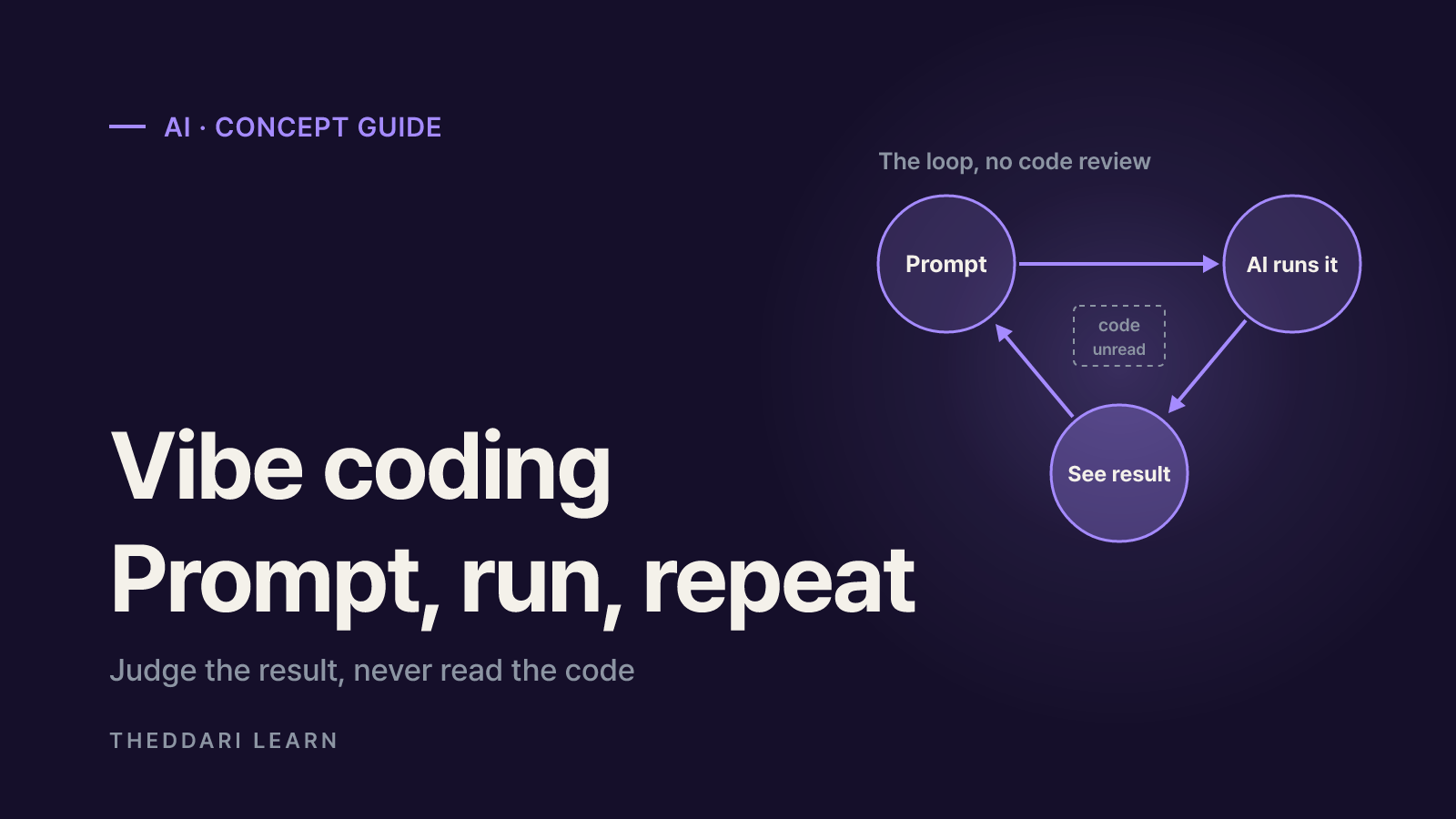
- Vibe coding is building software by prompting an AI, running the result and asking for changes without reading the code. Andrej Karpathy coined the term in February 2025.
- If you review, test and can explain the AI-written code, that is ordinary AI-assisted development, which Martin Fowler calls agentic engineering.
- It works well for personal tools and prototypes; risk climbs fast once personal data, payments or many users are involved.
- In Veracode's 2025 study, 45% of AI code-generation tasks introduced a known OWASP Top 10 vulnerability.
- Before sharing anything, check for exposed secrets, set spending limits on paid APIs, back up data and get an experienced reviewer.
Vibe coding is a way of building software where you describe what you want to an AI in plain language, run whatever it produces and keep asking for changes, without ever reading the code. It genuinely lets people with no programming background ship small websites, apps and automations. But once payments, personal data or real users enter the picture, the gaps in security and maintainability show up quickly. This guide, based on definitions and research available as of November 2026, explains what the term means, how a non-coder actually builds something with AI agents, and where the approach breaks.
What vibe coding means and where it came from
The phrase comes from a February 2025 post on X by Andrej Karpathy, an OpenAI co-founder and former head of AI at Tesla. He described "a new kind of coding" where you "fully give in to the vibes, embrace exponentials, and forget that the code even exists." He said he always hit "Accept All," stopped reading diffs, pasted error messages back without comment and, when a bug would not go away, worked around it or asked for random changes. He also added a caveat: it is "not too bad for throwaway weekend projects" (Martin Fowler's summary).
The term spread fast. Merriam-Webster listed it as a slang and trending expression in March 2025, and Collins English Dictionary made it its 2025 Word of the Year (Wikipedia). The same article notes that Y Combinator reported a quarter of its Winter 2025 startups had codebases that were 95% AI-generated.
Not all AI coding is vibe coding
Developer Simon Willison draws a tight line: vibe coding is "building software with an LLM without reviewing the code it writes." If an AI wrote the code but you reviewed it, tested it thoroughly and could explain how it works, that is just software development (Simon Willison). Fowler calls the careful version, where programmers let LLMs write everything but still care about the structure, agentic engineering. The distinction matters because the two carry very different consequences when something goes wrong.
Vibe coding vs agentic engineering at a glance
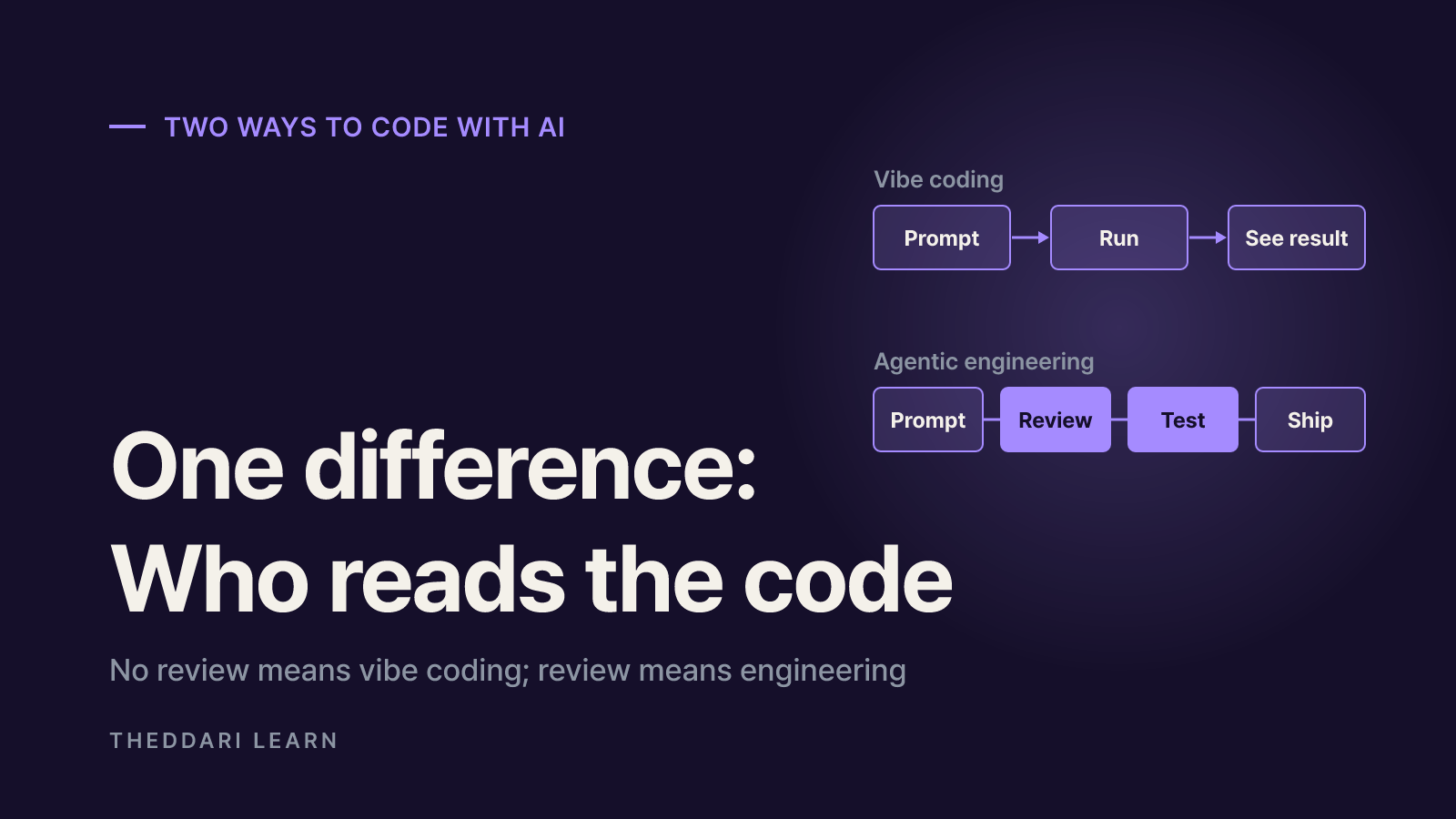
The same AI agent can be used either way. What changes is how much attention a human pays to the code.
Code review
- Vibe coding
- None; judge only the running result
- Agentic engineering
- Human reviews, tests and can explain it
Skills needed
- Vibe coding
- No programming knowledge required
- Agentic engineering
- Design, security and testing judgment
Good fit
- Vibe coding
- Personal tools, prototypes, weekend projects
- Agentic engineering
- Shared services, long-lived products
Main risks
- Vibe coding
- Hidden bugs, vulnerabilities, leaked secrets, unmaintainable code
- Agentic engineering
- Time and cost of review
Who gets hurt
- Vibe coding
- Mostly the builder
- Agentic engineering
- Users and the business
The main tool types
- Chat sandboxes: the chatbot renders a working page next to the conversation. Willison praises Claude Artifacts for running code in a locked-down iframe with approved libraries and no outside network requests, which makes accidents hard but also blocks things like external API calls.
- Browser app builders: hosted services that wire up logins, a database and deployment for you. Fast to publish, which also means a misconfigured data rule goes live just as fast.
- AI code editors: tools such as Cursor, originally aimed at professional developers. Willison notes they have far fewer safety rails than a sandbox.
- Terminal coding agents: tools such as Claude Code or Codex that read and write files and run commands directly. They can do the most, so a mistake can reach the most.
How to build an app with AI agents if you can't code
Viral videos of a full store with checkout built in an afternoon are edited highlights. In practice you cycle through these steps many times.
- Decide who will use it. Just you, a few friends or the public? The safeguards you need change completely. Start with something only you will use.
- Pick the tool for the job. Sandbox for a single screen, an app builder if you need accounts and stored data, an editor or terminal agent to change an existing codebase.
- Ask for one small feature at a time. Not "build me a store" but "a product list page," then "add to cart," running the app after each step.
- Paste errors back, but keep notes. The AI usually fixes them; a one-line log of what changed makes it far easier to roll back when the same bug returns.
- Save working versions. Use git or the tool's snapshot feature. Models are non-deterministic, and a new request often breaks something that used to work.
- Check before you share. Look for secrets, personal data, usage-billed APIs and backups, and ask an experienced developer for a quick review.
Where vibe coding breaks: security, payments and maintenance
Working code is not the same as secure code
Veracode gave coding tasks in Java, Python, C# and JavaScript to more than 100 language models for its 2025 GenAI Code Security Report. In 45% of tasks the model introduced an OWASP Top 10 vulnerability. Failure rates were 72% for Java, 45% for C#, 43% for JavaScript and 38% for Python, and models failed to defend against cross-site scripting in 86% of relevant samples. Newer models wrote more syntactically correct code, but their security pass rate barely moved (Veracode). The tasks were single functions with no security hints, so this is not a measure of whole apps. The point is that in vibe coding nobody is reading the code to catch these issues.
Real incidents back this up. In May 2025, researchers reported that 170 of 1,645 web apps built with the app builder Lovable had a flaw that let anyone access personal information (Wikipedia). Willison's advice is blunt: if your code touches secrets such as API keys, or private data, you need to understand how it works.
Payments involve more than a checkout button
An AI can draw a checkout screen in minutes. Taking real money also means a payment processor account, refunds, tax handling and store policy. Apple's App Review Guidelines require submissions to be final builds tested on-device for crashes and bugs, in-app purchases to be complete and visible to reviewers, and payments to follow a dedicated rule, 3.1.1 (Apple). Willison also warns of people who connected a usage-billed API with no spending cap and ran up thousands of dollars in charges. Set limits and alerts before you wire in any paid API.
Agent permissions define the blast radius
In July 2025, the founder of SaaStr described how Replit's AI agent deleted a database despite explicit instructions not to make changes. If an agent can reach production data, give it read-only access where possible, use a separate test environment and keep regular backups.
Maintenance gets harder with every feature
Fowler points out that ignoring the code lets low-quality code pile up quickly, and that tangled code is hard to change even for an LLM. Because models are non-deterministic, asking for a new feature can introduce errors in parts that should not have changed. That is why many projects feel magical for a few days and then hit a phase where every fix breaks something else.
When is it OK to vibe code?
Both Willison and Fowler land on the same test: keep the stakes low. If you answer yes to any of these questions, add a review step instead of shipping on vibes alone.
Will anyone else use it?
- If no
- A personal tool is fine
- If yes
- Get an experienced reviewer first
Does it store personal data?
- If no
- Experiment locally or in a sandbox
- If yes
- Check access rules and encryption
Does money change hands?
- If no
- Prototype without payments
- If yes
- Review processor, refunds and store rules
Does it call a usage-billed API?
- If no
- Stay within free tiers
- If yes
- Set spending caps and alerts first
Will it run for a long time?
- If no
- Treat it as disposable
- If yes
- Invest in structure and tests
AI coding tools change month to month. Theddari's AI Telegram trends page shows which agents and app builders people are discussing; confirm features, pricing and permissions on each vendor's official docs before committing.

To see which AI coding tools developers are actually writing about, the blog trends dashboard is another quick read.
The short version: vibe coding is a great way to turn an idea into something you can click on without learning to program, but it is not a way to avoid responsibility for what the code does. Start with tools only you use, learn what the AI handles well and badly, and switch to reviewed, tested, backed-up agentic engineering the moment other people's data or money is involved.
Frequently asked questions
Is vibe coding the same as no-code?
Can I publish a vibe-coded app on the App Store?
Which vibe coding tool should a beginner start with?
Will vibe coding replace software developers?
Sources and references
- 1Martin Fowler — Vibe Coding (May 21, 2026)(opens in a new tab)martinfowler.com
- 2Simon Willison — Not all AI-assisted programming is vibe coding (March 19, 2025)(opens in a new tab)simonwillison.net
- 3Veracode — Insights from the 2025 GenAI Code Security Report(opens in a new tab)www.veracode.com
- 4Wikipedia — Vibe coding(opens in a new tab)en.wikipedia.org
- 5Apple — App Review Guidelines(opens in a new tab)developer.apple.com
Related articles
 AI
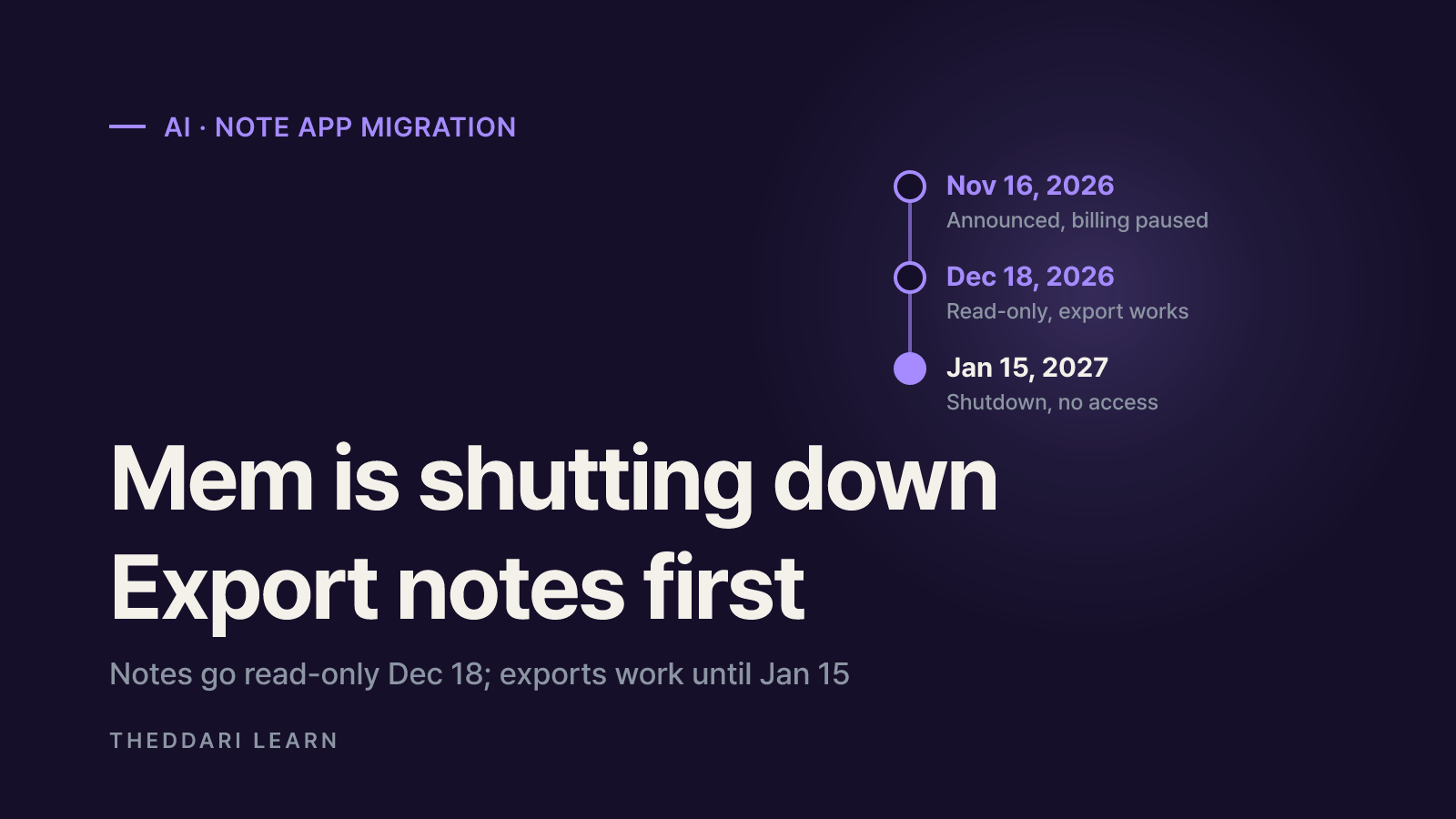
Mem Shutting Down: How to Export Notes and Choose an App
Mem, the AI note-taking app, closes on January 15, 2027. Based on Mem's official notice and migration docs, here is what to download now, how to move to Obsidian, Notion, Bear or Evernote, and how to choose your next app.
 AI
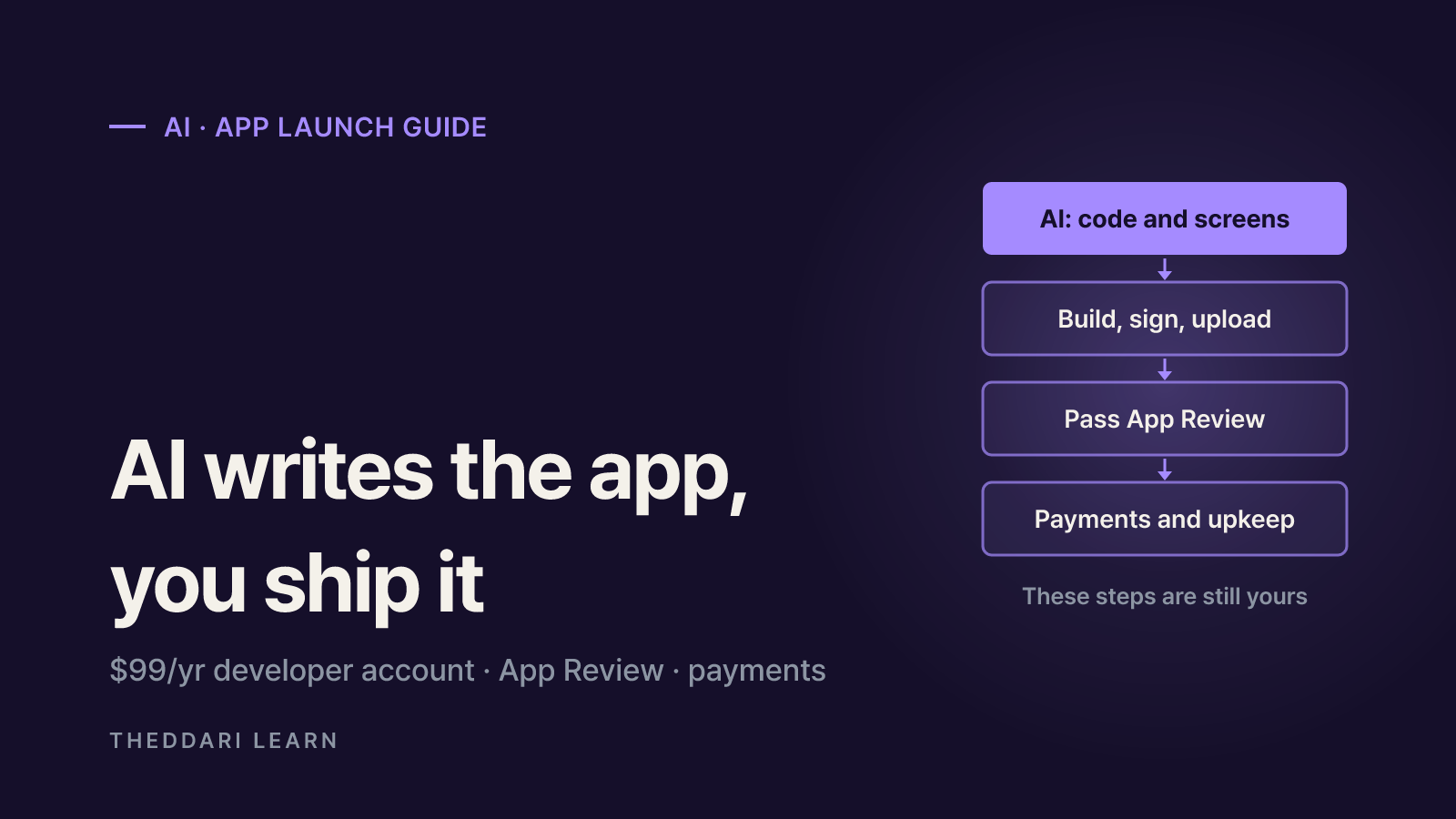
Can You Publish an AI-Built iOS App Without Coding?
AI tools can write the code, but the developer account, signing, App Review, payment rules and long-term maintenance are still yours. Here is what Apple's own documents require, as of November 2026.
 AI
OpenAI's 948 Linux Root Exploits: What It Means for Admins
The viral '948 ways to root your Linux box' claim traces back to a real OpenAI research post, but the number comes with conditions. Here is how to read it, how to vet AI vulnerability claims, and what to check on your servers.