Contents7 sections
An OpenAI revenue forecast moves Nvidia and AMD stock because OpenAI sits on the other side of some of the largest chip commitments either company has announced. How much OpenAI can earn feeds directly into how much compute it can pay for. On Thursday, October 8, 2026, reports that OpenAI's annualized revenue was about $50 billion, well below the roughly $68–70 billion figure that had circulated in September, sent AI chip and cloud stocks lower together. This guide, written as of October 2026 and based on public reporting and company announcements, explains how that chain reaction works and what to check before reading too much into one headline.
What happened to the OpenAI revenue forecast in October 2026
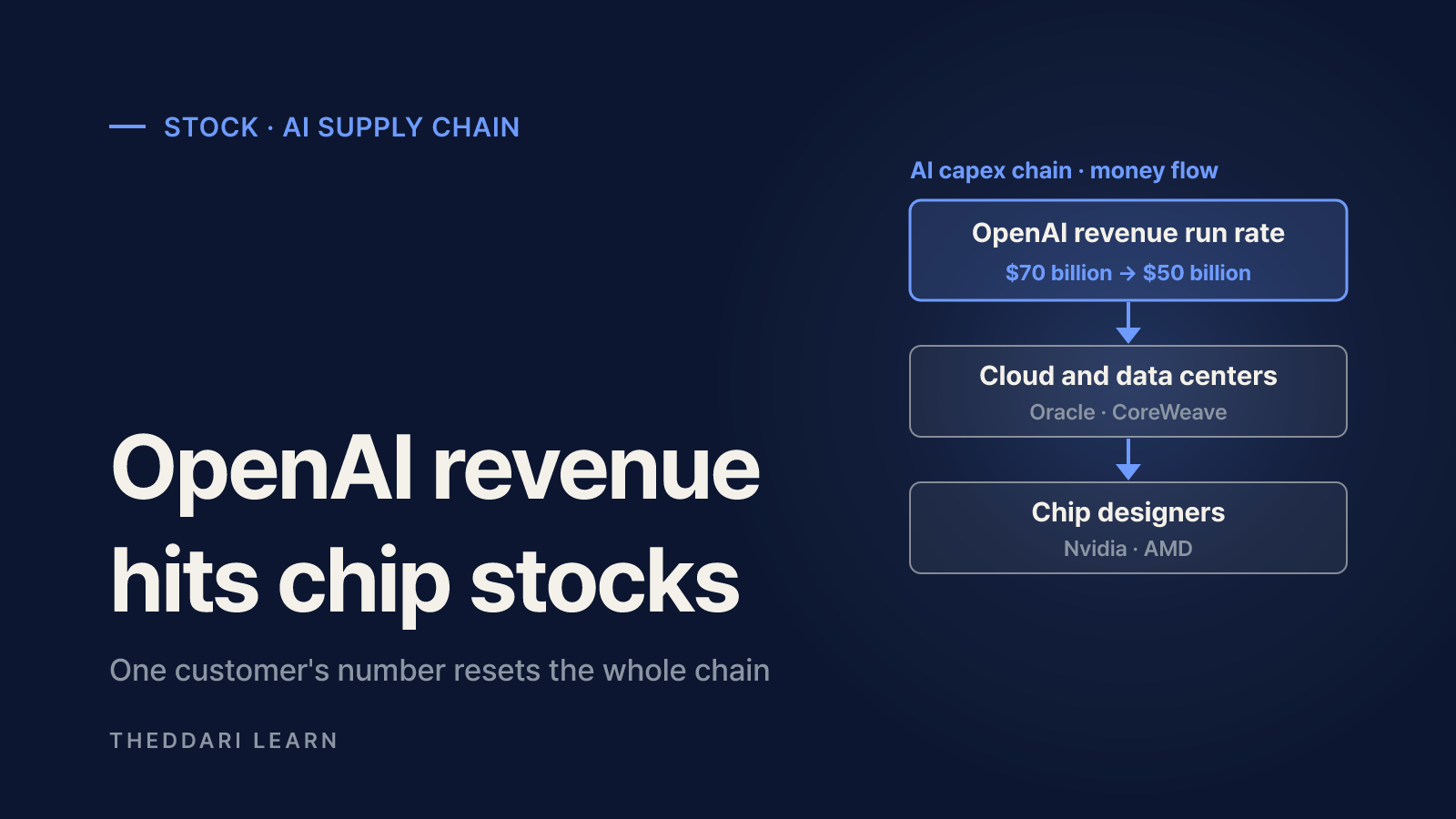
According to CNBC, OpenAI told investors in a presentation that it reached roughly $50 billion in annualized revenue at the end of September, lower than the $68 billion figure widely reported late in September. The Financial Times broke the story first. In the same update, OpenAI reportedly cited 77% total run-rate growth during its third quarter and 107% run-rate growth in its enterprise business. Growth remained fast; what changed was the size of the number the market had been working from.
The reason for the gap matters. A Benzinga article on Yahoo Finance, citing the FT, explains that investors had adjusted OpenAI's revenue upward to match Anthropic's approach, which counts the full value of sales made through cloud partners. That adjusted base produced a reported $40 billion run rate in August, and applying OpenAI's later growth rate to it yielded the roughly $70 billion figure. OpenAI's own figures put the run rate closer to $50 billion. In other words, $20 billion of sales did not vanish. The market simply learned that its anchor was built on a different definition.
Nvidia (NVDA)
- Move on Oct 8, 2026 (as reported)
- About -3%
- Link to OpenAI
- GPU supplier; 10 GW letter of intent
AMD
- Move on Oct 8, 2026 (as reported)
- About -4%
- Link to OpenAI
- 6 GW GPU agreement; share warrant
Broadcom (AVGO)
- Move on Oct 8, 2026 (as reported)
- About -4%
- Link to OpenAI
- Custom chip collaboration
Oracle (ORCL)
- Move on Oct 8, 2026 (as reported)
- Nearly -6%
- Link to OpenAI
- Data center and cloud capacity
CoreWeave (CRWV)
- Move on Oct 8, 2026 (as reported)
- Nearly -8%
- Link to OpenAI
- GPU cloud leasing
Intel, Super Micro
- Move on Oct 8, 2026 (as reported)
- About -5%
- Link to OpenAI
- Broader AI server and chip chain
These are rounded single-day moves reported by CNBC. Benzinga noted that the Nasdaq was down 1.4% in afternoon trading and that rising oil prices and Treasury yields also pressured stocks. So the whole decline should not be pinned on one report. Still, the pattern was telling: the companies most directly tied to OpenAI tended to fall the most.
How AI capex links one customer to chip stocks
Think of the AI supply chain as money flowing downhill. Consumers and businesses pay for ChatGPT and API access, which becomes OpenAI revenue. OpenAI combines that revenue with outside funding to buy compute. Cloud and data center operators such as Oracle, Microsoft and CoreWeave provide that compute, and they buy GPUs, custom accelerators and servers from Nvidia, AMD and Broadcom. Below them sit foundries, memory makers, server assemblers, networking vendors and power equipment suppliers.
- End demand: users and enterprises spend on AI services.
- Model developers: companies like OpenAI fund compute from revenue and investor capital.
- Cloud and data centers: operators build capacity against long-term contracts and lease it out.
- Chip designers: Nvidia, AMD and Broadcom supply GPUs and custom silicon.
- Components and manufacturing: foundries, memory, servers and networking gear sit at the base.
When a number near the top of the chain changes, expectations for everyone below it get revised. Stock prices reflect expected future cash flows, not just current results, so news that a key customer is smaller than assumed can shake assumptions about order volumes several years out. OpenAI is private and does not publish audited quarterly results. Run-rate figures from investor materials or press reports are among the few public signals of AI end demand, and scarce information tends to produce outsized reactions when it arrives.
How Nvidia and AMD are tied to OpenAI
Per Nvidia's announcement, the two companies signed a letter of intent on September 22, 2025 to deploy at least 10 gigawatts of Nvidia systems, and Nvidia said it intends to invest up to $100 billion in OpenAI progressively as each gigawatt is deployed. The first gigawatt was targeted for the second half of 2026 on the Vera Rubin platform. A letter of intent is not a final contract; the companies said details would be finalized later.
Per AMD's announcement, AMD and OpenAI announced a definitive 6-gigawatt, multi-generation agreement on October 6, 2025, beginning with a 1-gigawatt deployment of Instinct MI450 GPUs in the second half of 2026. AMD issued OpenAI a warrant for up to 160 million AMD shares that vests in tranches tied to deployment milestones, AMD share-price targets and OpenAI's technical and commercial milestones. AMD's CFO said the partnership was expected to deliver tens of billions of dollars in revenue for AMD.
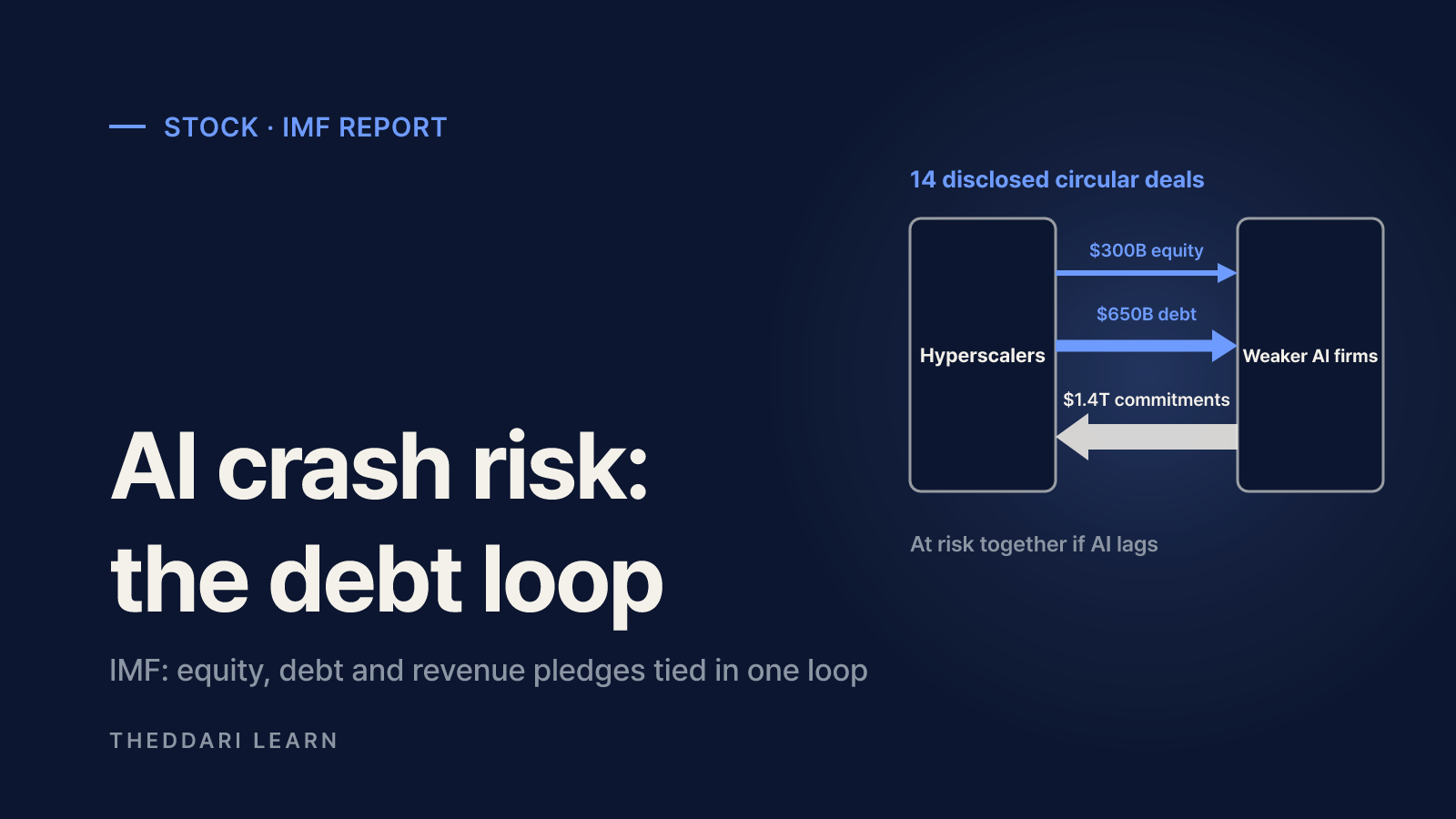
Both structures link a supplier's future sales to OpenAI's deployment pace and its ability to pay. Nvidia sells chips while also planning to invest in the buyer; AMD gives the buyer a path to owning AMD stock. When the buyer's revenue looks smaller, investors re-examine every assumption in that loop at once, including how quickly gigawatts actually come online.

Why some AI stocks fall harder than others
The same headline hit companies differently because their exposure to a single customer and their funding models differ. The table below is a general framework; check each company's filings for actual customer concentration.
Customer mix
- Chip designers (Nvidia, AMD)
- Many hyperscalers and enterprises
- Cloud and data centers (Oracle, CoreWeave)
- Large contracts can dominate
Capital needs
- Chip designers (Nvidia, AMD)
- Manufacturing outsourced to foundries
- Cloud and data centers (Oracle, CoreWeave)
- Heavy spending and borrowing to build
Link to OpenAI
- Chip designers (Nvidia, AMD)
- Supply deals, investment, warrants
- Cloud and data centers (Oracle, CoreWeave)
- Long-term capacity leases
Sensitivity to the report
- Chip designers (Nvidia, AMD)
- Often lower
- Cloud and data centers (Oracle, CoreWeave)
- Often higher
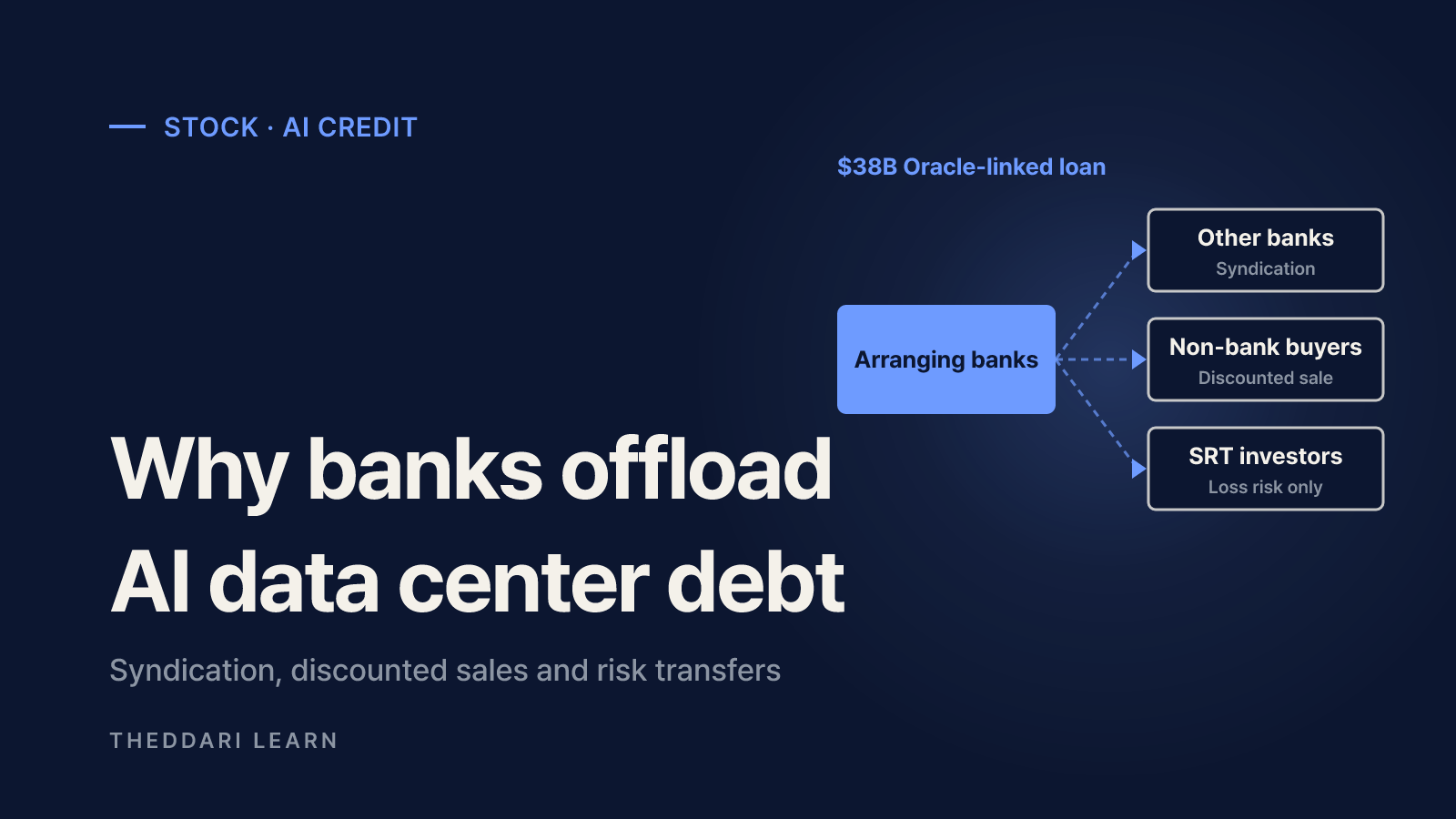
Benzinga also relayed a Wall Street Journal report that Broadcom was working to arrange more than $50 billion in financing for custom chips developed with OpenAI. AI capex runs on revenue, equity raises and debt. That is why OpenAI's revenue number shapes not only demand forecasts but also judgments about how easily the company can keep raising money. A higher valuation relative to revenue can make the next funding round harder to price, which in turn affects suppliers waiting on those orders.
A checklist for reading AI capex headlines
- 1
Pin down the definition
A run rate annualizes a recent month or quarter; it is not reported annual revenue. Counting partner sales gross versus net can swing the figure by tens of billions of dollars for the same company.
- 2
Record the source and date
Most figures for private AI companies come from anonymous sources or investor decks. Note who said it, when, under what definition, and whether the company confirmed it.
- 3
Separate other drivers
Check whether rates, oil or macro data moved the same day. Pairing an economic calendar with an earnings calendar helps avoid blaming one headline for everything.
- 4
Check supplier disclosures
Read Nvidia, AMD and Oracle quarterly reports and earnings calls for customer concentration, backlog and capex plans. Announced contract sizes and the timing of recognized revenue can differ.
The theddari earnings calendar shows when Nvidia, AMD and Oracle report, which is when suppliers disclose their own view of AI demand. The economic calendar helps you spot rate and inflation releases that may move the same stocks on the same day. Neither tool predicts price direction, so verify announcements against official company materials.
Concentration risk in the AI supply chain
The bigger lesson is concentration risk. The OpenAI volumes announced by Nvidia and AMD are multi-year, gigawatt-scale plans, and a meaningful part of them assumes that OpenAI keeps growing both revenue and outside funding. If that assumption wobbles, expectations adjust before any order is actually cut, and stock prices move first. The chain works in both directions: a report that revenue is growing faster than expected can travel up the same links.
- Single-customer risk: several layers of the chain lean on the spending plans of a few AI labs.
- Information gaps: private AI company figures often surface through reports and can be revised.
- Funding risk: data centers built with debt and fresh equity are more sensitive to rates and sentiment.
- Contract certainty: letters of intent and milestone-based deals do not guarantee that headline volumes become revenue.
An OpenAI revenue forecast is less a direct cause of chip stock moves than a prompt to re-test the assumptions behind future orders. Separate the metric's definition and source, the macro factors moving that day, and each supplier's disclosed exposure, and you will read the situation more accurately than any single headline allows. Tracking how stock-focused Telegram channels interpret the news can show where sentiment is leaning, but those interpretations still need to be checked against primary sources.