LLM uncertainty: do AI models know when they're wrong?
A November 2026 study found LLMs stay 95%+ confident even at their first reasoning error. What the research shows, its limits, and how to check AI answers.
Contents6 sections
Key takeaways
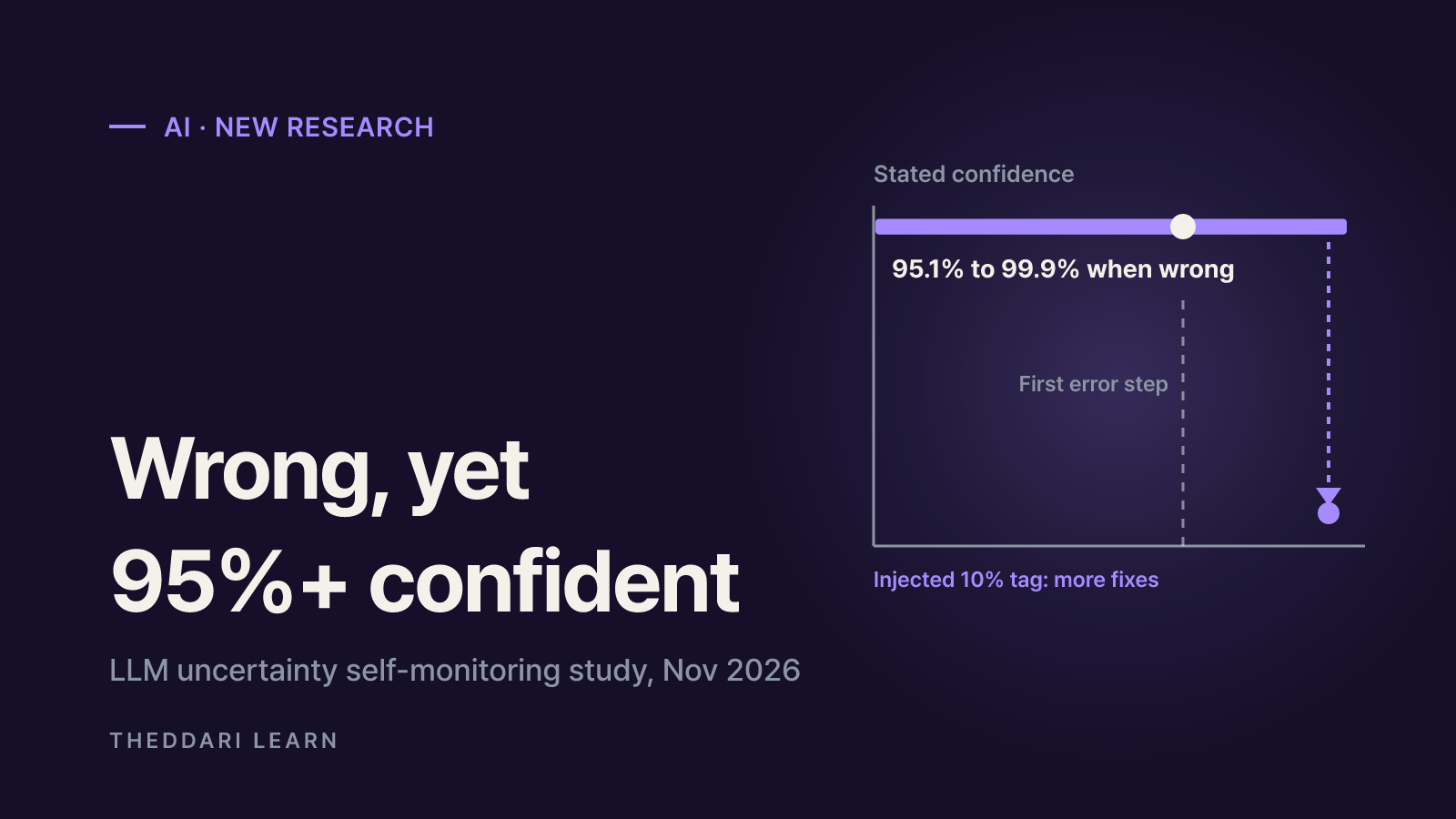
- A preprint posted to arXiv on November 23, 2026 tested four open-weights models on math problems and found stated confidence stayed at 95.1% to 99.9% at the first reasoning error.
- Within-position AUROC for separating wrong steps from correct ones using that confidence was 0.500 to 0.561, close to chance.
- Injecting a 10% confidence tag at the error step raised correction rates by 3.7 to 22.5 points, but injecting doubt on correct steps cut solve rates by up to 22.8 points.
- The study covers 7B to 14.7B open models and math only, so it does not prove the same holds for every frontier or reasoning model.
- Treat a model's confidence as a tone, not evidence: ask for sources, open them, and cross-check key claims elsewhere.
Short answer: current evidence says language models are poor at noticing their own mistakes while they are still generating an answer. A preprint posted to arXiv on November 23, 2026, Language Models Steer on Injected Uncertainty Tokens, but Fail to Self-Monitor In Situ, asked models to state their LLM uncertainty as a number after every reasoning step. At the very step where each model first went wrong, its stated confidence stayed between 95.1% and 99.9%. Yet when the researcher inserted a low-confidence tag from outside, the models often changed course and fixed the error. This guide, written as of November 2026, explains what was measured, what it does not show, and how to check an AI answer before you rely on it.
What LLM uncertainty self-monitoring means
Many AI agent frameworks ask a model to annotate its reasoning with confidence scores, for example 'Step confidence: 90%' and 'On-track: 85%'. The idea is that a falling score can trigger backtracking, a retry or a different search branch. The paper points out that this design quietly assumes two separate abilities.
- Monitoring: does the stated confidence actually drop when an error happens?
- Steering: if low confidence appears in the context, does the model use it to repair the mistake?
The distinction matters. A model that detects errors but cannot fix them needs a different remedy from one that can fix errors once someone points them out. The study's central claim is that small open models fall into the second group: the repair machinery responds, but the alarm rarely goes off on its own.
Earlier work was more optimistic
In 2022, Anthropic researchers published Language Models (Mostly) Know What They Know. They found larger models were well calibrated on multiple-choice and true/false questions presented in the right format, and that asking a model to rate the probability its own proposed answer was true, called P(True), worked encouragingly well. Models could also be trained to predict P(IK), the chance they know an answer, though calibration weakened on new tasks. The newer paper probes something different: whether confidence reported in real time, mid-solution, tracks errors as they happen.
Inside the November 2026 study
According to the full paper, the author tested four open-weights instruction-tuned models: Qwen2.5-7B, Llama-3.1-8B, Mistral-7B and Phi-4 at 14.7B parameters. They made 15,200 attempts at GSM8K and MATH-500 problems, and 2,017 reasoning errors were isolated on problems near each model's capability frontier. Claude Opus 5.5 served as a step-level judge to locate the first wrong step; on a ProcessBench validation set it pinpointed the exact error step 85.0% of the time. The author then generated 27,568 counterfactual continuations by swapping the confidence tags at those failure points.
Confidence at the first error step
- Reported result
- 95.1% to 99.9%
- Plain-English reading
- Models sounded almost certain while wrong
Within-position AUROC of confidence for spotting errors
- Reported result
- 0.500 to 0.561
- Plain-English reading
- 0.5 is a coin flip
Errors with a confidence drop of 10+ points
- Reported result
- Under 9% (Llama), under 1.6% (others)
- Plain-English reading
- Most mistakes passed silently
Effect of injecting a 10% tag at the error
- Reported result
- +3.7 to +22.5 points vs a 95% tag
- Plain-English reading
- Outside doubt helped repair
Best correction rate with active rethink instructions
- Reported result
- 38.5%
- Plain-English reading
- Most errors still went unfixed
Injecting doubt on already-correct steps
- Reported result
- Solve rate down by up to 22.8 points
- Plain-English reading
- False alarms damaged good work
Two findings stand out. First, step position alone, simply knowing that later steps are more likely to be wrong, gave an AUROC of roughly 0.69 to 0.74, better than the models' own confidence. Once that position effect was removed, stated confidence carried almost no signal. Second, the models did respond to uncertainty they were handed. The author concludes that self-correction at inference time is bottlenecked by detecting the error, not by the ability to repair it.
Why blanket doubt backfires
If outside doubt helps, why not flag every step? Because the paper also measured the cost of false alarms. Placing a low-confidence tag on steps that were already correct led models to discard valid reasoning, lowering solve rates by as much as 22.8 points. Any external verifier that injects doubt therefore needs to be precise enough that its hits outweigh its misses. The same applies to users who reflexively reply 'are you sure?' to everything; that habit can talk a model out of a right answer.
Limits to keep in mind
- It is a single-author preprint, not yet peer reviewed.
- Only four open models from 7B to 14.7B parameters were tested; dedicated reasoning models and large commercial systems were not.
- Every task was a math word problem, so factual Q&A, coding and legal or medical questions may behave differently.
- Only verbalized numeric confidence was examined, not token probabilities or agreement across multiple samples.
- Error locations came from an AI judge that was validated but not perfect.
Why AI overconfidence and hallucinations go together
A confident wrong answer is the classic hallucination. In Why language models hallucinate, published September 5, 2025, OpenAI argued that standard training and evaluation reward guessing over admitting uncertainty. On an accuracy-only test, 'I don't know' always scores zero while a guess might score a point, so models optimized for leaderboards learn to guess.
OpenAI illustrated the trade-off with SimpleQA figures from the GPT-5 system card. gpt-5-thinking-mini abstained on 52% of questions, answered 22% correctly and got 26% wrong. The older o4-mini abstained just 1% of the time, scored 24% accuracy and had a 75% error rate. The older model looked slightly better on accuracy, yet it produced nearly three times as many wrong answers. OpenAI also noted that hallucinations are not inevitable, because a model can abstain when unsure.
Put the two lines of research together and the picture is consistent: incentives push models to answer, and in-generation self-checks are weak, so a confident tone or a high confidence number is not evidence of correctness.
How to check an AI answer before you trust it
The practical takeaway is to replace the model's self-assessment with outside evidence. The study's steering result is good news here: specific, well-placed challenges tend to help.
- 1
Separate tone from facts
Ignore phrases like 'definitely' or 'I'm 95% sure'. Highlight the factual claims, such as numbers, dates, names and quotes, and treat only those as items to verify.
- 2
Ask for sources and open them
Request a link for each key claim, then open it yourself to confirm the sentence or figure is really there. A dead link or mismatched content means the claim is unverified.
- 3
Cross-check through another route
Ask a different model, run a search or go to the official source. Where answers disagree is where you need to dig. Recompute any math in a calculator or spreadsheet.
- 4
Challenge a specific point
Instead of 'double-check that', say 'step 3 seems to switch units; is that right?'. Targeted doubt helps; vague doubt can flip correct answers.
- 5
Escalate high-stakes decisions
For health, legal, tax or financial choices, use the AI's answer only as a draft and confirm with official guidance and a qualified professional.
Research headlines spread fast and often get flattened into claims like 'AI never knows when it is wrong'. Browsing what is trending on theddari's Telegram AI feed and blog trends, then reading the original paper's model list and limitations section, is a quick way to spot an overstated summary.
 theddari.comTrendsBlog PostsSummarized Naver blog posts
A note for agent builders
If your agent uses self-reported confidence to decide when to backtrack or prune, test that signal on your own tasks before trusting it. The paper suggests delegating error detection to external checks such as unit tests, execution results or a separate verifier, and measuring that verifier's precision, since false positives carry a real cost. For tasks with checkable answers, recomputing the result in code is usually a stronger signal than a number the model wrote about itself.
The bottom line is narrower than the headlines: this study shows that verbalized confidence written mid-solution by small open models is a poor error alarm on math problems. Within that scope, the habit it supports is clear. Do not mistake confidence for accuracy, verify the claims that matter, and when you push back, point at the exact spot you doubt.
Frequently asked questions
Can I trust an AI chatbot when it says it is 95% sure?
Why do language models hallucinate with such confidence?
Does this research apply to GPT, Claude or Gemini flagship models?
Will telling the AI 'are you sure?' make its answers more accurate?
Sources and references
- 1arXiv 2611.31228: Language Models Steer on Injected Uncertainty Tokens, but Fail to Self-Monitor In Situ(opens in a new tab)arxiv.org
- 2arXiv 2611.31228 full HTML (methods and limitations)(opens in a new tab)arxiv.org
- 3OpenAI: Why language models hallucinate (September 5, 2025)(opens in a new tab)openai.com
- 4arXiv 2207.05221: Language Models (Mostly) Know What They Know(opens in a new tab)arxiv.org
Related articles
 AI
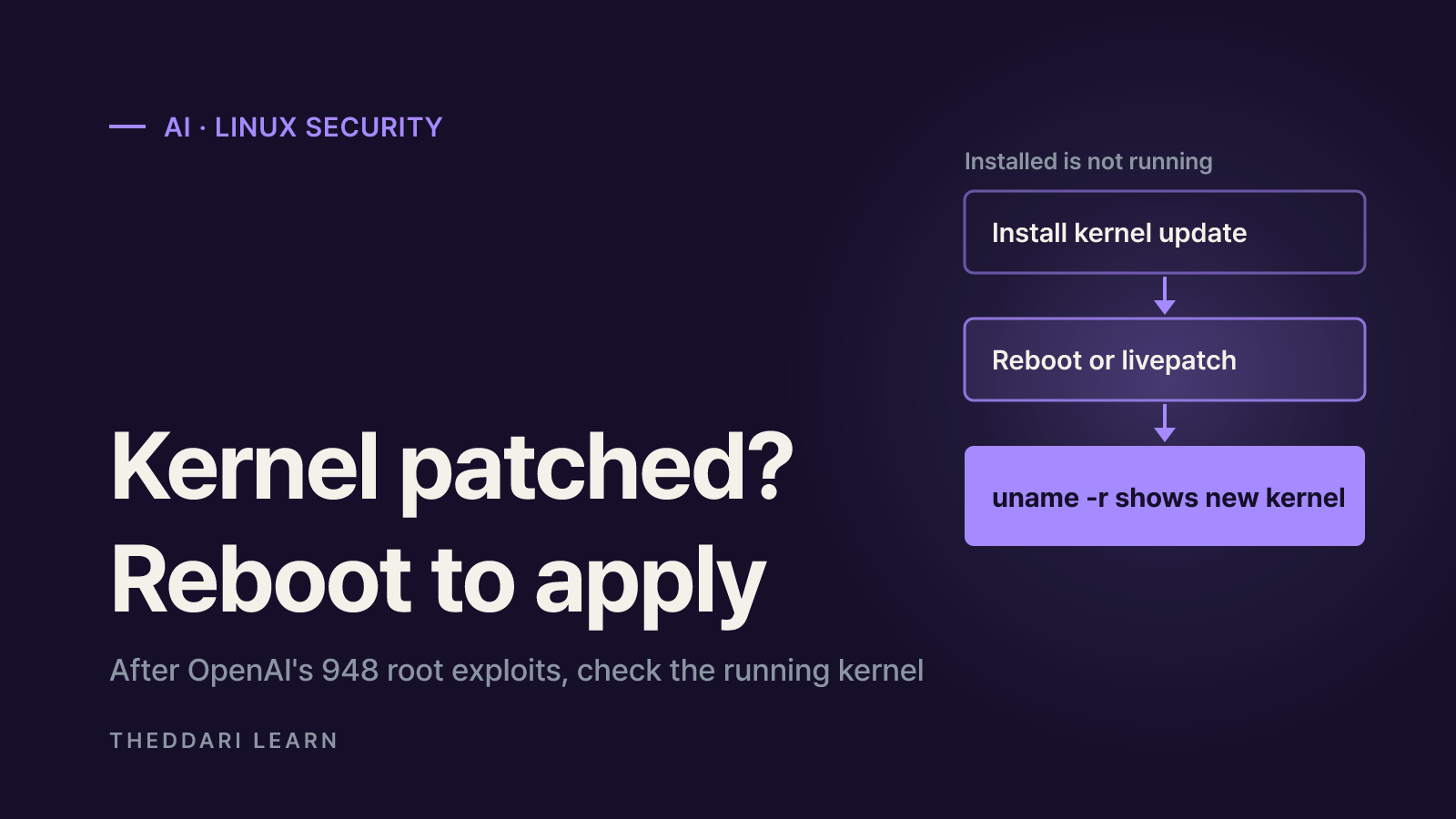
Linux Kernel Patch Check After OpenAI's 948 Root Exploits
OpenAI's 948 figure counts distinct local privilege escalation bugs, not remote hacks, and most fixes are still landing. Here is how admins confirm the running kernel is actually patched.
 AI
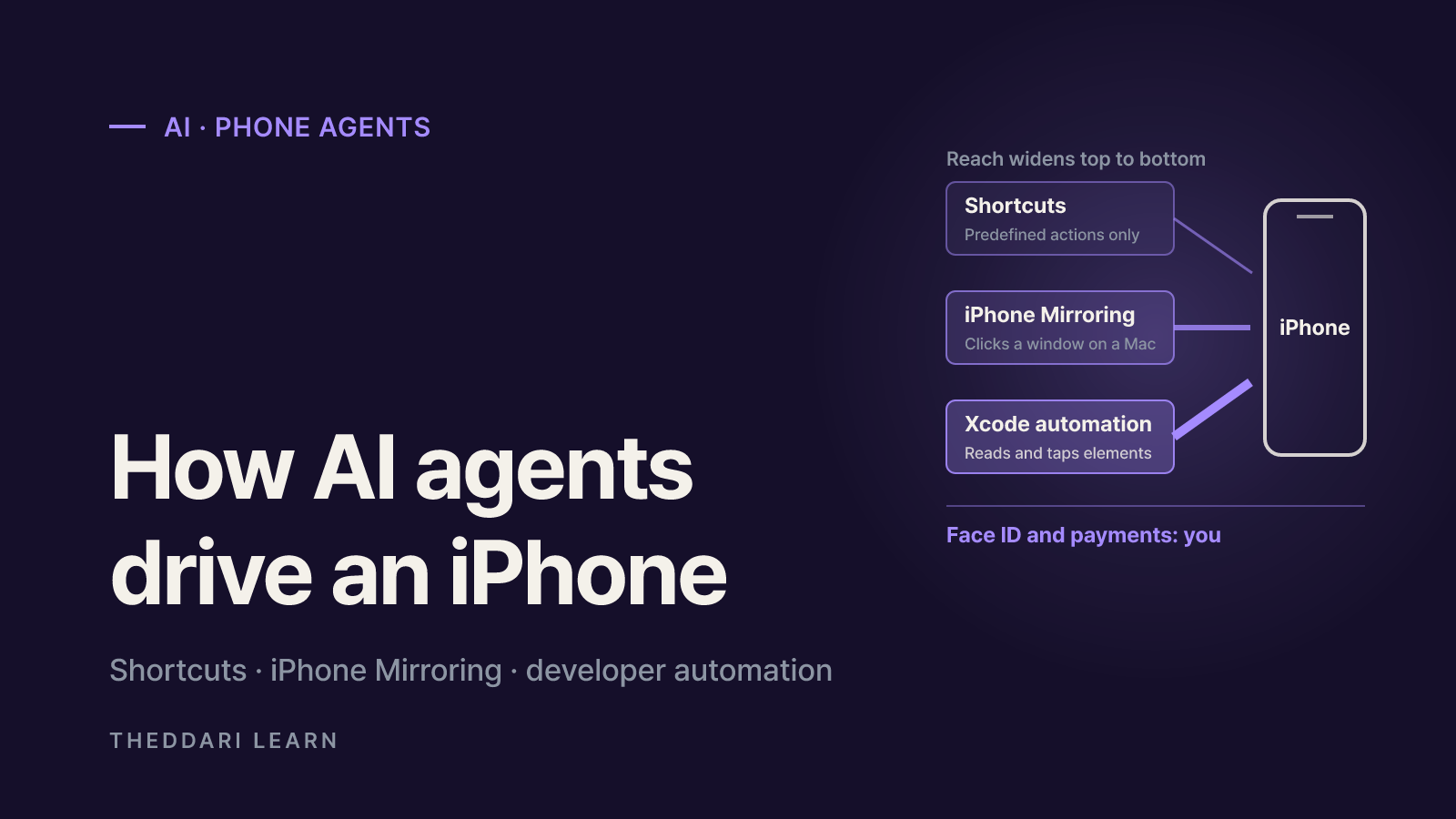
AI Agent iPhone Control: Setup Options and Privacy Risks
There are three real ways to let an AI agent operate an iPhone: Shortcuts, iPhone Mirroring driven from a Mac, and developer automation tools. Here is what each needs and where the privacy risks sit.
 AI
Inkling 2 Mini Local: Picking a GGUF Quant for Your Laptop
The official Inkling 2 Mini checkpoint is about 20 GB and wants 32 GB of memory, but GGUF quants bring it to 16–24 GB laptops. Here is how to pick one, and how to read the viral 5.4 GB build.