Korea Productive Finance ISA: Is the 600M Won Claim Real?
A viral claim says Korean couples get tax-free gains on up to 600M won. See what the proposed Productive Finance ISA really offers and how to verify it.
Contents7 sections
- Where the 600M won productive finance ISA figure comes from
- Productive Finance ISA vs. regular ISA under the final government bill
- From announcement to law: where the bill stands
- How to check a Korean tax law claim yourself
- Risks and exceptions before you sign up
- Frequently asked questions
- Sources and references
Key takeaways
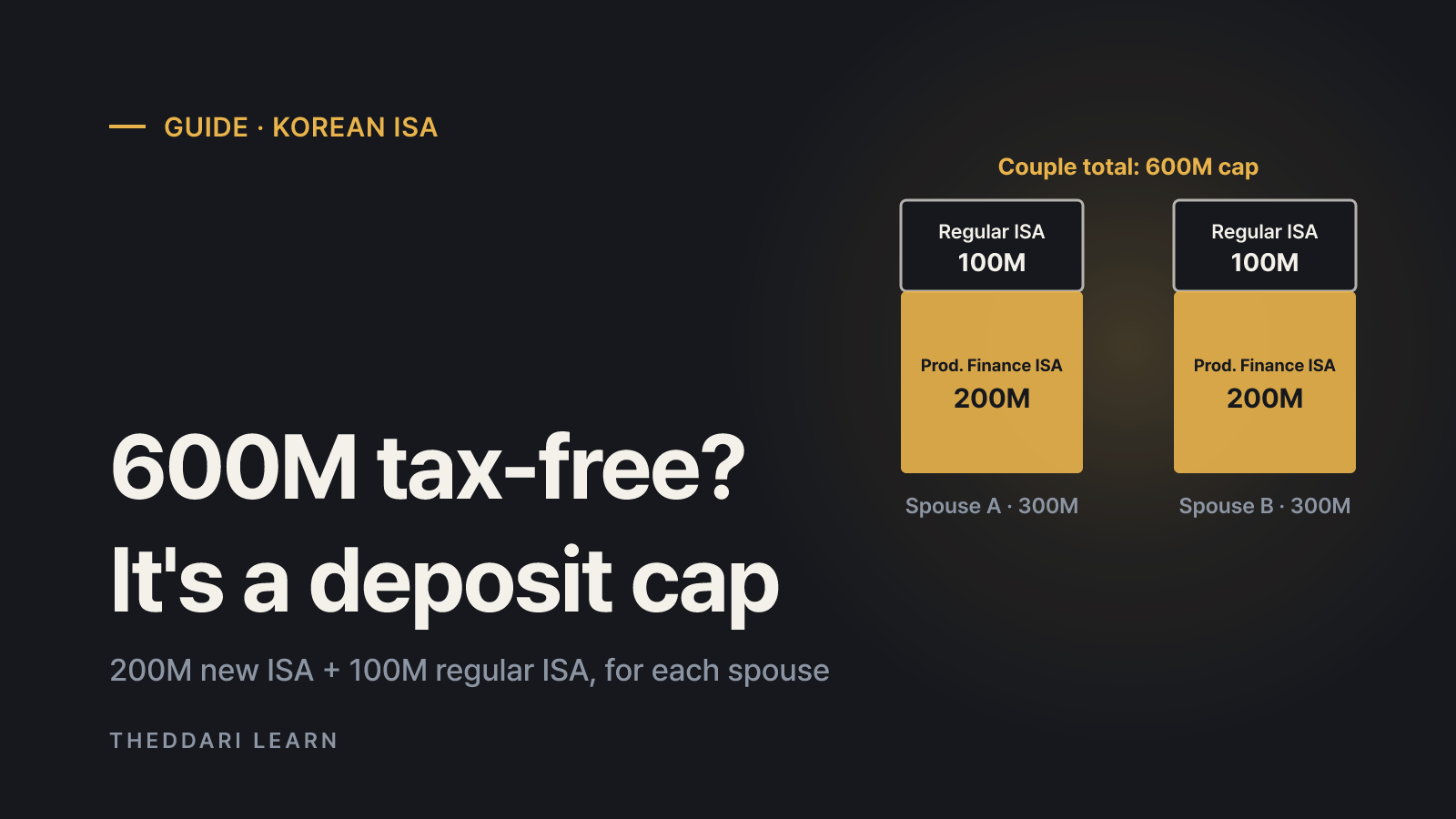
- The 600 million won figure appears to be simple arithmetic: a 200M won cap on the proposed Productive Finance ISA plus the 100M won cap on the existing ISA, multiplied by two spouses.
- It is a contribution ceiling, not a tax-free amount. Only interest and dividends get the break, and the regular ISA still caps tax-free income at 2M won (4M won low-income type).
- Korea's cabinet approved the government bill on September 1, 2026. As of November 1, 2026 it had not passed the National Assembly, so limits and conditions can still change.
- The government targets new accounts opened on or after January 1, 2027, but signing up requires the law, an enforcement decree and actual products from brokers and banks.
- Verify in this order: the Ministry of Economy and Finance press release, the bill's status in the National Assembly, the promulgated statute, then your broker's launch notice.
Short answer: the "600 million won tax-free for couples" account is not an approved Korean program. The claim, spread by a popular Korean YouTube video, appears to describe the productive finance ISA proposed in Korea's 2026 tax revision. The 600M won figure is not a tax-free amount. It is the combined contribution cap of the new account (200M won) and the existing Individual Savings Account (100M won), counted for two spouses. This guide covers Korean tax residents and reflects official material checked as of November 1, 2026.
The cabinet finalized the government bill on September 1, 2026 and sent it to the National Assembly. Until lawmakers pass it and it is promulgated, the contribution caps, eligible assets and eligibility rules can change (Korea Policy Briefing, Sep 1, 2026).
Where the 600M won productive finance ISA figure comes from
Korea's Ministry of Economy and Finance announced the 2026 tax revision on August 3, 2026. One headline item was a new Productive Finance ISA for domestic investments, with an annual contribution limit of 20M won and a lifetime limit of 200M won. The existing regular ISA has a 100M won lifetime limit, and the ministry said people can hold both accounts at the same time (ministry explanation, Aug 5, 2026).
Productive Finance ISA lifetime cap
- Amount
- 200M won
- What it means
- Government bill, under review
Regular ISA lifetime cap
- Amount
- 100M won
- What it means
- Current law
One person, both accounts
- Amount
- 300M won
- What it means
- Maximum you could deposit
Two spouses
- Amount
- 600M won
- What it means
- Two separate individuals added together
So the number is a ceiling on deposits. It does not mean 600M won of gains go untaxed, and Korean law has no joint ISA for married couples. At 20M won per account per year, filling 300M won per person would take many years, and each spouse needs their own money to contribute. Moving one spouse's money into the other's account can also raise gift tax questions.
What is actually tax-free
Under the plan, the Productive Finance ISA exempts interest and dividend income without a cap. The regular ISA exempts net income only up to 2M won (4M won for the low-income type) and taxes the rest at 9.9% separately (Maeil Shinmun, Oct 10, 2026). Because capital gains on Korean listed stocks are generally untaxed for small shareholders anyway, the new account mainly helps investors who collect sizeable Korean dividends.
Productive Finance ISA vs. regular ISA under the final government bill
The table reflects the cabinet-approved version of September 1, 2026. Several conditions changed between the August draft and the final bill, so older videos and articles may quote terms that were already dropped.
Who can join
- Productive Finance ISA (bill)
- Korean residents 19+, workers 15+
- Regular ISA (unchanged)
- Same
Excluded
- Productive Finance ISA (bill)
- Anyone taxed under comprehensive financial income taxation in the prior 3 tax years
- Regular ISA (unchanged)
- Same
Tax break
- Productive Finance ISA (bill)
- Interest and dividend income exempt
- Regular ISA (unchanged)
- Up to 2M won (4M won low-income type); excess taxed at 9.9%
Contribution limit
- Productive Finance ISA (bill)
- 20M won a year, 200M won total
- Regular ISA (unchanged)
- 20M won a year, 100M won total
Unused annual limit
- Productive Finance ISA (bill)
- Can be carried forward (changed in Sep bill)
- Regular ISA (unchanged)
- Can be carried forward
Contract term
- Productive Finance ISA (bill)
- At least 3 years, no maximum (changed in Sep bill)
- Regular ISA (unchanged)
- At least 3 years, no maximum
Eligible assets
- Productive Finance ISA (bill)
- Korean listed stocks, Korean equity funds, National Growth Fund, BDCs
- Regular ISA (unchanged)
- Broad, including deposits and Korea-listed overseas ETFs
Youth extra
- Productive Finance ISA (bill)
- Ages 15-34 earning up to 75M won: 10% income deduction on deposits
- Regular ISA (unchanged)
- None
Start date
- Productive Finance ISA (bill)
- New accounts from Jan 1, 2027, if the law passes
- Regular ISA (unchanged)
- In force
In the final bill, the government dropped its plan to limit regular ISAs to five years, end carry-forward of unused limits and add a sunset date. It also removed the 10-year maximum and the carry-forward ban from the new account, and allowed the youth version to be held alongside the Youth Future Savings product (The Korea Financial Times, Sep 1, 2026).
The August plan also said that withdrawing more than your principal within three years would be treated as closing the account, with the exempt tax clawed back; youth members would also lose the income deduction on withdrawn principal. Check the final statute once it is published.
From announcement to law: where the bill stands
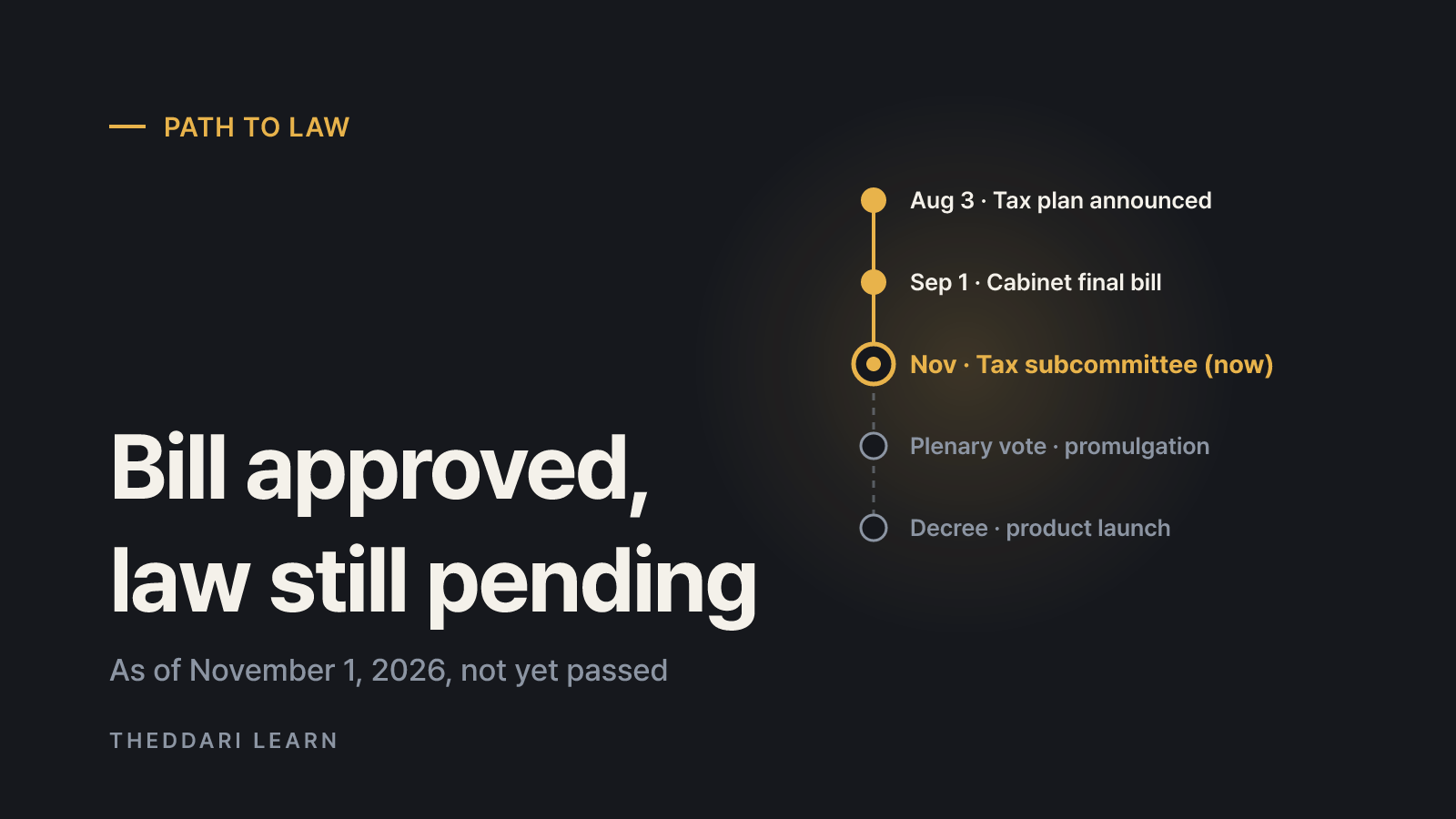
A Korean tax proposal becomes usable only after several steps: government bill, review by the tax subcommittee of the National Assembly's finance committee, the full committee and the Legislation and Judiciary Committee, a plenary vote, promulgation, an enforcement decree, and finally product launches by financial firms.
- 1
Aug 3, 2026: tax revision announced
The ministry unveiled the Productive Finance ISA. The draft capped the contract at 10 years and banned carry-forward.
- 2
Aug 4-20, 2026: public notice and consultations
Investor pushback focused on the carry-forward ban and contract limits.
- 3
Sep 1, 2026: cabinet finalizes the bill
The regular ISA stays as is; the new account gains carry-forward and an open-ended term. The bill was to reach the National Assembly by September 3.
- 4
November 2026: tax subcommittee review
Lawmakers tentatively agreed to open subcommittee review of the government tax package on November 2 (Seoul Economic Daily, Oct 25, 2026). Whether the 200M won cap survives unchanged was still open.
- 5
After passage: decree and product launch
Even after the vote, an enforcement decree, broker systems and account terms must be ready before anyone can open an account.
How to check a Korean tax law claim yourself
- Check the video or post date. Content from early August 2026 may describe draft terms such as the 10-year limit that were later withdrawn.
- Read the ministry release. Search korea.kr for the tax revision and open the attached PDF. Tables split the original plan from the revised plan; read the right column.
- Track the bill. Look up the government's Restriction of Special Taxation Act amendment in the National Assembly bill information system and see whether it is in committee, passed, or promulgated.
- Read the statute after promulgation. The Korean Law Information Center shows the article text, effective date and transition rules; details often sit in the enforcement decree.
- Confirm with your broker or bank. Wait for an official launch notice, required documents and whether you can hold it with an existing ISA at the same firm.
To see how a policy story spreads among Korean investors, the blog trend dashboard tracks keyword momentum and the stock Telegram trends page shows what domestic market channels are discussing. These tools measure buzz, not whether a bill has passed, so use them alongside the official sources above.

Risks and exceptions before you sign up
- Home-market concentration: eligible assets are limited to Korean stocks and domestic equity funds, so the whole account rises and falls with the Korean market.
- Small dividends, small benefit: the exemption applies to interest and dividends. A trading strategy built on capital gains may see little difference from a normal account.
- Exclusion rule: anyone subject to comprehensive financial income taxation in the past three tax years cannot join, so the 600M won math does not apply to them.
- Withdrawal limits: under the plan, early withdrawals beyond principal can trigger a clawback, so do not park money you may need soon.
- Spousal funding: filling a spouse's account from one partner's income may be treated as a gift; get tax advice for large amounts.
- Possible amendments: lawmakers can change the total cap, the youth deduction rate or related surtax treatment. Claims that everyone must open the account immediately run ahead of the facts.
Bottom line: the 600M won figure combines two individual contribution caps for a couple, and as of November 1, 2026 the Productive Finance ISA is still a bill. Check the date of the claim, the ministry's revised table, the bill's status, the final statute and your broker's launch notice, then decide how it fits with an existing ISA or pension account once lawmakers vote.
Frequently asked questions
Is there really a Korean account that is tax-free up to 600 million won for couples?
Would all returns on 600 million won be tax-free?
When could Korean residents open a Productive Finance ISA?
Can foreigners or non-residents use this account?
Can I hold US index ETFs in the new account?
Sources and references
- 1Korea Policy Briefing: 2026 Tax Revision government bill finalized (Sep 1, 2026, Korean)(opens in a new tab)www.korea.kr
- 2Korea Policy Briefing: Ministry explanation on regular ISA changes (Aug 5, 2026, Korean)(opens in a new tab)www.korea.kr
- 3KDI Economic Information and Education Center: 2026 Tax Revision bill summary (Korean)(opens in a new tab)eiec.kdi.re.kr
- 4The Korea Financial Times: ISA contract period and limits kept as is (Sep 1, 2026, Korean)(opens in a new tab)www.fntimes.com
- 5Maeil Shinmun: Productive Finance ISA explained (Oct 10, 2026, Korean)(opens in a new tab)www.imaeil.com
- 6Seoul Economic Daily: Tax subcommittee review schedule (Oct 25, 2026, Korean)(opens in a new tab)www.sedaily.com
Related articles
 Investing
Stock Market Circuit Breakers and Sidecars: US vs Korea
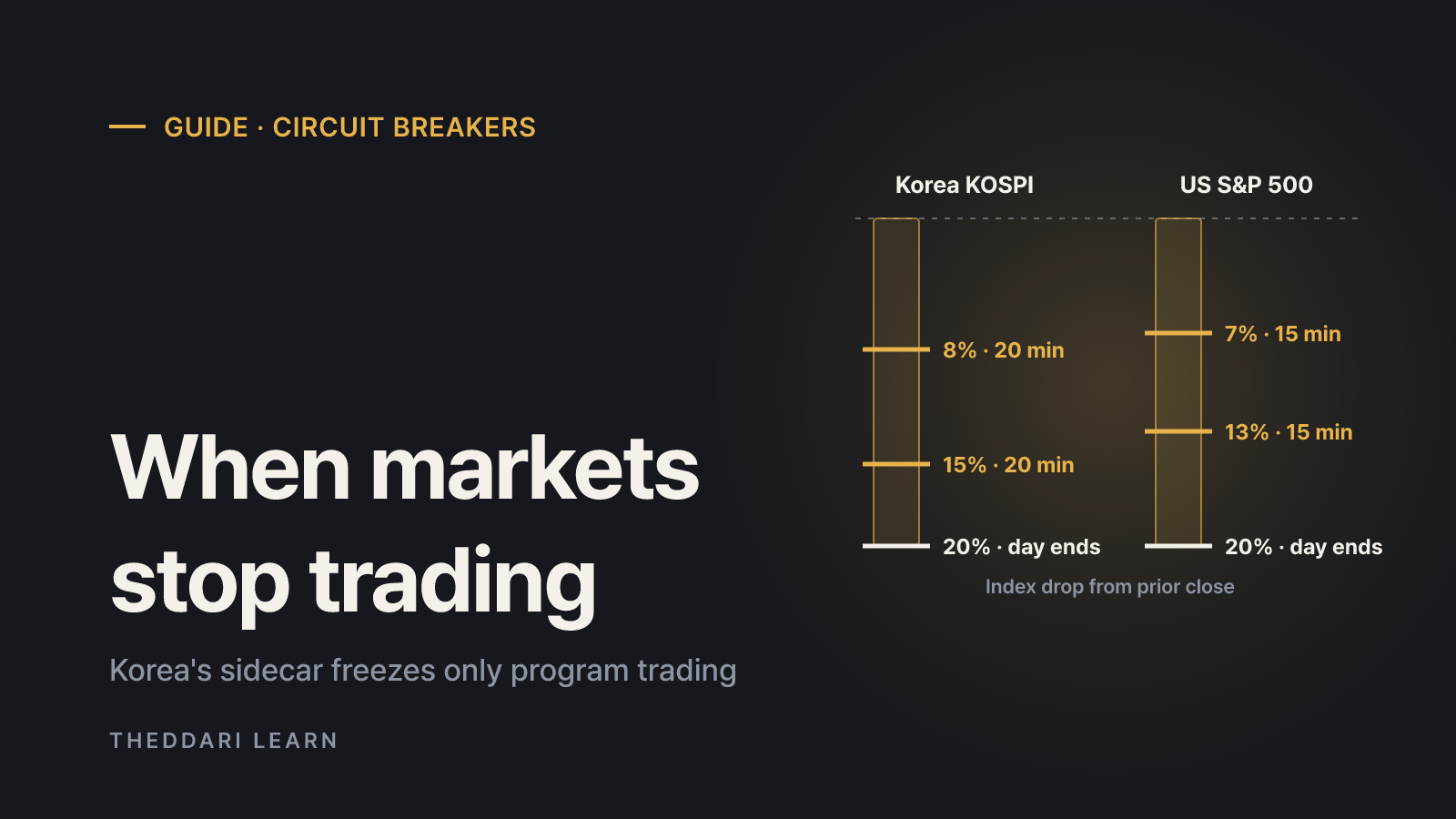
US market-wide circuit breakers halt all trading when the S&P 500 drops 7%, 13% or 20%. Korea uses 8%, 15% and 20% thresholds plus a sidecar that freezes only program trading. Here is how each rule works and what happens to your orders.
 Investing
Pension Withdrawal Order in Korea: How IRP Money Is Taxed
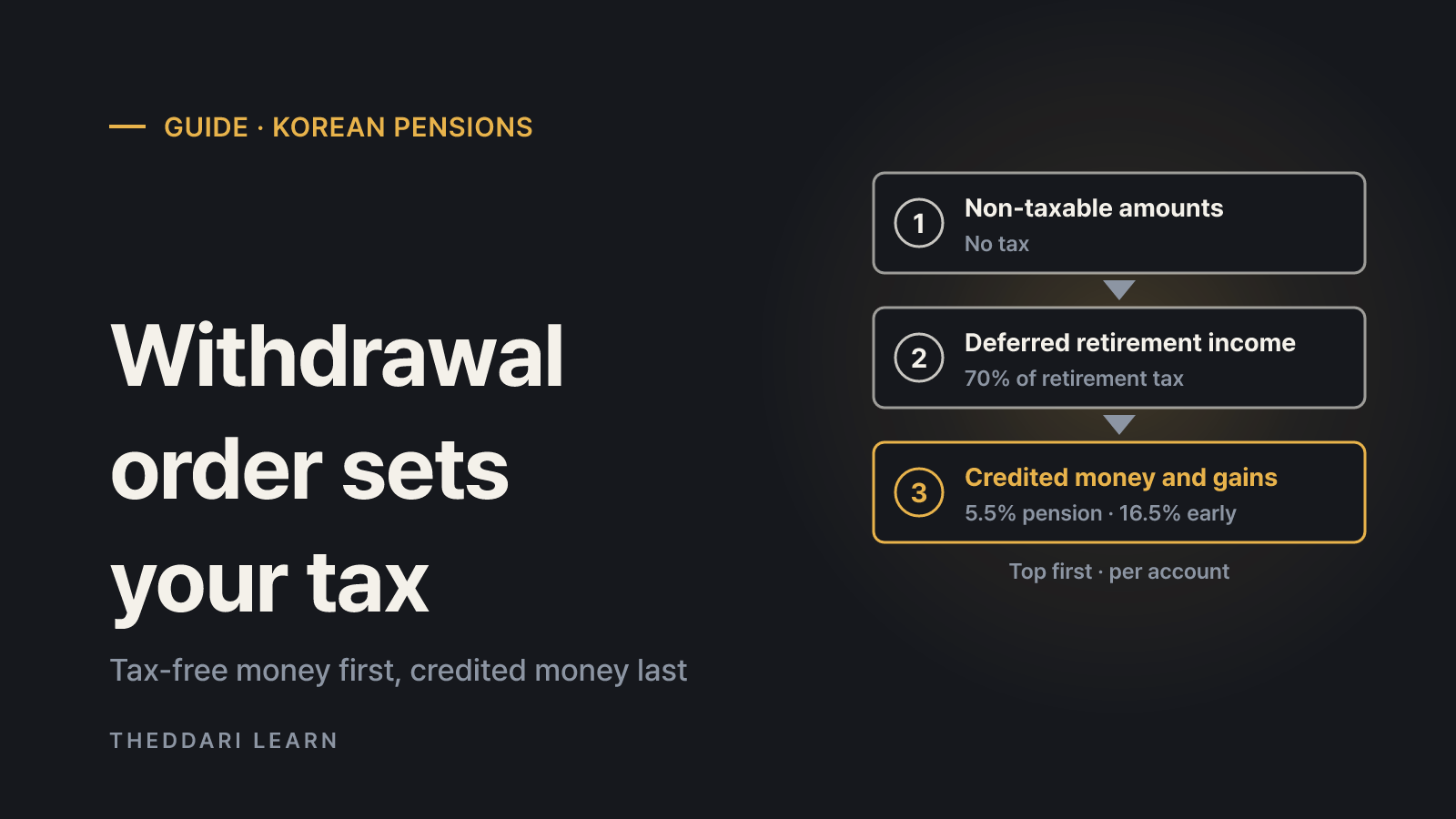
When you take part of the money out of a Korean pension savings account or IRP, the law decides which money left first, and each part is taxed differently. A November 2026 guide to the withdrawal order, rates and exceptions for Korean tax residents.
 Investing
How to Buy ETFs in Singapore: CDP vs Custodian and Fees
A practical guide for Singapore residents: how SGX-listed and US-listed ETFs are held, what the CDP rule changes of July 2026 mean for custodian accounts, and what a trade really costs at different order sizes.