Korean ISA Maturity Pension Transfer: Tax Credit and DCA
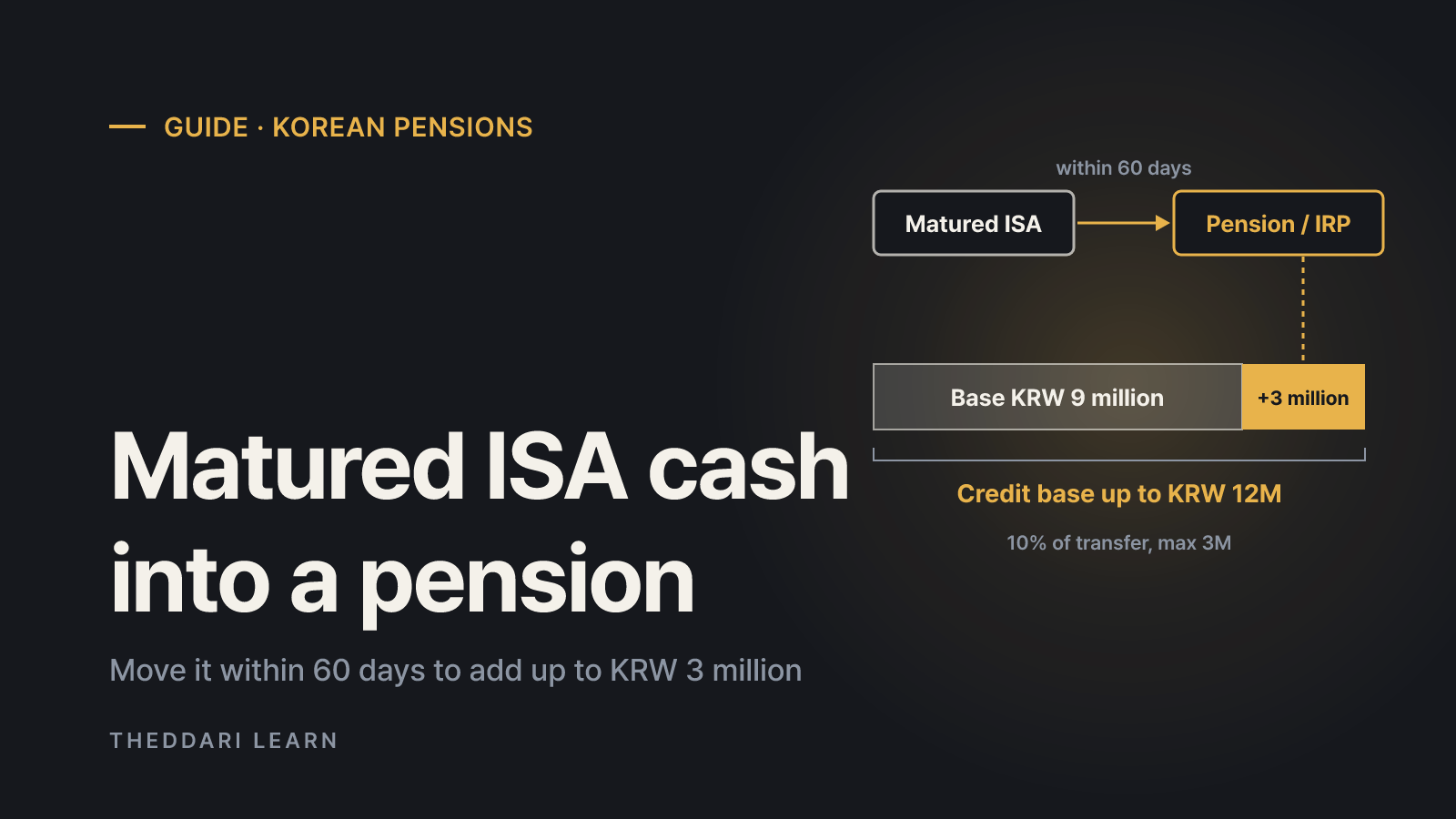
Move matured Korean ISA money into a pension savings account or IRP within 60 days to add up to KRW 3 million to your credit base. Steps and lump sum vs DCA.
Contents6 sections
Key takeaways
- Move matured Korean ISA money into a pension account within 60 days and 10% of the transfer (capped at KRW 3 million) is added to your credit base on top of the normal limits.
- A KRW 30 million transfer uses the full extra limit; at a 16.5% credit rate that is up to KRW 495,000 of tax, or KRW 396,000 at 13.2%, but only up to the income tax you actually owe.
- Tell your provider in advance that the deposit is an ISA maturity transfer; a plain bank transfer may not be recorded correctly.
- How you invest the cash afterwards is a separate decision. Historical data favors lump-sum investing about two-thirds of the time, while short staged buying limits regret if markets fall right away.
When a Korean ISA maturity date arrives, you can move some or all of the balance into a Korean pension savings account or an individual retirement pension (IRP) within 60 days and widen that year's pension tax-credit base by 10% of the amount moved, up to KRW 3 million. This guide applies to Korean tax residents with a standard Korean ISA (Individual Savings Account), as of November 2026. It is not about US IRAs or other countries' ISAs. It covers how the extra credit is calculated, the transfer steps, and how to think about investing the cash once it lands. Korean tax rules are revised most years, so confirm the details with the National Tax Service and your provider before you move money.
How the Korean ISA maturity transfer credit works
Korea gives a tax credit on contributions to pension accounts. The standard credit base is KRW 6 million a year for a pension savings account and KRW 9 million a year combined with retirement accounts such as an IRP. Money moved from a matured ISA within 60 days adds an extra amount equal to the smaller of 10% of the transfer or KRW 3 million. Someone who already fills the KRW 9 million base can therefore claim on up to KRW 12 million in the transfer year. KB Securities cites Article 59-3(3) and (4) of the Income Tax Act as the legal basis.
The credit rate is 16.5% if your total salary is KRW 55 million or less (or other comprehensive income of KRW 45 million or less) and 13.2% above that. Both rates include local income tax. The credit reduces the income tax you owe, so if your final tax bill is small you may not receive the full amount shown below. The table assumes you already fill the standard base and only the extra limit is new.
KRW 10 million
- Extra credit base
- KRW 1 million
- Credit at 16.5%
- KRW 165,000
- Credit at 13.2%
- KRW 132,000
KRW 20 million
- Extra credit base
- KRW 2 million
- Credit at 16.5%
- KRW 330,000
- Credit at 13.2%
- KRW 264,000
KRW 30 million
- Extra credit base
- KRW 3 million
- Credit at 16.5%
- KRW 495,000
- Credit at 13.2%
- KRW 396,000
KRW 50 million
- Extra credit base
- KRW 3 million (cap)
- Credit at 16.5%
- KRW 495,000
- Credit at 13.2%
- KRW 396,000
Two details are easy to miss. First, the transferred amount sits outside the normal KRW 18 million annual contribution cap; the National Tax Service adds the ISA transfer, limited to the ISA balance on its expiry date, on top of that cap. Second, the transfer counts as a contribution for the year it is paid, so if you made few other contributions, part of it can also fill the standard base. If a transfer straddles two tax years, the extra limit is still KRW 3 million in total across both years.
Step-by-step: moving the money inside 60 days
The clock starts on the ISA contract expiry date. An ISA closed early does not qualify. Providers handle the paperwork differently, so use the steps below as a checklist and follow your own provider's instructions.
- 1
Mark the expiry date and day 60
Check the contract end date in your ISA app and write down the 60th day. Aim to finish two or three weeks earlier to allow for holidays and settlement.
- 2
Sell holdings and wait for settlement
In a brokerage-type ISA you usually need cash before closing. Korean stocks and ETFs take a few business days to settle, and funds can take longer to redeem.
- 3
Open the receiving pension account
If you do not yet have a pension savings account or IRP in your own name, open one before the ISA matures and compare fees, eligible products and withdrawal rules.
- 4
Register the deposit as an ISA maturity transfer
Korea Investment & Securities says customers must tell it before depositing that the money is an ISA pension transfer. Use the provider's transfer menu or call center rather than sending an ordinary bank transfer.
- 5
Confirm it was recorded
After the deposit, check that it appears as a transfer amount, and look for it again on next year's year-end tax settlement data or pension contribution certificate.
You do not have to move everything. Korea Investment & Securities lists the eligible amount as up to the ISA maturity proceeds, with partial transfers allowed. Moving KRW 30 million already captures the full extra limit, so anything beyond that should go in only if you are comfortable locking it up until pension age.
Lump sum vs DCA once the cash arrives
After the transfer you may have tens of millions of won sitting as cash in the pension account. Whether to invest it immediately or through dollar-cost averaging (DCA, buying in fixed installments) is separate from the tax credit, which is fixed by the year of deposit. The more useful question is whether you would stick to the plan if prices fell right after you bought.
Vanguard's summary of its 2023 research compared lump-sum investing with a three-month staged approach over rolling one-year periods from 1976 to 2022 across the US, UK, Canada, Europe, Australia, emerging markets and global indices. The lump sum came out ahead between 61.6% and 73.7% of the time. For an all-equity portfolio the median result was 2.2% higher, and the longer the staging period, the wider the gap, because cash on the sidelines misses market returns. In the worst 5% of outcomes, however, staged investing beat the lump sum by 3.6% for an all-equity portfolio.
Those figures use overseas indices and currencies and do not reflect Korean pension account fees, the won exchange rate or the products available to you, and past hit rates do not guarantee future ones. A fair reading is that investing at once usually won historically, while staging hurt less when a downturn started immediately.
- Lean toward a lump sum if pension age is more than ten years away, the money is a modest share of your total wealth, and you could leave a 20% drop alone.
- Lean toward staging if this is a large share of everything you own, or if a quick loss would make you abandon the plan.
- Keep any staging period short, such as three to six months, and fix the dates and amounts in advance, for example six monthly purchases of KRW 5 million.
- A hybrid also works: invest half at your target allocation now and spread the rest over three months.
- Do not leave waiting cash idle; ask your provider which money-market or short-term bond products the account can hold, since leveraged and inverse ETFs are excluded from pension savings fund accounts.
If you stage purchases, it helps to know when major economic releases are scheduled so a volatile day does not surprise you. A calendar tells you when data is due, not which way prices will move, so treat it as context rather than a timing signal. Market chatter on stock-focused Telegram channels can show sentiment, but it should not override a schedule you set in advance.

Risks and exceptions to check first
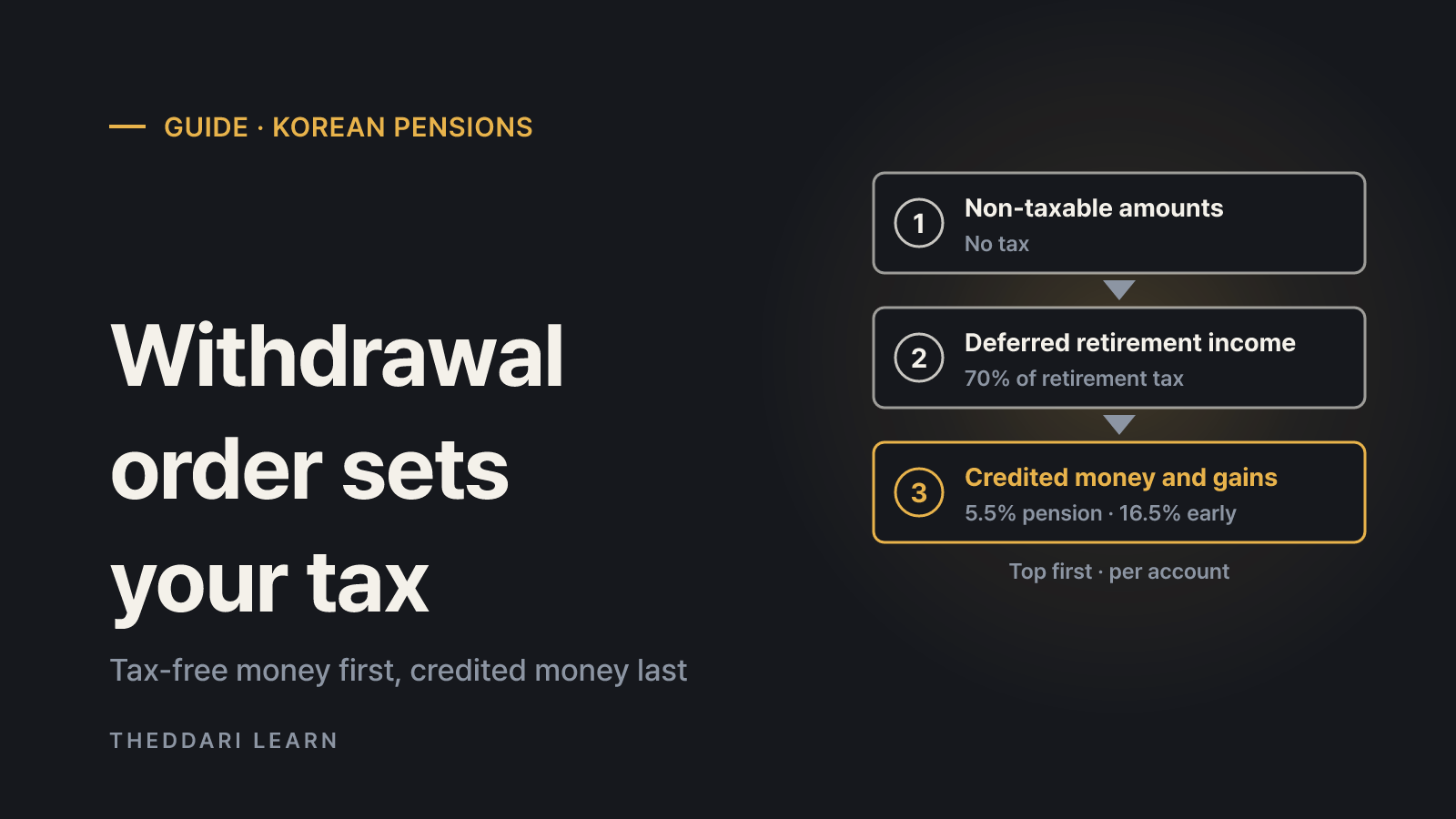
Pension money is long-term money. Korea Investment & Securities summarizes the payout conditions as five years of membership and age 55, whichever comes later, with pension income tax of 5.5% to 3.3% on qualifying payouts and 16.5% other-income tax on early termination. Under the National Tax Service withdrawal order, contributions that never earned a credit come out first tax-free, while credited amounts and gains are taxed if taken outside pension payments. If you may need the money for a home or business within a few years, transfer less.
Account switching also has rules. The National Tax Service treats transfers between a pension savings account and a retirement pension account as withdrawals unless you are 55 or older and have held the account for five years. Moving the same account type between providers is allowed, but choose between pension savings and an IRP before you transfer. Later, private pension income above KRW 15 million a year means choosing between comprehensive taxation and 16.5% separate taxation, so the decision carries into retirement as well.
In short: confirm the ISA expiry date and the 60-day deadline, sell early enough to settle, choose the receiving account, and register the deposit as an ISA maturity transfer. KRW 30 million is enough to use the full extra limit. Then decide between investing at once or over three to six months based on your time horizon and tolerance for an early loss, write the plan down, and stick to it.
Frequently asked questions
What happens if I miss the 60-day window after my ISA matures?
Does a large ISA transfer count against the KRW 18 million annual contribution cap?
Should the money go into a pension savings account or an IRP?
Is it better to invest the transferred money all at once or spread it out?
Will I pay tax if I take the money out early?
Sources and references
- 1National Tax Service (Korea): Pension income, contribution limits, withdrawal order and transfers(opens in a new tab)www.nts.go.kr
- 2Korea Investment & Securities: Personal pension system and matured ISA transfers(opens in a new tab)securities.koreainvestment.com
- 3KB Securities: ISA maturity 60-day pension transfer and extra tax credit (Oct 15, 2026)(opens in a new tab)blog.kbsec.com
- 4Vanguard: The truth about cost averaging(opens in a new tab)www.vanguard.co.uk
Related articles
 Investing
Stock Market Circuit Breakers and Sidecars: US vs Korea
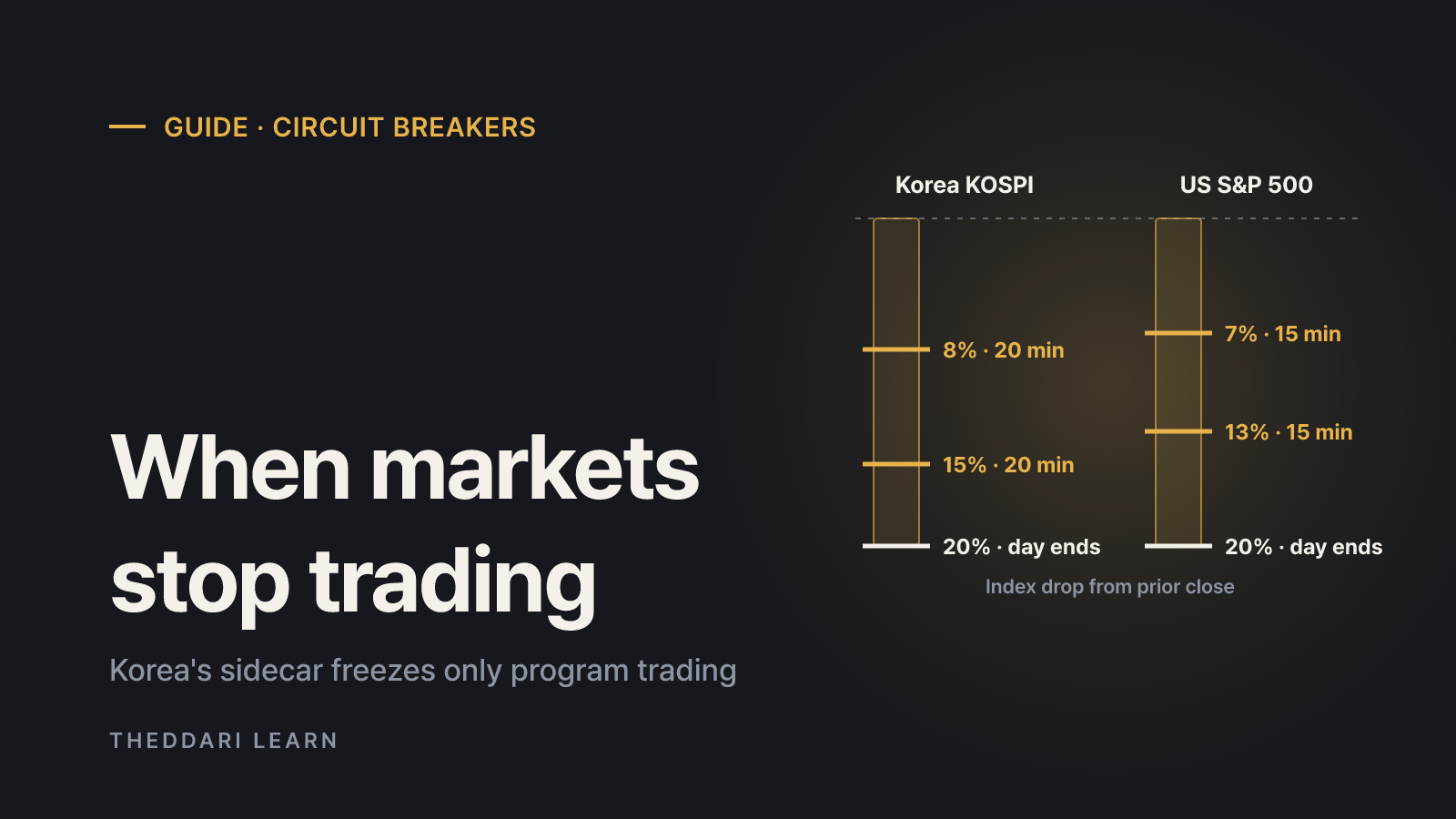
US market-wide circuit breakers halt all trading when the S&P 500 drops 7%, 13% or 20%. Korea uses 8%, 15% and 20% thresholds plus a sidecar that freezes only program trading. Here is how each rule works and what happens to your orders.
 Investing
Pension Withdrawal Order in Korea: How IRP Money Is Taxed
When you take part of the money out of a Korean pension savings account or IRP, the law decides which money left first, and each part is taxed differently. A November 2026 guide to the withdrawal order, rates and exceptions for Korean tax residents.
 Investing
How to Buy ETFs in Singapore: CDP vs Custodian and Fees
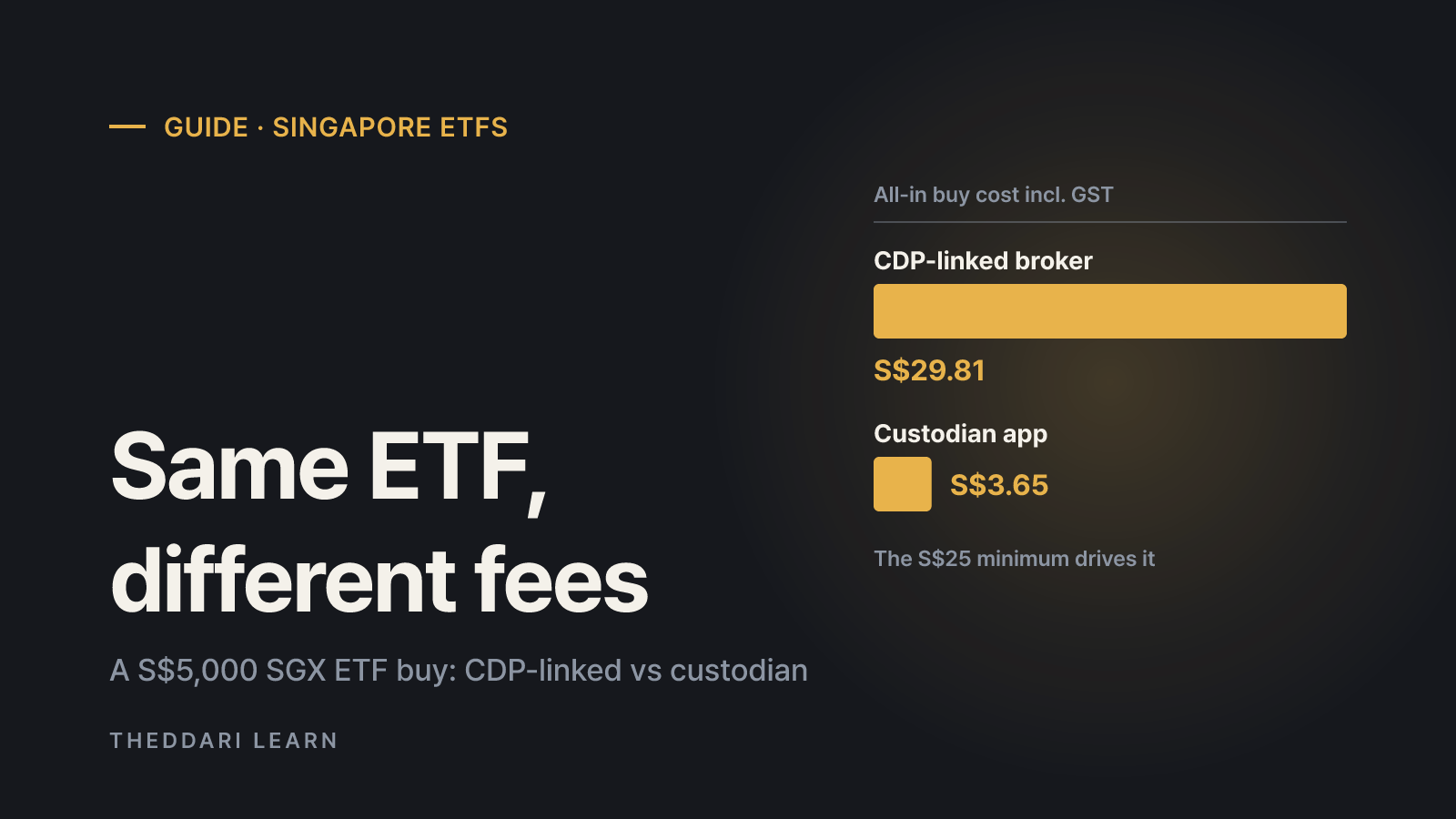
A practical guide for Singapore residents: how SGX-listed and US-listed ETFs are held, what the CDP rule changes of July 2026 mean for custodian accounts, and what a trade really costs at different order sizes.