What Is Canton Network (CC)? Token, Structure and Risks
Canton Network explained: how the Global Synchronizer works, what Canton Coin (CC) is used for, how burn-and-mint supply works, and the risks to check first.
Contents7 sections
Key takeaways
- Canton Network is a network of networks for regulated finance: each node keeps only the data it needs, and the shared Global Synchronizer lets separate institutions settle atomically.
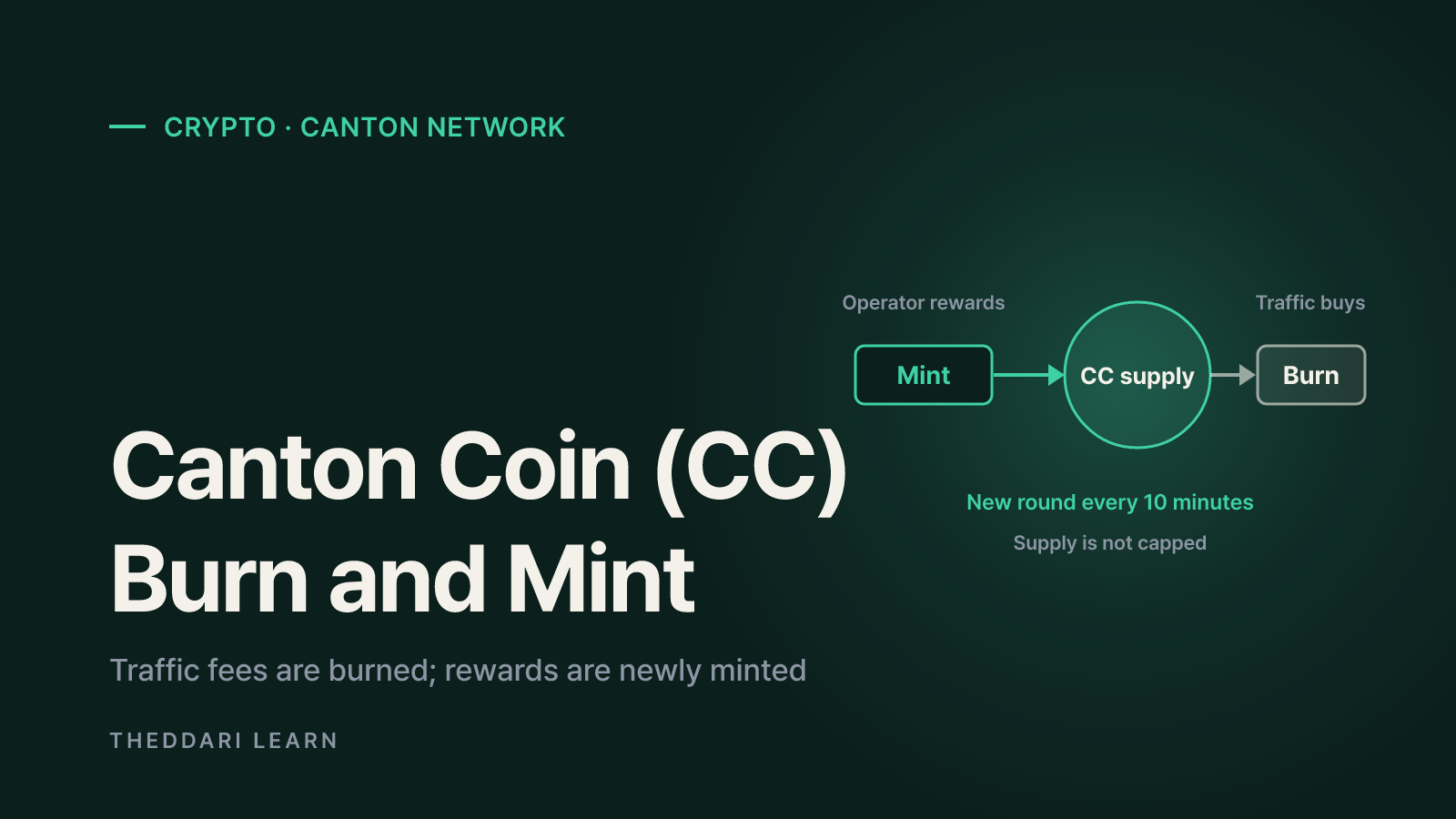
- Canton Coin (CC) is burned to buy synchronizer traffic priced in USD and minted as rewards by operators and featured apps, so supply follows usage instead of a cap.
- As of November 25, 2026, CoinGecko showed CC near $0.0754 with a market cap of about $3.03 billion (rank 25), no max supply, and a price about 61% below its February 2026 high.
- Institutional adoption headlines do not automatically mean CC demand: only paid Global Synchronizer traffic burns CC, and governance votes keep changing the reward rules.
Canton Network is a privacy-focused blockchain designed for banks, asset managers and other regulated institutions, and Canton Coin (CC) is the utility token that pays for and rewards use of its shared infrastructure, the Global Synchronizer. Users burn CC to buy transaction traffic; infrastructure operators and featured app providers mint new CC in return for their contributions. This guide uses the official Canton docs and CoinGecko data, both checked on November 25, 2026.
CC sat at number one on CoinGecko's trending list that day. Trending only reflects search and page-view interest, and we could not confirm a specific official catalyst behind it, so this guide sticks to what can be verified: the architecture, the token mechanics, the numbers and the risks.
How Canton Network is built
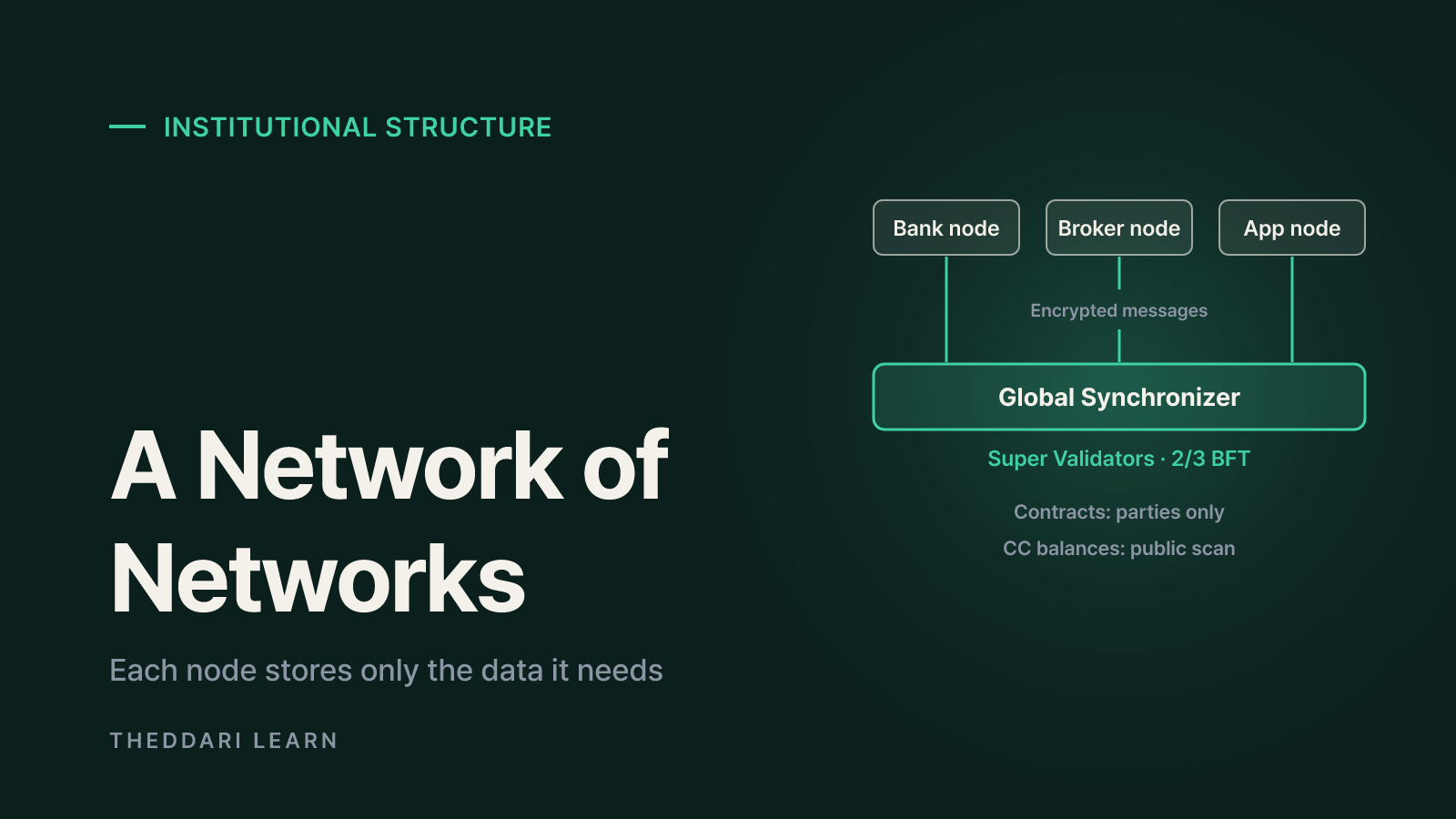
Most public chains have every node see and store every transaction. Canton calls itself a network of networks instead. According to the Global Synchronizer docs, each node stores only the data it needs and exchanges encrypted messages with other nodes through synchronizers. The pitch to institutions is that two firms can settle a trade atomically, meaning every leg succeeds or none does, without exposing the details to the rest of the network.
The main pieces
- Validators validate transactions, record activity and connect users and apps. A validator can join one or more synchronizers, and those can be centralized or decentralized services.
- The Global Synchronizer is the shared, publicly governed interoperability layer. It orders and confirms messages with a 2/3 majority Byzantine Fault Tolerant (BFT) protocol and uses BFT majority votes for governance changes.
- Super Validators are independent organizations that run the synchronizer's core infrastructure, sequence transactions, validate CC transfers and vote on governance.
- The Canton Foundation, created with the Linux Foundation, coordinates governance and runs a Super Validator node. The open-source code lives in the Splice repository.
One nuance matters for token holders: ordinary Canton contracts are private by default, but CC balances and transfers are public via the scan service.
Canton Coin tokenomics: burn, mint, repeat
The docs give CC three jobs: paying for network usage, rewarding operators and app builders, and governance through Super Validator participation. The design choice that sets it apart is that fees are not paid to operators. They are burned, and operators earn separately by minting.
- 1
Buying traffic burns CC
Validators buy non-transferable traffic credits priced in USD per MB, paying by burning CC at the current conversion rate. Each validator also gets a free, regenerating base allowance that is used first.
- 2
Activity records are created
Burns, transactions by featured apps and Super Validator infrastructure work each create weighted activity records.
- 3
Minting happens in rounds
A round starts every 10 minutes by default, roughly 52,560 rounds a year. Each round's issuance is split in proportion to activity weight, after a default 5% is set aside for the development fund under CIP-0082.
- 4
Supply adjusts
When burning outpaces minting, circulating supply shrinks; when usage is light, supply grows. The project says this pushes the system toward equilibrium over time.
Rule changes in 2026
- CIP-0078 removed almost all transfer and lock fees. Traffic fees and a small per-UTXO holding fee remain.
- CIP-0096 cut validator liveness rewards, which paid for uptime alone, to $0 effective April 30, 2026. Validators now earn only burn-linked activity rewards.
- CIP-0104 moves featured-app rewards to a model based on actual traffic burned, enabled network by network through Super Validator votes.
The CC-to-USD rate used for fees is not a live exchange quote. Per the tokenomics docs, each Super Validator publishes a rate and the median is recorded for every mining round.
CC market data as of November 2026
Figures below are rounded from CoinGecko's update at 08:12 UTC on November 25, 2026. Prices move constantly, so recheck before acting.
Price
- Value
- about $0.0754
- What it tells you
- down about 1.4% over 24 hours
Market cap
- Value
- about $3.03 billion (rank 25)
- What it tells you
- circulating supply times price
Circulating and total supply
- Value
- about 40.11 billion CC
- What it tells you
- no max supply set
24-hour volume
- Value
- about $9.79 million
- What it tells you
- roughly 0.32% of market cap
All-time high
- Value
- $0.1942 on Feb 3, 2026
- What it tells you
- price now about 61% lower
All-time low
- Value
- $0.0590 on Dec 6, 2025
- What it tells you
- price now about 28% higher
Reported volume is thin relative to market cap. CoinGecko does not capture every venue, but thin books mean large orders can move the price sharply and exits can be harder than the market cap implies. Quotes can also differ across exchanges and regions, which is worth checking before you trade.

Risks to weigh before buying Canton Coin
- Adoption is not the same as token demand. The Canton website cites over $6 trillion in tokenized real-world assets, over $300 billion in daily US Treasury repo and more than 700 connected firms. Those are project-supplied figures, and CC is burned only when paid Global Synchronizer traffic is bought. Activity on private synchronizers or within free allowances may never touch CC.
- Uncapped supply. Minting continues every round. The project highlights no pre-mine and no venture allocation, which limits unlock overhang, but issuance still dilutes holders whenever burns fall short.
- Governance concentration. Issuance splits, fees, reward caps and even round length can change by Super Validator vote, and 2026 already brought major changes.
- Volatility and liquidity. A drawdown of about 61% from the high plus thin reported volume makes leverage and large positions especially risky.
- Look-alike tokens. Tokens using the Canton name may exist on other chains. Confirm the ticker, the supported network and the official wallet, exchange and custodian list before depositing.
A practical checklist
- Confirm the CC listing and official links on CoinGecko and note when the data was last updated.
- Read the current fee and reward rules in the official tokenomics docs.
- Scan the Canton Foundation CIP repository for proposals that change issuance or rewards.
- Check your exchange's notices for listing status, supported network and any risk warnings.
- Treat institutional headlines separately from evidence of rising Global Synchronizer traffic and burns.
- If social chatter spikes, look for the official announcement behind it first.
Bottom line: Canton Network is engineered around what regulated finance asks for, privacy plus atomic settlement, and CC is designed to track usage of its shared layer. The path from usage to burns is narrow, supply is not fixed and the rules keep evolving, so burn data, governance changes and real liquidity are better guides than trending ranks or partner logos.
Frequently asked questions
Is Canton Coin a good investment?
Does Canton Coin have a maximum supply?
Who runs the Canton Network?
Are Canton Coin transactions private?
Sources and references
- 1Canton Coin Tokenomics — Canton Network Docs(opens in a new tab)docs.canton.network
- 2Tokenomics of the Global Synchronizer — Canton Network Docs(opens in a new tab)docs.canton.network
- 3Global Synchronizer for the Canton Network — Canton Network Docs(opens in a new tab)docs.canton.network
- 4Canton Coin and the Global Synchronizer — Canton Network Docs(opens in a new tab)docs.canton.network
- 5Why Canton — Canton Network(opens in a new tab)www.canton.network
- 6Canton (CC) Price and Market Cap — CoinGecko(opens in a new tab)www.coingecko.com
Related articles
 Crypto
Hyperliquid vs Lighter vs Variational: Perp DEX Comparison
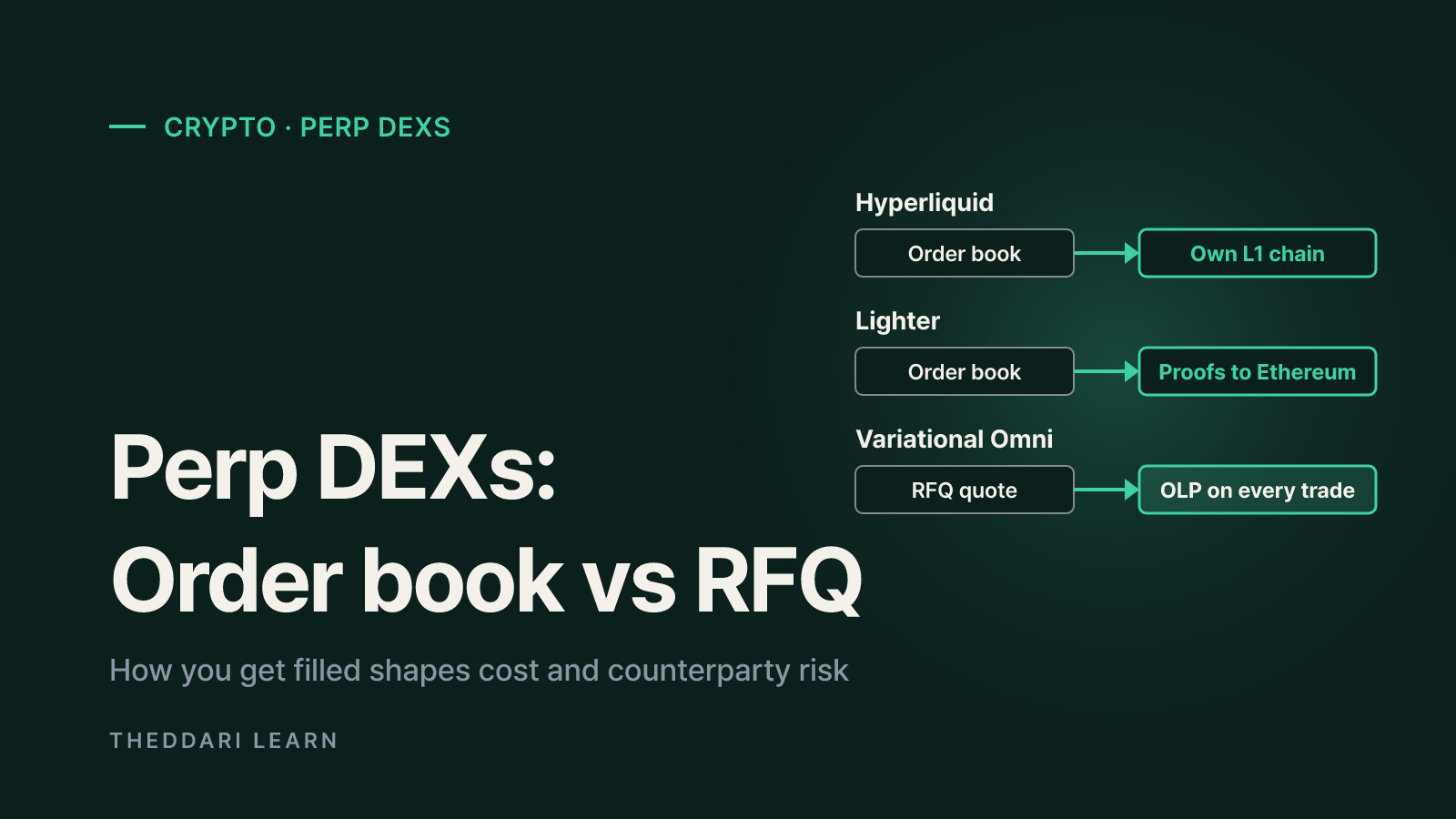
Hyperliquid runs an order book on its own L1, Lighter proves its order book matching to Ethereum, and Variational Omni quotes every trade from a single liquidity provider. Here is how fees, funding, liquidations and counterparty risk differ.
 Crypto
Derive Crypto Explained: DRV Token, Options Exchange, Risks
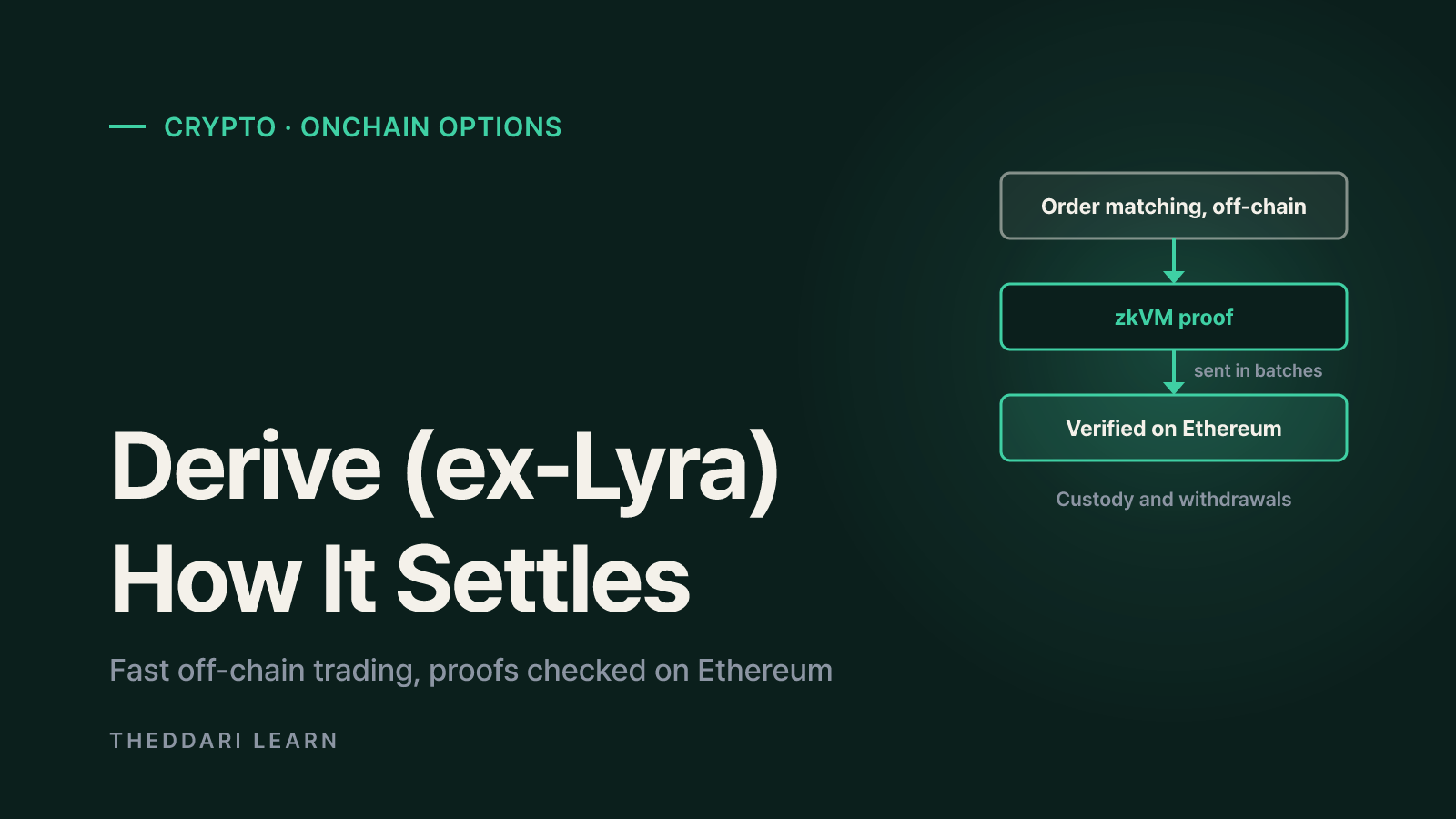
Derive, the exchange formerly known as Lyra Finance, matches orders off-chain and verifies margin and settlement on Ethereum. Here is how its options and perps work, what DRV does, and where the risks sit.
 Crypto
What Is Pepe Intelligence (PEI)? Checks Before You Buy
Pepe Intelligence hit the top of CoinGecko's trending list, but it is a separate day-old Ethereum token, not the original PEPE. Here is what on-chain data showed as of November 24, 2026.