What Is Pepe Intelligence (PEI)? Checks Before You Buy
Pepe Intelligence (PEI) is a new Ethereum memecoin, not the original PEPE. Verify the contract, the $314.8K liquidity pool and holder spread before you buy.
Contents7 sections
Key takeaways
- Pepe Intelligence (PEI) is an Ethereum ERC-20 memecoin with no verified link to the original PEPE launched in April 2023.
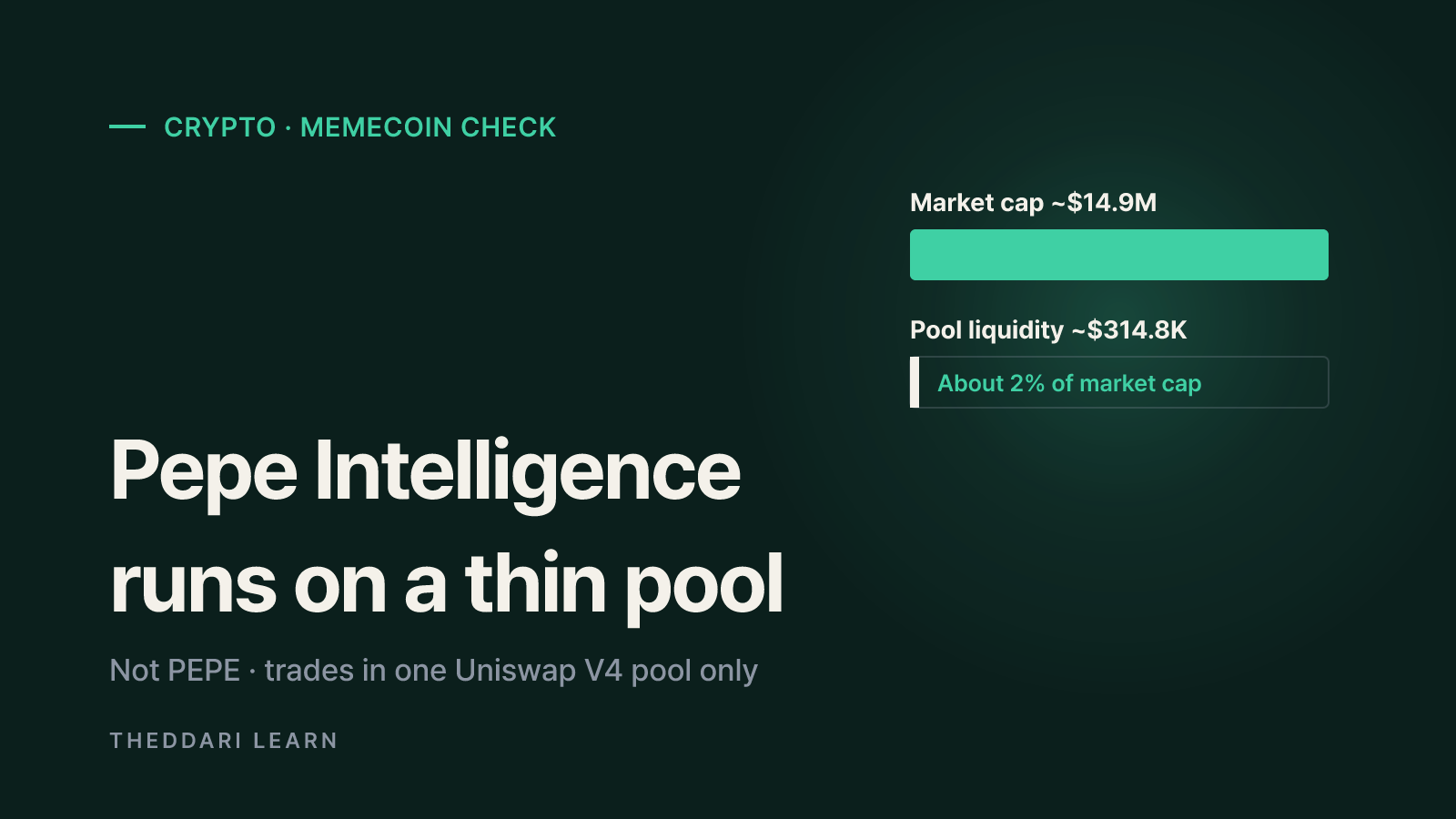
- As of November 24, 2026, CoinGecko listed PEI at about $14.9M market cap with a single market: a Uniswap V4 PEI/ETH pool.
- Pool liquidity was about $314.8K, roughly 2% of market cap, so large sells can move the price sharply.
- The contract is a verified, plain ERC-20 with no audit on file; whether the liquidity is locked could not be confirmed.
- A trending rank measures attention on CoinGecko, not safety, exchange listings or future price.
Pepe Intelligence (ticker PEI) is a brand-new Ethereum memecoin that reached the top of CoinGecko's trending list on November 23, 2026. Despite the name, it is not the original Pepe (PEPE) token launched in April 2023: the contract address, supply and trading venues are all different. As of November 24, 2026, CoinGecko showed PEI at roughly $0.0149 with a market cap of about $14.9M, and its only market was a single Uniswap V4 pool. GeckoTerminal put that pool's liquidity at about $314.8K. This guide explains what PEI is, how to tell it apart from PEPE and other look-alikes, and which on-chain checks to run before buying. Every figure here is a snapshot and can change within hours.
What is Pepe Intelligence, and who is behind it?
The project's official website describes PEI as a community-first meme token concept built around a frog in sunglasses. It openly says there are no price promises and no pretend utility, and its footer labels the project as entertainment only, warning that meme tokens are highly volatile. The token section lists supply and taxes as "to be announced," and the roadmap has three loose stages: gather a community, publish verified details, and spread more memes. No team members are named. In short, PEI has no product or revenue model; its price depends on attention and sentiment.
The word "Intelligence" hints at artificial intelligence, but neither the website nor the contract shows any AI feature. This research also found no official link to the original PEPE team or community. The only official channel the site points to is the X account @pei_erc20, so treat Telegram groups, airdrop offers or "support" accounts claiming to represent PEI with suspicion until they are confirmed from that source.
Key on-chain facts
- Network: Ethereum (ERC-20), 18 decimals
- Contract: 0x9579Dde255F9A982D2598FF87fdcf2887ea8a273, matching on CoinGecko, the website and Etherscan
- Supply: fixed at 1 billion PEI; CoinGecko shows circulating, total and max supply as equal
- Code: source verified on Etherscan under the name LaunchToken, with only standard ERC-20 functions and no visible mint, fee or owner controls
- Audit: none submitted
- Holders: about 1,503 addresses
Pepe Intelligence vs PEPE: how the two tokens differ
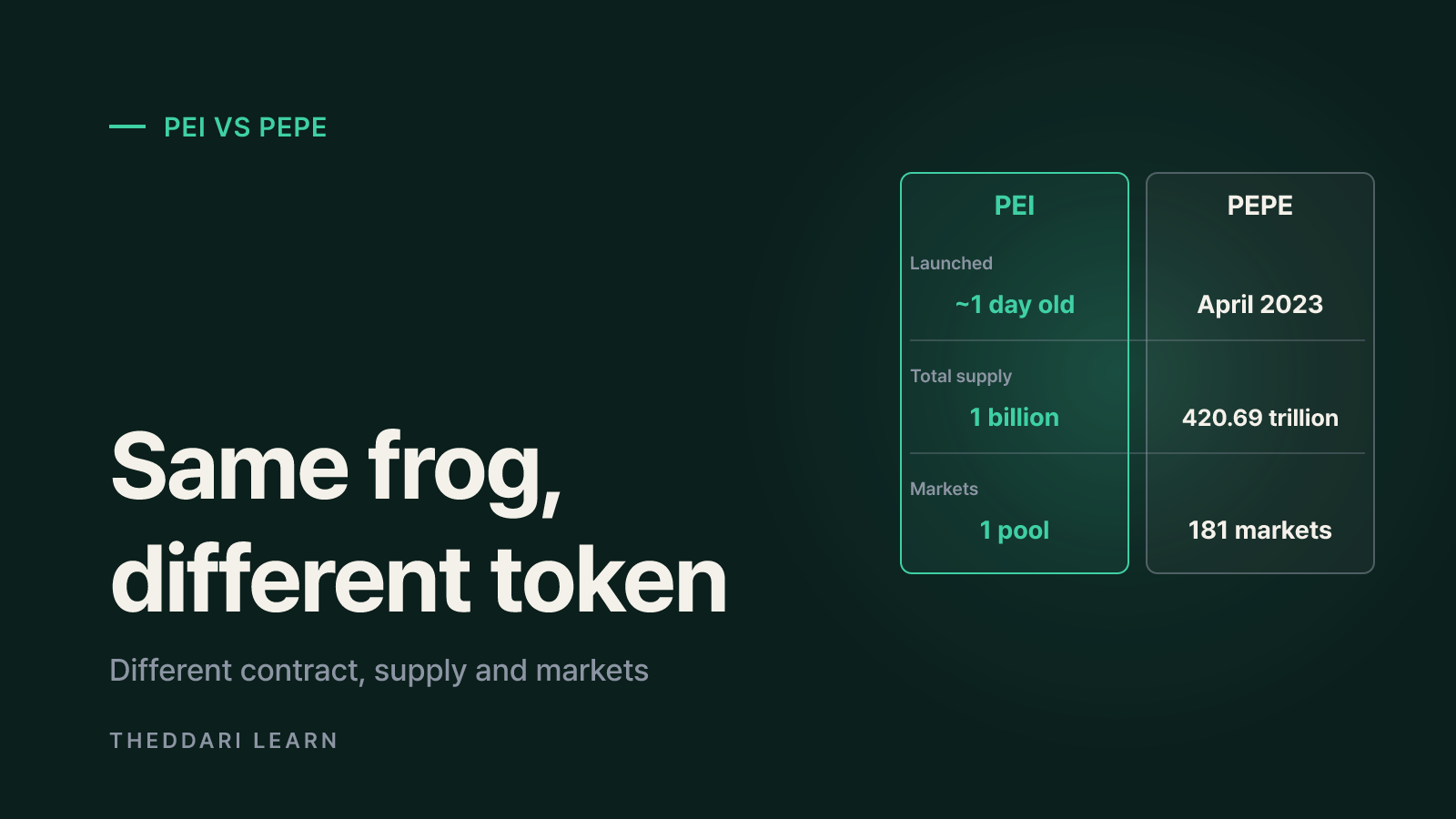
Both tokens borrow the same internet frog, but they sit in very different markets. The table compares figures shown on CoinGecko on November 24, 2026, using the PEPE page for the original token.
Launched
- Pepe Intelligence (PEI)
- Pool created about 1 day earlier
- Pepe (PEPE)
- April 2023
Ethereum contract
- Pepe Intelligence (PEI)
- 0x9579Dde2…a8a273
- Pepe (PEPE)
- 0x69825081…311933
Total supply
- Pepe Intelligence (PEI)
- 1 billion
- Pepe (PEPE)
- 420.69 trillion
Market cap (rank)
- Pepe Intelligence (PEI)
- About $14.9M (#899)
- Pepe (PEPE)
- About $1.447B (#52)
24h volume
- Pepe Intelligence (PEI)
- About $3.2M
- Pepe (PEPE)
- About $369.6M
Markets
- Pepe Intelligence (PEI)
- 1 (Uniswap V4 PEI/ETH)
- Pepe (PEPE)
- 181, including Binance, OKX and Kraken
Website
- Pepe Intelligence (PEI)
- pepeintel.com
- Pepe (PEPE)
- pepe.vip
PEI's market cap was roughly 1% of PEPE's, and all of its trading ran through one decentralized pool. Even the original PEPE has separate addresses on BNB Chain, Arbitrum and Avalanche, so a familiar name never identifies a token on its own. CoinGecko's related-coins panel also shows several similarly named tokens, such as Ape and Pepe and PepeCoin. Wallet and DEX interfaces display whatever name and logo a deployer chooses, which is why scammers copy them. Compare the full contract address, not just the first and last few characters, before you swap.
How to check PEI before you buy
- 1
Match the address in three places
Confirm that CoinGecko, the official website and Etherscan list the same contract. For PEI all three showed 0x9579…a8a273. Never use an address from a reply, a direct message or an ad, and make sure you are on Ethereum rather than another chain.
- 2
Read the contract's permissions
On Etherscan's Contract tab, check that the source is verified and scan the function list. Mint, fee-change, blacklist or trading-pause functions controlled by an owner are red flags. PEI exposes only standard ERC-20 functions plus a supply constant. There is no audit, and Etherscan lists known bug warnings for the compiler version used.
- 3
Size up liquidity and lock status
GeckoTerminal showed about $314.8K of liquidity, made of roughly 11.03M PEI and 90.05 ETH. That is around 2% of the $14.9M market cap. This research could not confirm whether the Uniswap V4 liquidity position is locked. If the provider withdraws it, the price can collapse and buyers may struggle to exit.
- 4
Check holder concentration
About 1,503 addresses held PEI. GeckoTerminal reported the largest holder at roughly 49.22M tokens, about 4.9% of supply. Only about 1.1% of supply sat in the pool, so find out where the rest is. Use Etherscan's Holders tab to separate the deployer, the pool and other large wallets in the top 10.
- 5
Plan for costs and approvals
CoinGecko showed a 0.60% spread and only a few thousand dollars of depth within 2% of the price, so larger orders face heavy slippage on top of Ethereum gas. Approve only the amount you intend to trade, and revoke unused approvals afterward.
New memecoins often spread through Telegram before they trend elsewhere. The theddari Telegram crypto trends page lets you see which channels started mentioning a token and whether the same promotional wording repeats, which helps you judge whether interest is organic or coordinated. Mention counts do not predict price.

What a CoinGecko trending rank does and does not mean
CoinGecko's trending list reflects which coins users are searching for and viewing on the site. PEI was observed at #1 on November 23 and had slipped to #2 behind another new memecoin when checked on November 24. A trending spot is not a review or endorsement. PEI's own page carried a note that its pools are newly created and may carry risks, plus a line saying the coin was moving without a clear narrative.
Figures also varied by source and timing. The same CoinGecko page showed a 24-hour gain of 93.9% at the top and 121.6% in the trending widget, while GeckoTerminal's pool page showed 64.9%. Different snapshots and pools explain the gap. The 24-hour range of $0.006967 to $0.01714 was identical to the all-time low and high, meaning the token's entire trading history fit inside one day. A price that more than doubles that quickly can reverse just as fast.
Reading the buy and sell counts
GeckoTerminal counted 1,796 transactions in 24 hours: 1,393 buys and 403 sells. Many small buys do not prove net dollar inflows or lasting demand, because one or two large sells can outweigh hundreds of small purchases. CoinGecko's community vote showing 89% bullish reflects voter mood, not data.
Because PEI had no centralized exchange market, there was no cross-exchange price to compare. The theddari arbitrage page tracks price gaps for coins listed on several exchanges, which shows how differently an established token like PEPE trades compared with a pool-only newcomer.
Memecoin risks and investor protection
In a February 27, 2025 staff statement, the SEC's Division of Corporation Finance described meme coins as assets bought mainly for entertainment and social reasons, with value driven by demand and speculation, much like collectibles. In the staff's view, transactions in such coins are not securities offerings, so buyers are not protected by US federal securities laws. The statement has no legal force, excludes products disguised as meme coins, and notes that fraud can still be prosecuted by other federal or state agencies. Readers outside the US should check their own regulator's position.
- Liquidity pull: with liquidity near 2% of market cap, a withdrawal can wipe out both price and exit options
- Whale selling: large holders can push the price down sharply in a thin pool
- Impersonation: copycat tokens and fake airdrops reuse the same name and logo
- Approval and phishing scams: fake DEX sites or unlimited approvals can drain a wallet
- Drawdown history: even PEPE, a top-100 coin, traded about 87.7% below its all-time high on November 24, 2026
Bottom line: Pepe Intelligence is a day-old Ethereum memecoin with no confirmed tie to PEPE. Before buying, match the full contract address, read the contract permissions, check liquidity size and lock status, review the top holders and estimate your trading costs. Write down what you verified and when. Anything you could not confirm is a risk you would be accepting, and only you can decide how much you can afford to lose.
Frequently asked questions
Is Pepe Intelligence the same as PEPE?
Where can I buy Pepe Intelligence?
Does a verified contract on Etherscan mean PEI is safe?
Are memecoins like PEI regulated as securities in the US?
Sources and references
- 1CoinGecko: Pepe Intelligence (PEI)(opens in a new tab)www.coingecko.com
- 2CoinGecko: Pepe (PEPE)(opens in a new tab)www.coingecko.com
- 3GeckoTerminal: PEI/ETH Uniswap V4 pool(opens in a new tab)www.geckoterminal.com
- 4Etherscan: Pepe Intelligence (PEI) token contract(opens in a new tab)etherscan.io
- 5Pepe Intelligence official website(opens in a new tab)www.pepeintel.com
- 6SEC: Staff Statement on Meme Coins (Feb. 27, 2025)(opens in a new tab)www.sec.gov
Related articles
 Crypto
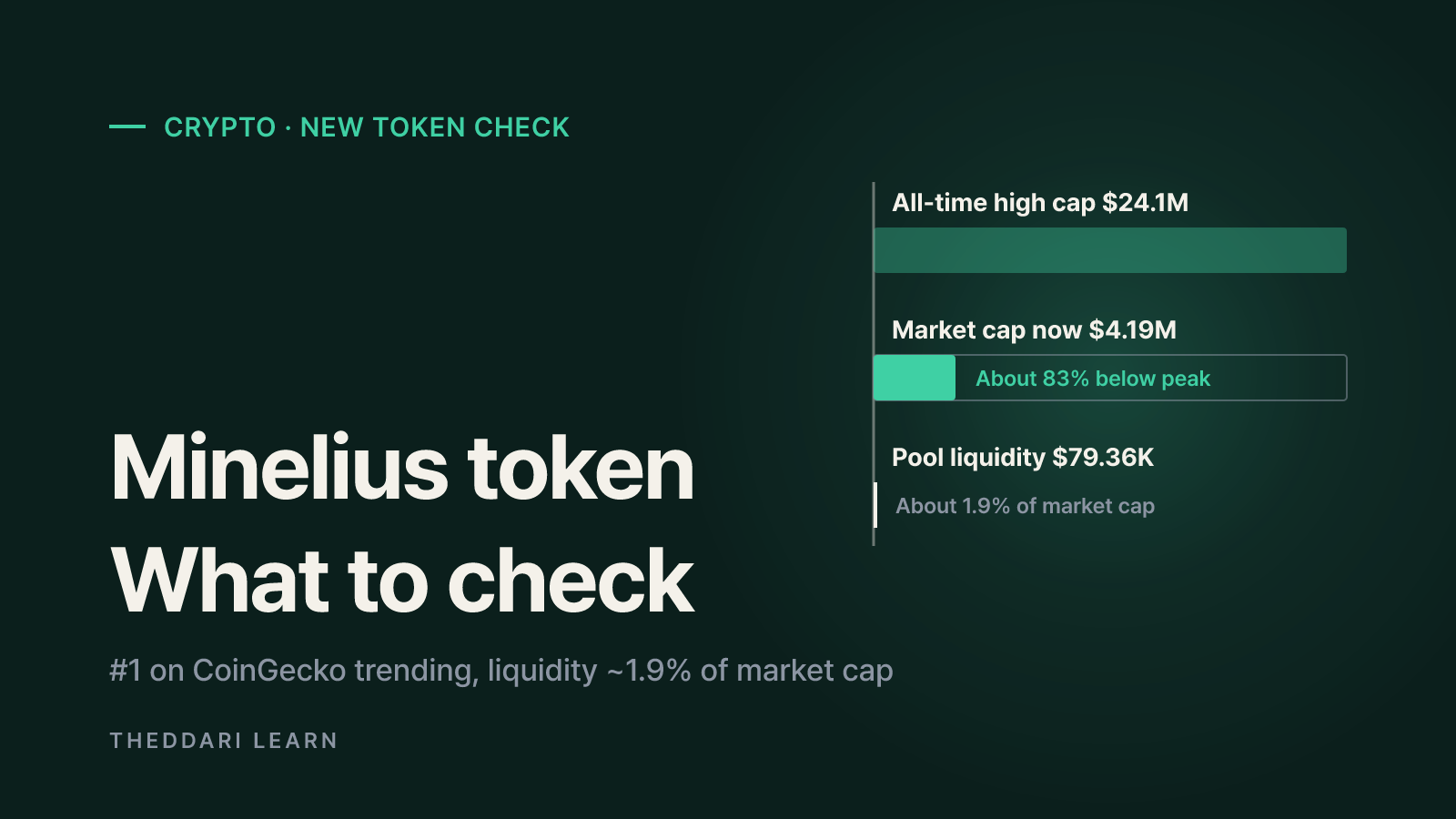
Minelius (MINELIUS) Token: What to Check Before Buying
Minelius hit #1 on CoinGecko trending. Here is how its private-mine launchpad works, what the on-chain numbers showed on November 24, 2026, how to spot the same-name copycat, and the checks to run first.
 Crypto
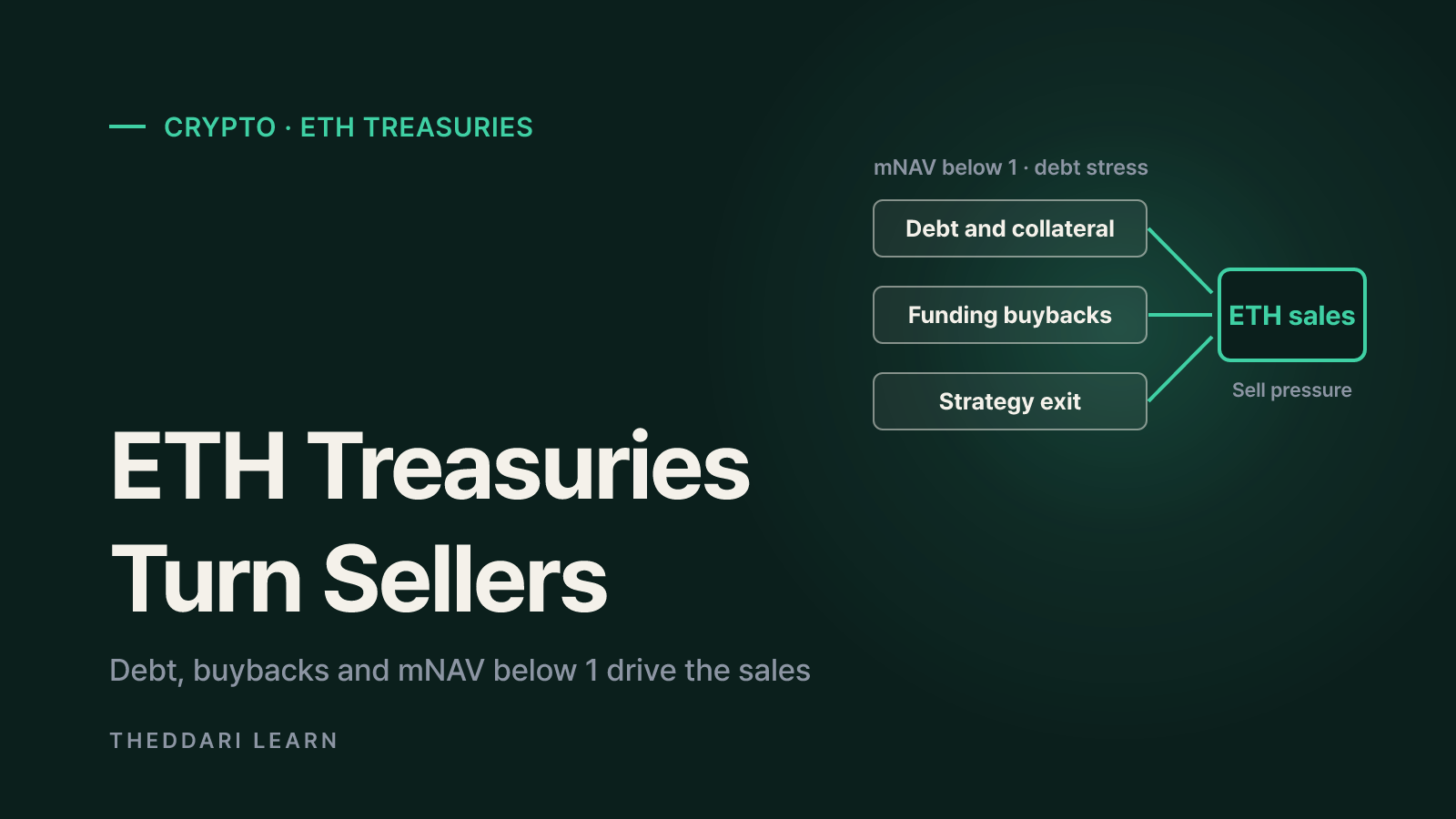
Ethereum Treasury Companies Selling ETH: Why mNAV Matters
Some Ethereum treasury companies are now selling ETH below cost. Using BTCS's November 2026 filings, BitMine's data and DefiLlama figures, this guide explains why firms sell, how Aave liquidation lines work and how to check a sale claim.
 Crypto
ETH Whales Selling at a Loss? Reading On-Chain Whale Data
Headlines about Ethereum whales dumping at a loss are often read as a bottom signal or a warning. Here is how to check the wallet cohorts, exchange inflows and labels behind them, using November 2026 data.