Artificial Analysis Intelligence Index v5: What Changed
Intelligence Index v5 combines nine evals in four 25% categories, 60% on private test sets. See what was added, what was dropped, and how to read rankings.
Contents8 sections
Key takeaways
- Intelligence Index v5 is a weighted average of nine evaluations split evenly across Knowledge Work, Coding, Science and General (25% each).
- FrontierCode 2.0 and Terminal-Bench-Science are new; GDPval-AA v2.1, SciCode and AA-LCR v1.1 were removed from the Index.
- 60% of the weight now sits on evaluations with private test sets or held-out answers, which limits training-data contamination.
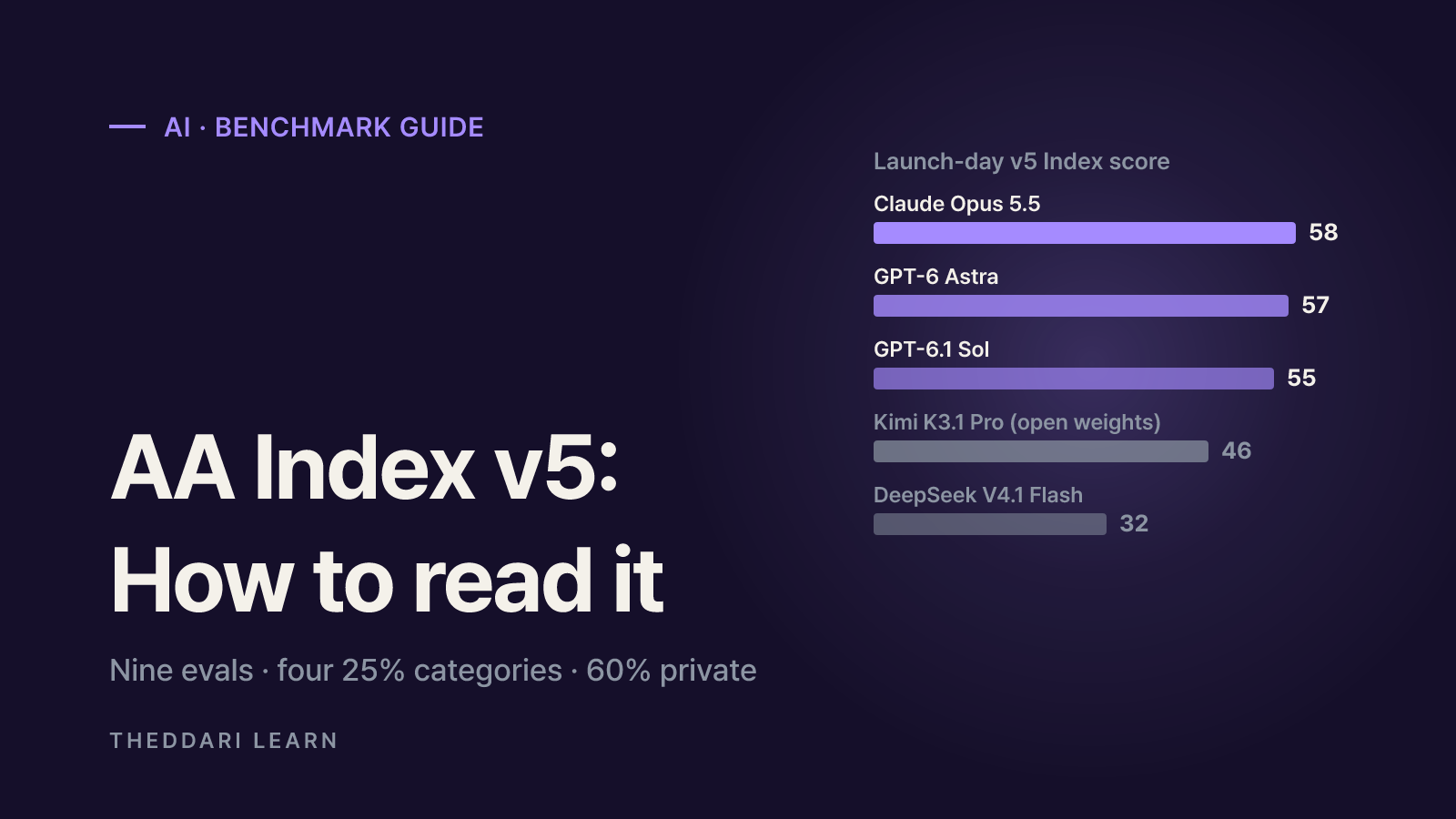
- At launch, Claude Opus 5.5 (max) led at 58, and the gap to the best open weights model widened from 3 points in v4.3 to 12.
- v5 is a new scale: compare models within the same version, and read the effort setting and cost per task next to the score.
Intelligence Index v5 is the new version of Artificial Analysis's composite score for language models, released on October 27, 2026. It averages nine evaluations across four equally weighted categories (Knowledge Work, Coding, Science and General), and for the first time 60% of the Index comes from evaluations with private test sets or held-out answers. Because the benchmark mix changed, v5 is a new scale: do not line up v5 numbers against v4 numbers, and read every score together with its effort setting and cost per task. This guide reflects the launch announcement and the methodology page as of October 2026.
What is Intelligence Index v5?
Artificial Analysis is an independent AI model comparison website that benchmarks model quality, price and speed. Its Intelligence Index rolls many benchmark results into a single number, which is why you often see launch posts and news coverage quote a model's "Artificial Analysis score."
The methodology page calls the Index a helpful synthesis of overall language model intelligence, while noting that, like any metric, it has limitations and may not apply directly to every use case. It also states that the Index is a primarily text-based, English-language suite; image input, speech input and multilingual performance are benchmarked separately.
Artificial Analysis describes v5 as its biggest upgrade since v4 launched in January 2026. Alongside it, the company launched Progress Index v1, which places language models released since November 2022 on one continuous capability scale. The guidance is simple: use the Intelligence Index to compare models for current use cases, and the Progress Index to see how capability has changed over time.
The v5 benchmark mix and weights
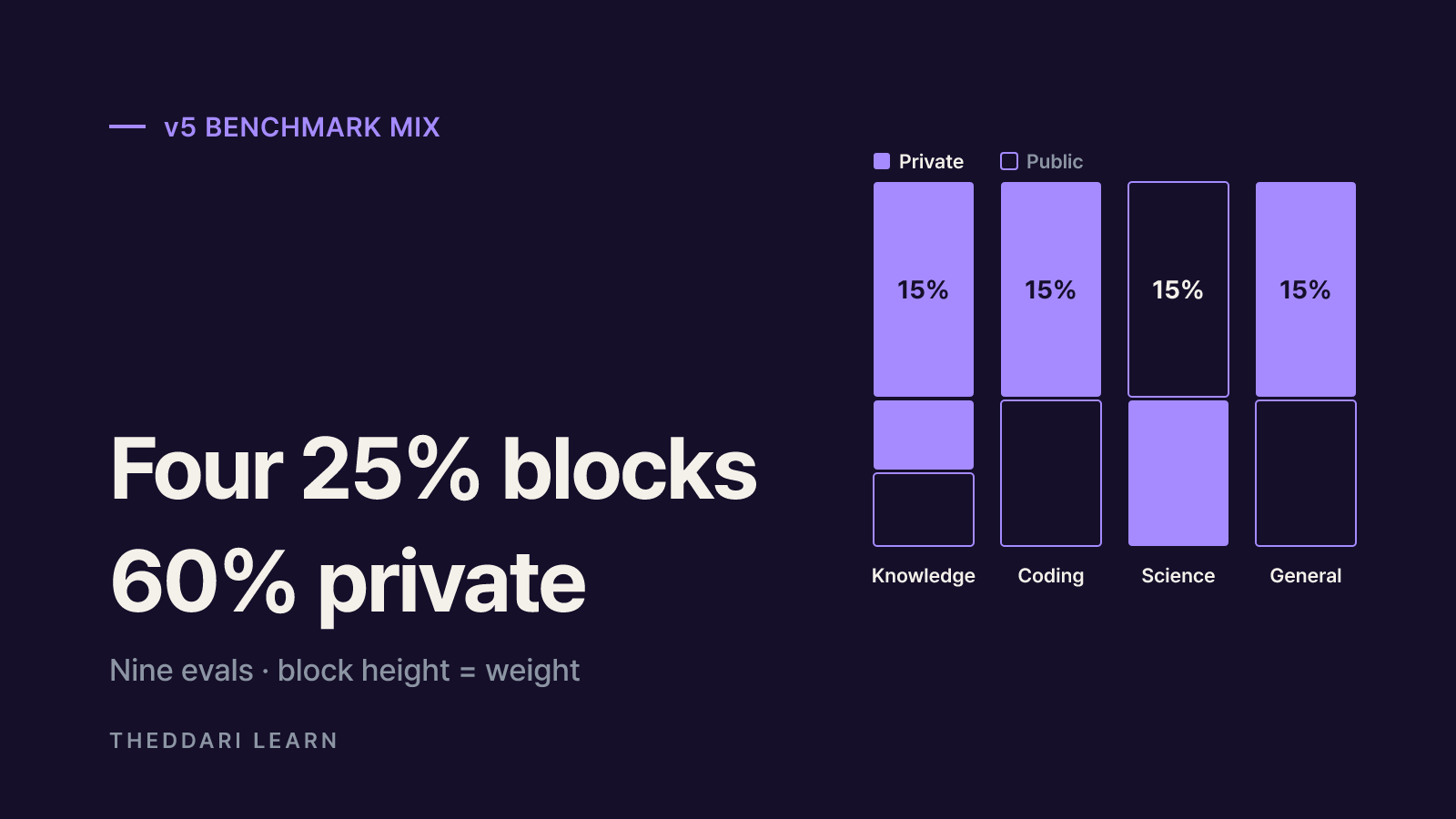
Each of the four categories carries 25% of the Index, and weights differ inside each category. The table below follows the methodology page.
Knowledge Work
- Evaluation
- AA-Briefcase v1.1
- Weight
- 15%
- What it tests
- Multi-week business projects delivered as files
- Private
- Yes
Knowledge Work
- Evaluation
- AutomationBench-AA
- Weight
- 5%
- What it tests
- SaaS workflow automation via REST APIs (657 tasks)
- Private
- Yes
Knowledge Work
- Evaluation
- GDP.pdf
- Weight
- 5%
- What it tests
- Answers grounded in long PDFs (100 tasks)
- Private
- No
Coding
- Evaluation
- FrontierCode 2.0
- Weight
- 15%
- What it tests
- Would a maintainer merge the change? (132 tasks)
- Private
- Yes
Coding
- Evaluation
- Terminal-Bench 4.0
- Weight
- 10%
- What it tests
- Terminal task execution (66 tasks)
- Private
- No
Science
- Evaluation
- Terminal-Bench-Science 0.1
- Weight
- 15%
- What it tests
- Scientific research workflows in a terminal (70 tasks)
- Private
- No
Science
- Evaluation
- CritPt v2 hard subset
- Weight
- 10%
- What it tests
- 40 research-level physics problems
- Private
- Yes
General
- Evaluation
- AA-Omniscience v1.1
- Weight
- 15%
- What it tests
- Accuracy (10%) plus non-hallucination (5%)
- Private
- Yes
General
- Evaluation
- HLE-Diamond
- Weight
- 10%
- What it tests
- 500 reasoning and 500 knowledge questions
- Private
- No
Add up the private rows and you get 15 + 5 + 15 + 10 + 15 = 60%, matching the headline claim. Public questions can leak into training data and inflate scores; shifting weight to private sets is meant to reduce that contamination risk.
Agentic work now dominates
Four agentic evaluations (Terminal-Bench-Science, Terminal-Bench 4.0, AA-Briefcase and FrontierCode 2.0) make up 55% of the weight but a median of roughly 90% of output tokens. Every model measured produced more output tokens per Index task than in v4.3, with the median rising from 35k to 59k. In practice, v5 rewards models that can finish long, multi-step jobs, not just answer quiz questions.
What changed from v4
The announcement summarizes v5 as two new benchmarks and three upgrades. Knowing what moved in and out explains why individual model scores shifted.
- New
- FrontierCode 2.0: Cognition's private coding benchmark on real open-source repositories. An attempt that fails any blocking check scores zero.
- Terminal-Bench-Science: 70 expert-reviewed scientific research tasks run in a terminal; a task passes only if all its tests pass.
- Upgraded
- HLE-Diamond replaces Humanity's Last Exam: a refined 1,000-question set, split evenly between reasoning and knowledge.
- AA-Omniscience v1.1: saturated and public-set questions removed, new questions added, ambiguous or wrong questions revised.
- CritPt v2: a private 40-question hard subset, run with a code-execution tool.
- Kept: AA-Briefcase, AutomationBench-AA, GDP.pdf and Terminal-Bench 4.0
- Removed from the Index: GDPval-AA v2.1, SciCode and AA-LCR v1.1
A model that scored higher under v4 and lower under v5 did not regress. The test got harder and different. Be skeptical of any chart that mixes versions in one ranking.
Launch-day AI model rankings
These are the results published on October 27, 2026. The live leaderboard changes as models are added, so recheck the site before relying on any number.
1st
- Model (effort)
- Claude Opus 5.5 (max)
- v5 score
- 58
2nd
- Model (effort)
- GPT-6 Astra (max)
- v5 score
- 57
3rd
- Model (effort)
- GPT-6.1 Sol (max)
- v5 score
- 55
Next after the top five
- Model (effort)
- Gemini 4 Argon (high)
- v5 score
- 50
Top open weights (weights not yet released)
- Model (effort)
- Kimi K3.1 Pro
- v5 score
- 46
Top with released weights
- Model (effort)
- DeepSeek V4.1 Flash 1017 (max), GLM-5.3 (max)
- v5 score
- 32
For reference
- Model (effort)
- Claude Haiku 5.5 (max)
- v5 score
- 36
- Anthropic and OpenAI hold all of the top five spots.
- The open weights gap widened from 3 points in v4.3 to 12 points in v5, and it is widest on HLE-Diamond and Terminal-Bench-Science.
- No model leads every evaluation. Claude Opus 5.5 leads FrontierCode 2.0 (46%), HLE-Diamond (68%) and AA-Omniscience v1.1; GPT-6 Astra leads Terminal-Bench-Science (63%) and the CritPt v2 hard subset (72%); Kimi K3.1 Pro leads Terminal-Bench 4.0 (67%); Gemini 4 Argon leads AutomationBench-AA (78%).
To see how new launches and leaderboard moves are being discussed, the theddari AI Telegram trends page collects channel chatter in one place. Seeing the context in which a score gets quoted makes hype easier to spot.
How to read the rankings in five checks
- 1
Check the version
Confirm whether a quoted score is v5 or v4.x. Never put two versions in one comparison. For long-run trends, use the Progress Index.
- 2
Check the effort setting
Effort matters more in v5. Claude Opus 5.5 scored 35 at low and 58 at max. Claude Sonnet 5.5's low-to-max spread grew from 20 to 29 points, and GPT-6.1 Sol's doubled from 10 to 20. Treat each setting as a different product.
- 3
Read cost per task
Among the 10 highest-scoring models, cost per Index task ranged from $0.96 for GPT-6.1 Terra (max) to $13.04 for Claude Fable 5.1 (max), more than 13x. GPT-6.1 Sol (max) at $1.27 landed within 4 points of Claude Opus 5.5 (max) at $10.04.
- 4
Use the category that matches your job
For coding tools, look at FrontierCode 2.0 and Terminal-Bench 4.0. For document work, GDP.pdf and AA-Briefcase. For factual reliability, the hallucination component of AA-Omniscience.
- 5
Treat small gaps as ties
A one- or two-point difference flips easily across categories. At that range, price, speed, context length and API terms usually decide the choice.
Limits to keep in mind
- English-first: the Index is mainly English text. Check the separate Multilingual Index for other languages.
- One lab's setup: results come from Artificial Analysis harnesses (Stirrup and mini-swe-agent) and settings. The methodology itself says its GDP.pdf scores are not directly comparable with Surge AI's own numbers.
- LLM judges: some evaluations are graded by other models. Artificial Analysis uses judge panels on some tasks to reduce same-family bias, but judge behavior still shapes results.
- Private data cuts both ways: hidden questions limit contamination, but outsiders cannot audit them.
- Snapshots age fast: always note the date next to any quoted score.
For a wider view of what AI writers and analysts are publishing, the theddari blog trends dashboard is another quick check. Bottom line: Intelligence Index v5 is a harder, more agentic and more private scale. Read rankings in this order (version, effort setting, cost, category scores), and do not crown a winner on a point or two.
Frequently asked questions
Can I compare a model's v4 score with its v5 score?
Does Intelligence Index v5 measure non-English performance?
What do labels like (max) or (high) mean on the leaderboard?
Is the top-ranked model always the best choice?
Sources and references
Related articles
 AI
What Is Vibe Coding? How It Works and Where It Breaks
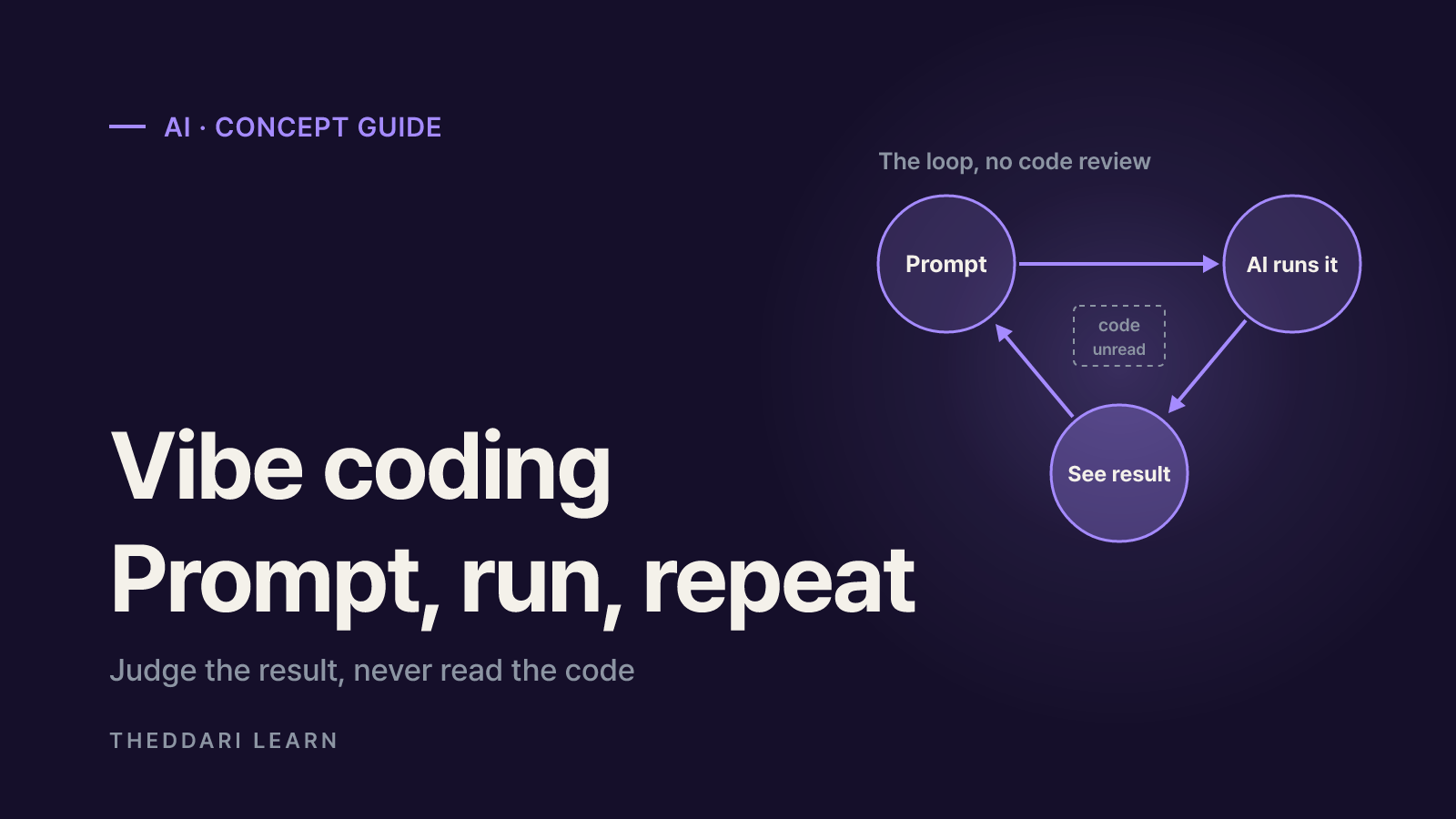
Vibe coding means building software by prompting an AI and judging only the result, never the code. Here is what it can realistically do, which tools fit which job, and where it fails.
 AI
Mem Shutting Down: How to Export Notes and Choose an App
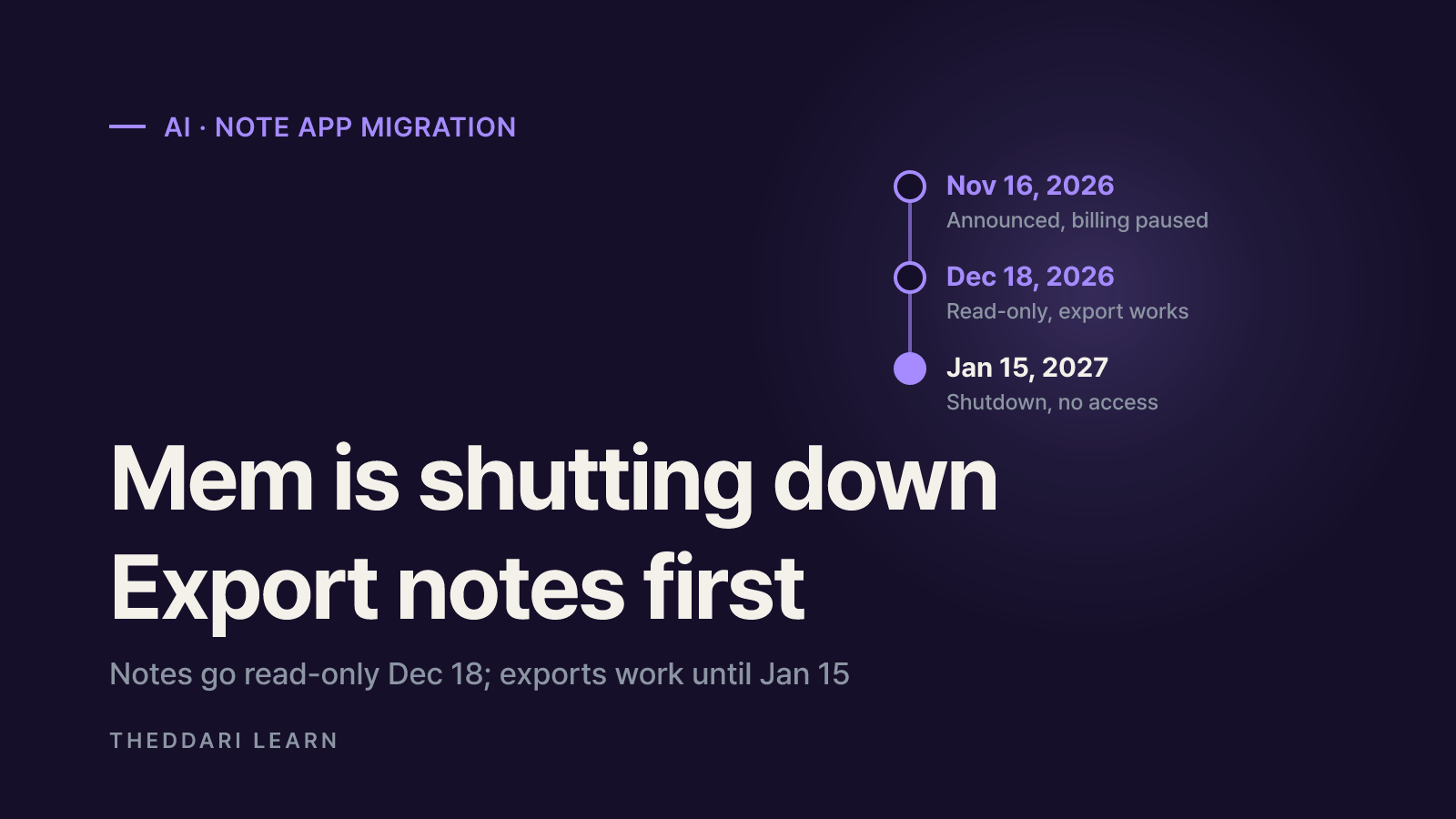
Mem, the AI note-taking app, closes on January 15, 2027. Based on Mem's official notice and migration docs, here is what to download now, how to move to Obsidian, Notion, Bear or Evernote, and how to choose your next app.
 AI
Can You Publish an AI-Built iOS App Without Coding?
AI tools can write the code, but the developer account, signing, App Review, payment rules and long-term maintenance are still yours. Here is what Apple's own documents require, as of November 2026.