Anthropic IPO Oversubscribed: Who Got Shares and Day One
Anthropic's IPO drew roughly $500B of orders, so retail orders were cut hard. How IPO allocation works, why ANT jumped 17.1% on day one, and what to watch next.
Contents6 sections
Key takeaways
- Bloomberg reported on November 12, 2026 that the Anthropic IPO was about six times oversubscribed; IFR later put total orders at roughly $500 billion.
- The deal priced at $83, above the $70-$78 range, and was upsized from 825 million to 980 million shares.
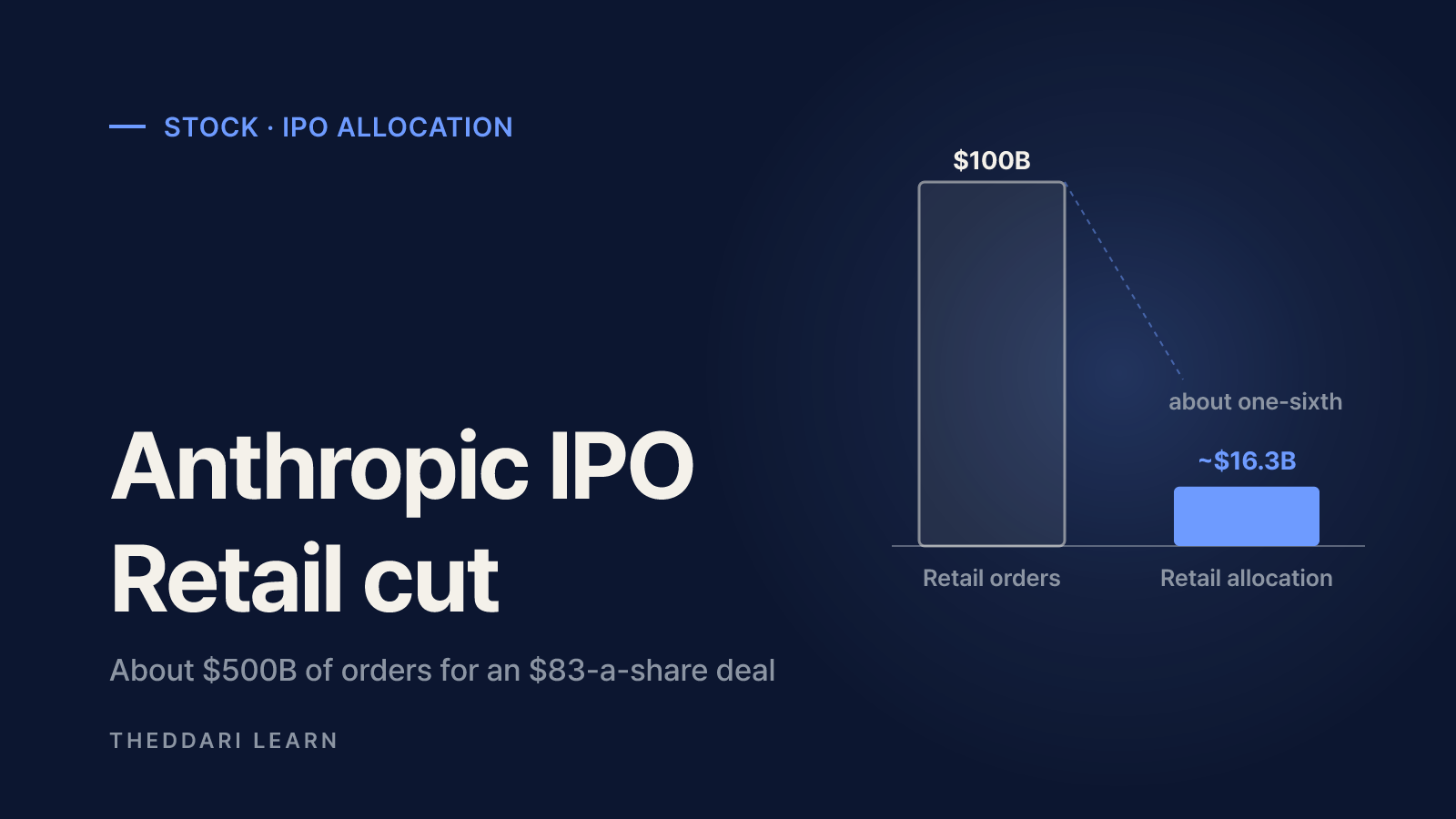
- Institutional orders were about $400 billion and retail about $100 billion, with roughly 20% of the deal going to retail, so retail orders were heavily scaled back.
- ANT closed its November 19 Nasdaq debut at $97.17, up 17.1%, but the greenshoe was exercised right away, removing a common source of price support.
- If you bought after listing, your reference point is your own purchase price, not $83, and lock-up releases and index inclusion dates matter.
Yes, the Anthropic IPO was heavily oversubscribed, and that is exactly why most retail investors received few or no shares at the offer price. Reuters, citing Bloomberg, reported on November 12, 2026 that orders were about six times the shares available. The deal priced at $83 on November 18, began trading on the Nasdaq under the ticker ANT on November 19, and closed its first day at $97.17. This guide, current as of November 23, 2026, explains what the oversubscription figure meant, how IPO allocation actually works in the US, and how to think about day-one volatility.
It focuses on allocation and early trading. If you are looking for how to read the S-1 or the full lock-up calendar, those are separate questions.
How oversubscribed was the Anthropic IPO?
The early "oversubscribed" headlines came during the roadshow, when banks were still collecting indications of interest. Those figures came from unnamed people familiar with the deal, and the reports noted that demand could still change. Firm numbers only arrive with the company's pricing announcement and the final prospectus. Here is the sequence.
Nov 12
- What happened
- Orders about 6x shares available; existing backers to be prioritized
- Type of source
- Bloomberg report, anonymous sources
As of Nov 12
- What happened
- Range $70-$78, 825M shares, up to $64.4B
- Type of source
- Reports and preliminary prospectus
Nov 18
- What happened
- Priced at $83; upsized to 980M shares
- Type of source
- Company announcement
Nov 19
- What happened
- Nasdaq debut; closed at $97.17 (+17.1%)
- Type of source
- IFR
Nov 20
- What happened
- Offering closed; underwriters' option fully exercised
- Type of source
- Company and IFR
According to Anthropic's pricing announcement, 956,351,354 of the 980 million shares were sold by the company and 23,648,646 by existing stockholders, whose proceeds do not go to Anthropic. Underwriters also received a 30-day option to buy up to 147 million additional shares.
IFR put total orders at about $500 billion. Against the $81.34 billion base deal, that is roughly 6.1 times coverage. So the final multiple looked similar to the early roadshow report, but the price and the share count had both gone up in between. In other words, part of the excess demand was absorbed by a higher price and a bigger deal, not handed out as extra allocations.
Reading an oversubscription multiple
- The multiple is order value divided by deal size, so it shifts whenever the price or share count changes.
- Institutions often put in orders larger than what they actually expect to receive, which inflates the headline number.
- A high multiple says nothing certain about returns after listing. Strong demand may already be in the price.
Why IPO allocation leaves most retail orders unfilled
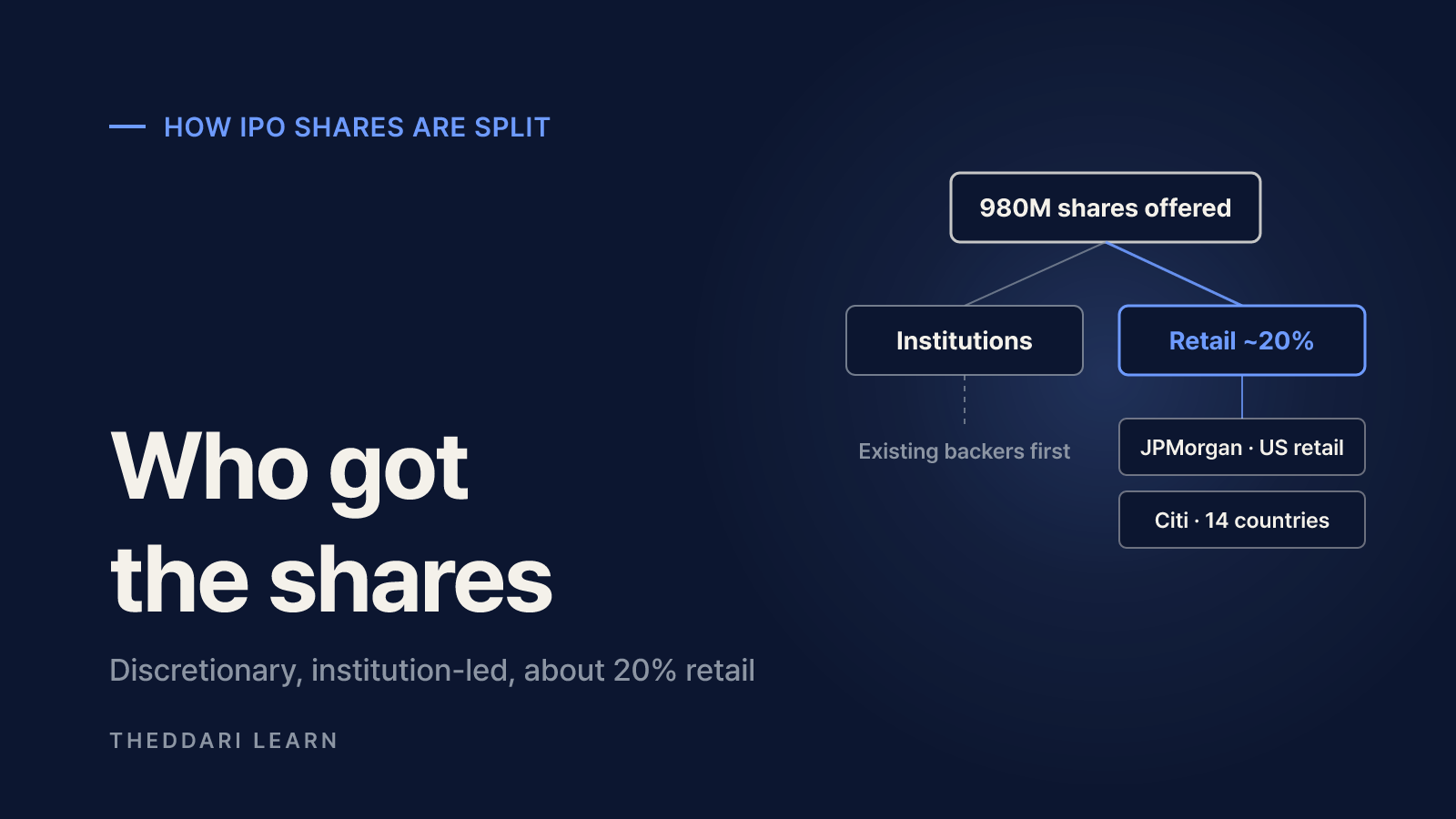
There is no statutory pro-rata rule for US IPO allocation. The SEC's investor bulletin on IPOs explains that underwriters often distribute most shares to institutional and high-net-worth clients such as mutual funds, hedge funds, pension funds and insurers, and that buying directly into a popular IPO is unusual for a typical investor. The more common route is buying in the open market once trading starts.
For Anthropic, IFR reported institutional orders of about $400 billion and retail orders of about $100 billion, with roughly 20% of the offering placed with retail. As a rough sizing exercise, 20% of 980 million shares at $83 is about $16.3 billion. Set against $100 billion of retail demand, the average retail order could only have been filled about one-sixth of the way. That is a back-of-the-envelope figure based on a reported approximation; actual fills varied by broker and account.
What drives who gets shares
Institutional vs retail split
- Anthropic deal
- About 20% retail (IFR)
- What it means for you
- Higher than many US IPOs, but still a minority of the deal
Priority for existing backers
- Anthropic deal
- Reported by Bloomberg
- What it means for you
- Less left over for new investors
Selling broker
- Anthropic deal
- JPMorgan US retail, Citi international retail (IFR)
- What it means for you
- No access unless you were a client of a participating firm
Eligible countries
- Anthropic deal
- 14, including Australia, Japan and the UK (IFR)
- What it means for you
- Check your own broker's notice
Broker eligibility rules
- Anthropic deal
- Balances, activity, past flipping
- What it means for you
- Brokers must consider suitability before selling you IPO shares
The SEC also notes that flipping, meaning reselling IPO shares immediately after trading begins, is not prohibited by federal securities law, but underwriters may refuse future allocations to customers who flipped in the past. Allocation is less a queue and more a judgment about who the banks think will hold the stock.
What drove the IPO first day volatility in ANT
On listing day, the shares that trade are generally only those sold in the IPO. Founder, employee and early-investor shares are often restricted or under lock-up. The SEC explains that this limited supply, especially in a sought-after deal, can push the price up steeply. IFR put Anthropic's initial float at about 6.2% of shares.
Four forces to track
- Offer price vs your price. The 17.1% first-day gain is measured from $83. If you bought intraday at a higher price, your own result may be negative.
- The greenshoe. The 147 million share option was exercised in full the day after the debut. IFR pointed out that this leaves underwriters without the usual ammunition to buy shares and support the price if it slides.
- Index inclusion. IFR reported that MSCI plans to add Anthropic from November 30, and that some index families allow inclusion after five trading days. Passive buying is expected, but it may already be priced in.
- Staggered lock-up releases. IFR said non-founding executives could sell 316 million shares on day one, with another 299 million released on December 16 and more through early 2027. The SEC warns that large releases of previously restricted stock can weigh on the price.
The SEC describes an IPO offering price as a negotiated estimate of value. It says closing prices shortly after an IPO are commonly well above or below the offer price, and that shares can fall significantly below it once underwriter stabilization ends.
A checklist if you hold or are watching ANT
- 1
Separate the headline gain from your cost basis
News coverage measures performance from $83. Track your own entry price and position size instead.
- 2
Read the final prospectus
Find the final prospectus (Form 424B4) on SEC EDGAR and read Risk Factors, Dilution and Shares Eligible for Future Sale.
- 3
Mark supply dates
Put lock-up release dates such as December 16 on your calendar and watch volume around them.
- 4
Track the first earnings date
IFR noted that a large block of shares unlocks after Anthropic reports full-year results. Watch the earnings calendar for when that date is set.
- 5
Account for currency and tax if you are outside the US
Non-US investors face exchange-rate swings and home-country capital gains rules on top of the share price itself.

If you were offered pre-IPO exposure through private shares or tokenized products, compare those prices with the listed stock now that a public price exists. The pre-IPO price comparison page shows how private and public prices can diverge.
Market chatter, for example on the stock Telegram trends page, can show sentiment, but "oversubscribed" is not evidence of future gains. The short version: oversubscription shrank retail allocations rather than widening them, and ANT's early price reflects a thin float, an already-exercised greenshoe, index flows and staggered lock-ups. Before acting, check your own cost basis, the next supply dates and the first earnings date.
Frequently asked questions
If an IPO is 6x oversubscribed, do I get one-sixth of what I asked for?
Could retail investors buy Anthropic at the IPO price?
Does a strong first day mean the stock will keep rising?
What happens to my broker access if I flip IPO shares?
Sources and references
- 1Anthropic prices initial public offering (Anthropic, Nov 18, 2026)(opens in a new tab)www.anthropic.com
- 2Anthropic's record-busting IPO swells to US$119.5bn (IFR, Nov 2026)(opens in a new tab)www.ifre.com
- 3Anthropic's IPO is about six times oversubscribed, Bloomberg News reports (Reuters via Investing.com, Nov 12, 2026)(opens in a new tab)www.investing.com
- 4Updated Investor Bulletin: Investing in an IPO (SEC Investor.gov)(opens in a new tab)www.investor.gov
Related articles
 Stocks
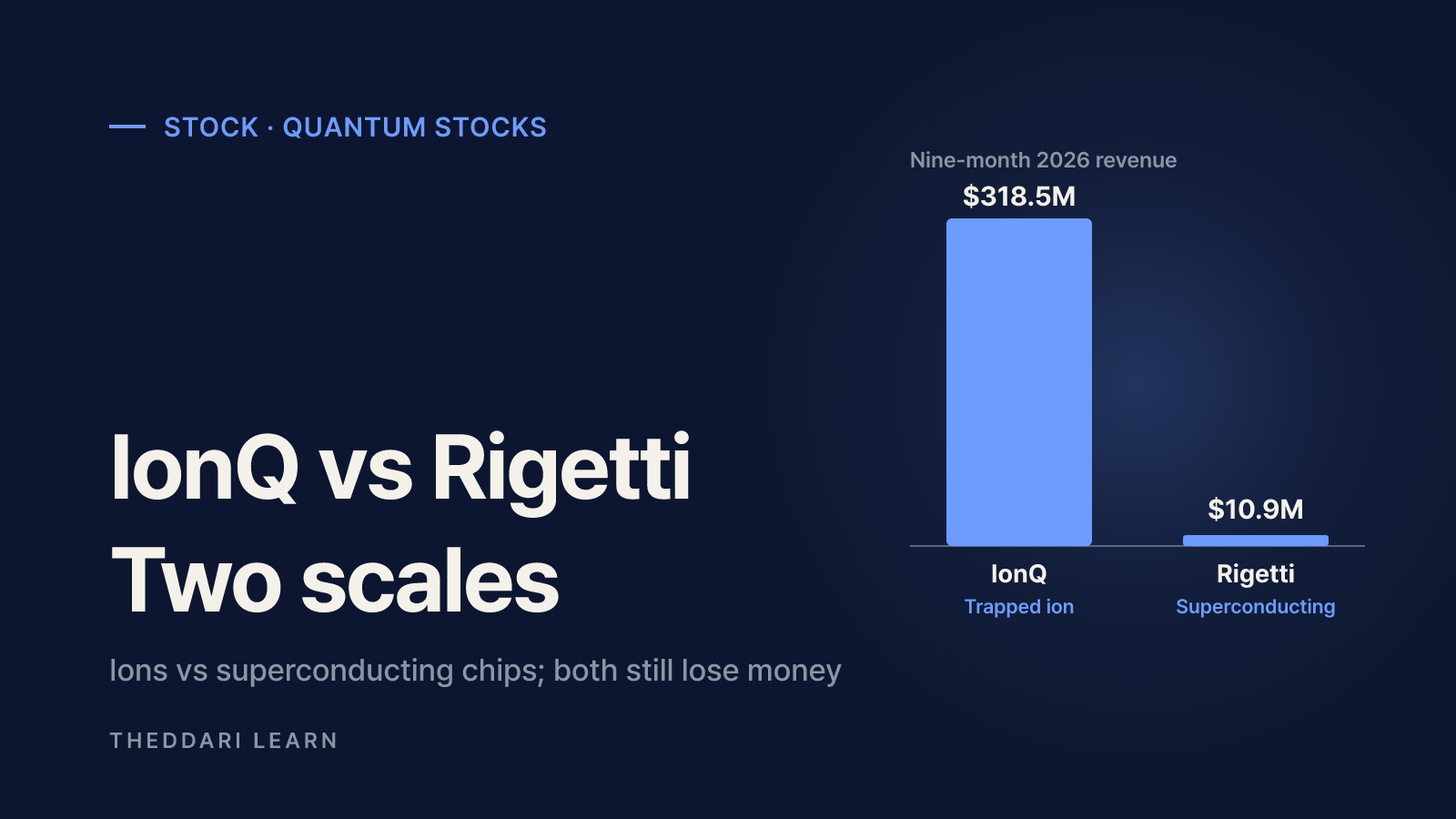
IonQ vs Rigetti: Quantum Tech, Earnings and Cash-Burn Risks
IONQ and RGTI often trade as one quantum theme, but their qubit technology, revenue scale and cash burn differ sharply. Here is what the Q3 2026 filings actually show.
 Stocks
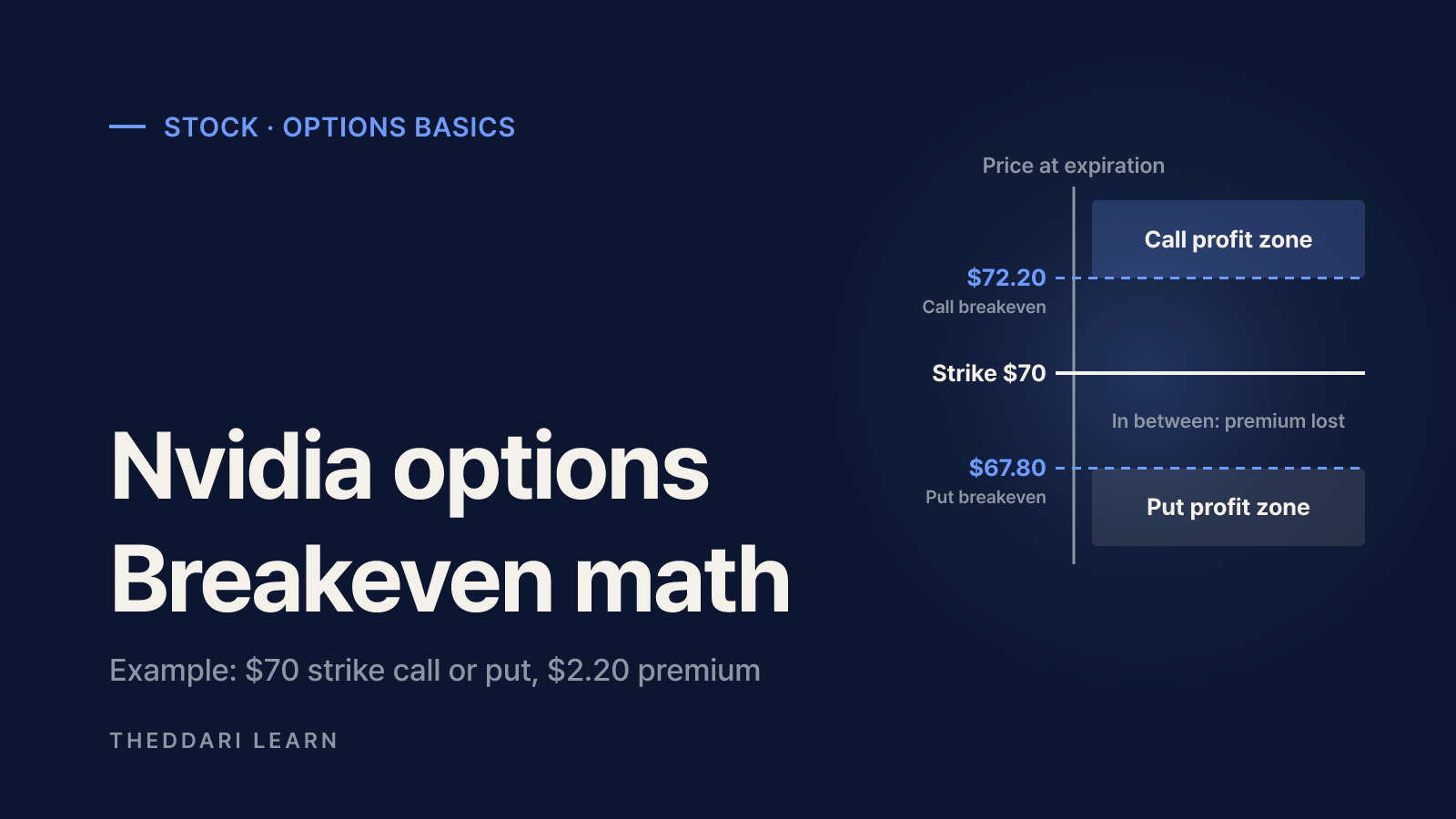
Nvidia Options Explained: Calls, Puts and Big Stock Moves
Why Nvidia calls and puts can swing far more than the stock itself: intrinsic value, time value and implied volatility explained, plus the training and tax rules Korean residents face before trading US stock options.
 Stocks
Real-Time US Stock Quotes for Free: Delayed vs Live Prices
Free 'real-time' US stock prices usually come from Nasdaq venues plus FINRA-reported trades, not the whole market. Learn how to spot delayed quotes, read a site's delay table, and decide when paid full-market data is worth it.