Minelius (MINELIUS) Token: What to Check Before Buying
Minelius (MINELIUS) is a Solana launchpad token created on pump.fun on Nov 22, 2026. Learn how it works, the copycat risk, and what to check before buying.
Contents8 sections
- What is Minelius? How the launchpad works
- What a CoinGecko trending rank does and does not tell you
- On-chain snapshot and the same-name copycat (Nov 24, 2026)
- Five checks before buying the Minelius token
- Risks created by the privacy design
- Bottom line: a final checklist
- Frequently asked questions
- Sources and references
Key takeaways
- Minelius (MINELIUS) is a Solana token created on pump.fun on Nov 22, 2026, the flagship of a launchpad that gives each coin a mine wallet and pays fees to holders in encrypted form.
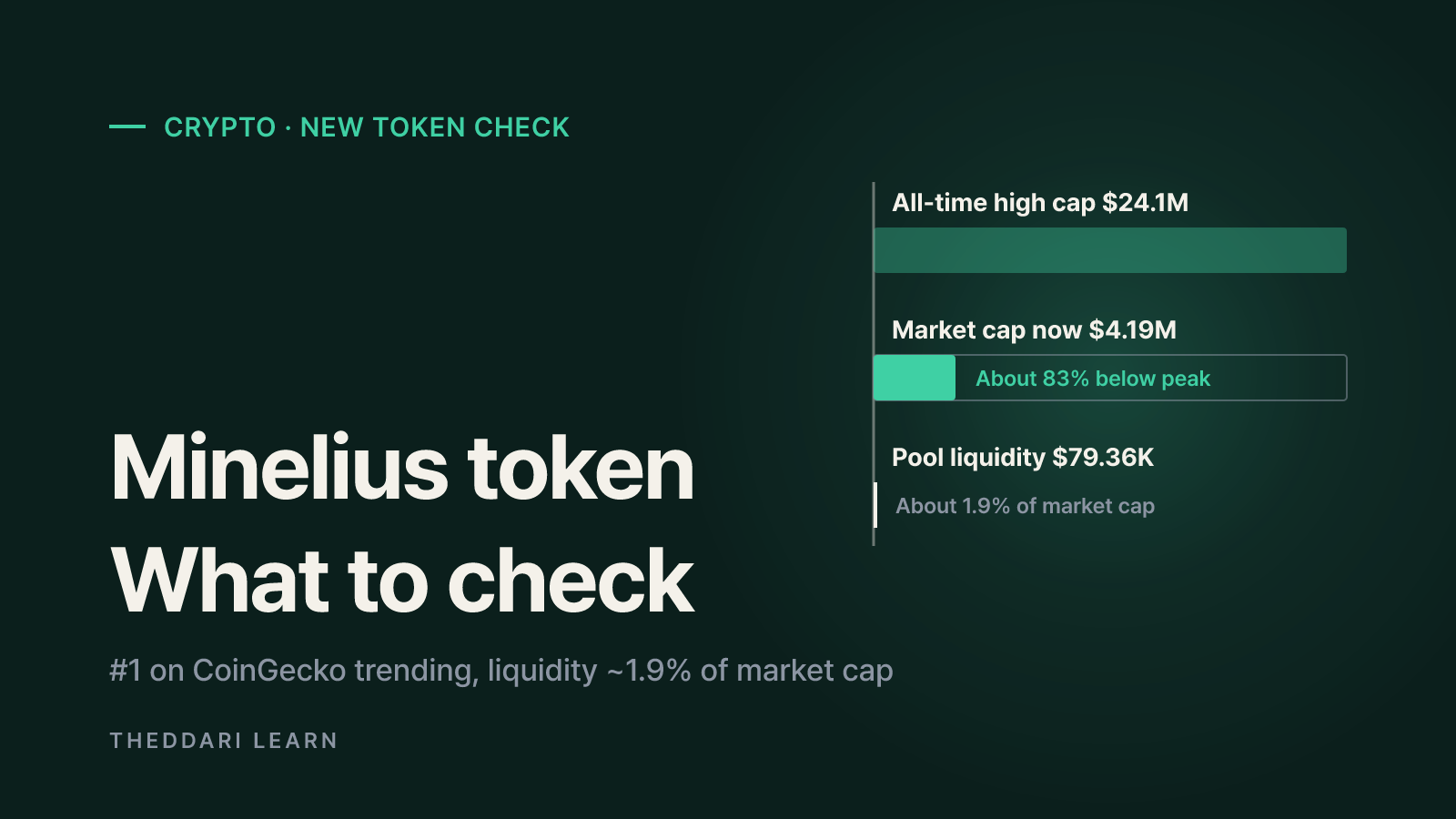
- As of November 24, 2026, pump.fun showed a $4.19M market cap, roughly 83% below its $24.1M all-time high, with only $79.36K of pool liquidity (about 1.9% of market cap).
- A different token also named Minelius (3U5A…pump) was created one day earlier. The real contract ends in E9rW…pump; verify it on the official site and CoinGecko.
- Holder payouts run through Helius' Solana Privacy Rings, so amounts are encrypted and outsiders cannot audit total payouts. The Minelius engine holds each mine wallet's keys.
- A CoinGecko trending rank measures attention, not safety or value.
Minelius (ticker MINELIUS) is a Solana token launched on pump.fun on November 22, 2026. It is the flagship coin of a launchpad with the slogan "Public coin. Private mine.": every coin launched through it gets its own mine wallet, and the trading fees that wallet earns are paid to holders through encrypted transfers. Minelius reached #1 on CoinGecko's trending list on November 23, 2026, but it is only days old, its price can move by tens of percent in hours, and a different token with the same name exists. This guide uses data checked on November 24, 2026 to explain how it works, what the numbers say and what to verify before you buy.
What is Minelius? How the launchpad works
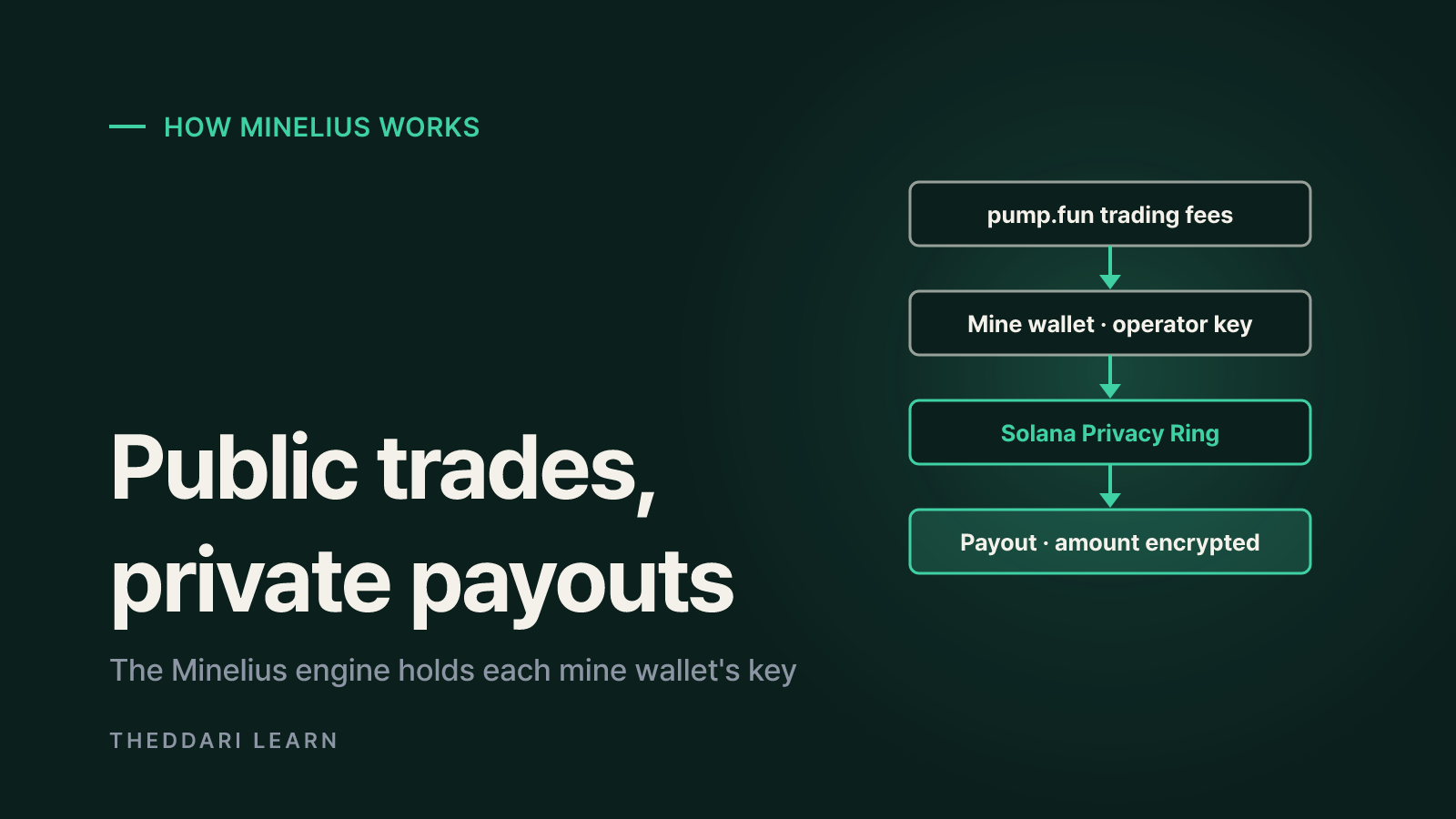
According to the Minelius website, four things happen to every coin launched on the platform. The pitch is simple: trading is public, earnings are private.
- A fresh mine wallet is the creator. Minelius generates a new wallet for each coin and launches the coin on pump.fun from it. On-chain, the creator is the mine, not the person who launched it.
- Fees get shielded. Creator fees collect in the mine wallet and are moved into Helius' Solana Privacy Ring on a schedule. From then on, the asset and the amount are encrypted.
- Holders are paid privately. Each cycle, the mine pays holders from its private balance. The chain records that a payout happened, but not what or how much.
- The default asset is hSOL. Fees are swapped into hSOL, Helius' liquid staking token, before being shielded. A launcher can choose SOL or another Solana token instead.
MINELIUS is the coin of the platform's headquarters mine. CoinGecko classifies it under Solana's Launchpad and Pump.fun Ecosystem categories and shows a total supply of about 1 billion tokens (displayed as 1B), with circulating supply equal to total supply, so market cap and fully diluted valuation match. That means no scheduled unlocks, but it also means there is no published allocation or vesting document to review.
What are Solana Privacy Rings?
Per the Solana Foundation announcement, Helius launched Solana Privacy Rings on mainnet on November 10, 2026. The permissionless default Ring is confidential: wallet addresses stay visible while assets and amounts are encrypted, and only the owner can decrypt a balance with a viewing key. The core programs and ZK circuits were audited by Certora, OtterSec and ZK Security, with formal verification expected by the end of 2026. Minelius is a third-party app on top of this infrastructure, and its own FAQ says it is not a Helius product.
What a CoinGecko trending rank does and does not tell you
CoinGecko's trending list reflects which coins users are looking up. A top spot means a lot of people searched for the coin; it does not mean anyone reviewed the code, the team or the liquidity. Fresh pump.fun tokens that jump many times in value within a day naturally attract searches and land near the top.
| Trending tells you | Trending does not tell you |
|---|---|
| Attention is spiking | Whether the product works as promised |
| A narrative (privacy, launchpads) is getting noticed | Whether liquidity can absorb a large sell |
| Price probably moved a lot | How the operator handles keys and funds |
| The coin deserves a closer look | Whether you found the real contract or a copycat |
To see where the buzz is coming from, compare the trending rank with how often a token is being pushed in crypto Telegram channels. Mentions are something to investigate, not a reason to buy.

On-chain snapshot and the same-name copycat (Nov 24, 2026)
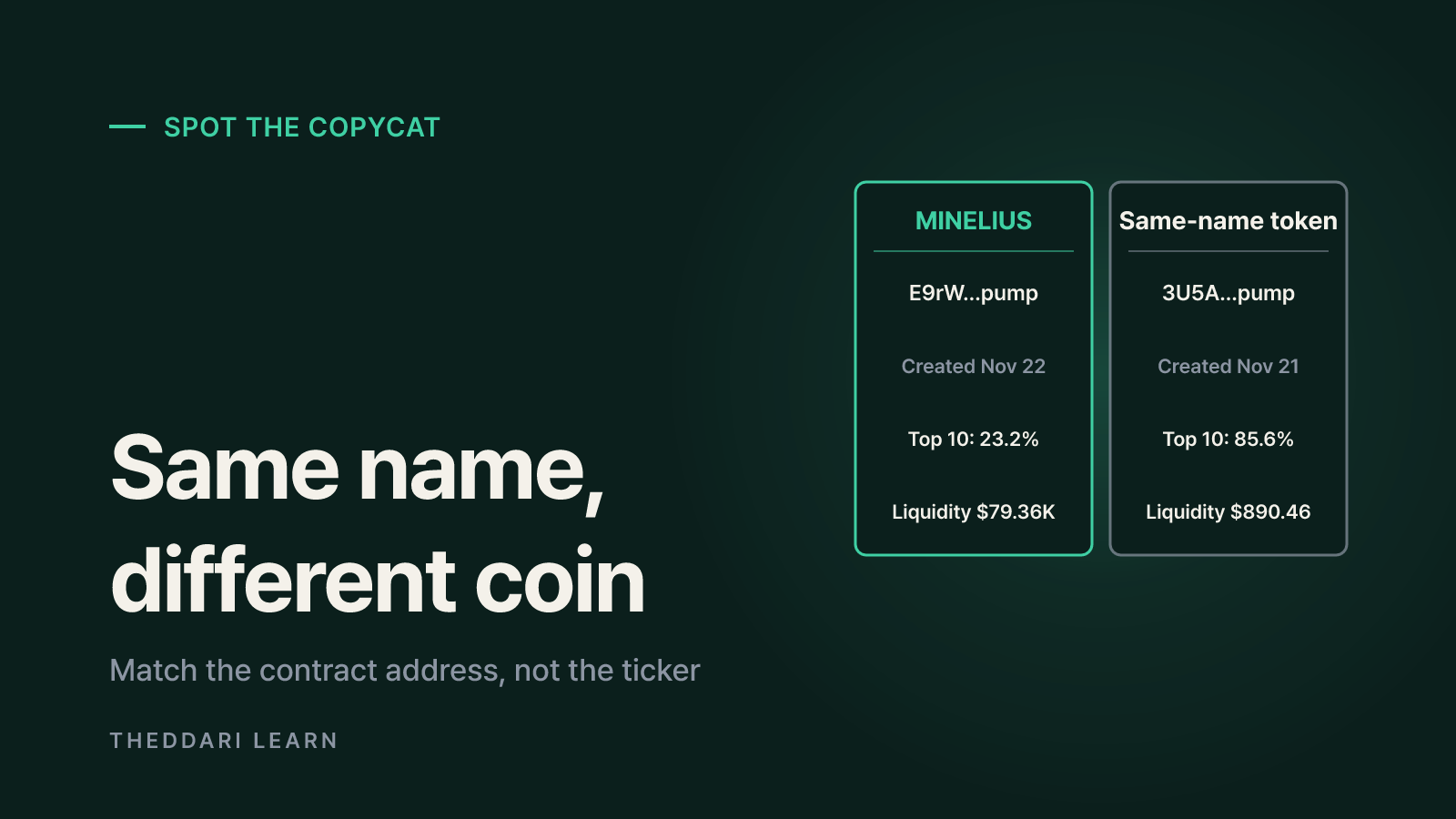
The figures below were read from the pump.fun token page on November 24, 2026, alongside the page for the other token called Minelius. New tokens change minute by minute, so use these to understand the shape of the market, not as live quotes.
Created
- MINELIUS (E9rW…pump)
- Nov 22, 2026
- Same-name Minelius (3U5A…pump)
- Nov 21, 2026
Market cap
- MINELIUS (E9rW…pump)
- $4.19M
- Same-name Minelius (3U5A…pump)
- $3.94K
All-time high market cap
- MINELIUS (E9rW…pump)
- $24.1M
- Same-name Minelius (3U5A…pump)
- $113K
Pool liquidity
- MINELIUS (E9rW…pump)
- $79.36K
- Same-name Minelius (3U5A…pump)
- $890.46
Holders
- MINELIUS (E9rW…pump)
- 2,697
- Same-name Minelius (3U5A…pump)
- 285
Top 10 wallets' share
- MINELIUS (E9rW…pump)
- 23.2%
- Same-name Minelius (3U5A…pump)
- 85.6%
Pool pair
- MINELIUS (E9rW…pump)
- SOL (PumpSwap)
- Same-name Minelius (3U5A…pump)
- hSOL (PumpSwap)
Three things the numbers say
- Deep drawdown. A $4.19M market cap is about 17% of the $24.1M peak, roughly 83% lower. The same page showed a 6-hour move of −70.7%.
- Thin liquidity. $79.36K of liquidity is about 1.9% of market cap. Larger orders can suffer heavy slippage, especially on the way out.
- Concentrated holders. The top 10 wallets held 23.2%. If several of them sell at once, a pool this thin can move sharply.
Watch for the copycat. pump.fun also lists a token named Minelius at 3U5AfwN8LNJKGB1qJynW1khSgbQAnrUk4VbYmknipump, created on November 21, 2026, a day before MINELIUS. Being older does not make it the original. Names, tickers and logos can be copied by anyone, so only the contract address counts.
Five checks before buying the Minelius token
- 1
Match the contract address
Confirm that the CA button on the official site, the Contract field on CoinGecko and the pump.fun page all show E9rWKjVhHMxQkxfREr7Li8Yy46rVcWiWHoKVQAe9pump. Never use an address from a DM, a reply or a search ad.
- 2
Size your order against liquidity
Compare what you plan to spend with the pool's liquidity. When liquidity is under 2% of market cap, selling can fill far below the quoted price.
- 3
Read the holder distribution
Look at the top 10 share, clusters of similarly sized wallets and the dev wallet. pump.fun showed Dev at 0.0%, but by design the real launcher's wallet never appears on-chain, so that figure says less than usual.
- 4
Understand where payouts come from
Payouts are funded by trading fees. Total fees showed 10 SOL at the time of checking, and they fall when volume fades. Amounts are encrypted, so you cannot audit the totals.
- 5
Check what you sign
Receiving payouts requires a signature to open a private wallet. Make sure you are on the official domain, read the signing request, and never type a recovery phrase anywhere.
If you mainly trade on regulated exchanges, note that a DEX-only token like Minelius cannot be compared across venues the way listed coins can. For coins that do trade on both Korean and global exchanges, the price-gap tool below shows how venue prices differ.
Risks created by the privacy design
The private mine is what makes Minelius different, and it is also what makes it hard to verify. With a normal memecoin, anyone can trace fee flows on a block explorer. Here, that part is hidden by design.
- Who holds the keys. The site's FAQ says the Minelius engine holds every mine wallet's key and handles claiming, shielding and paying out fees. Holders are trusting the operator to follow through.
- Payouts you cannot total. The default Ring is confidential, so the mine and each recipient are visible but amounts are not. Claims like "100% to holders" cannot be checked in aggregate by outsiders.
- Audit scope. The Certora, OtterSec and ZK Security audits cover Helius' Privacy Ring programs. We found no published audit of the Minelius engine in the sources reviewed.
- Anonymity cuts both ways. A private launch hides the launcher's wallet, which protects privacy but also makes accountability harder if something goes wrong.
- Compliance friction. Transfers that hide amounts may draw extra review from exchanges in some jurisdictions. The Solana Foundation notes that Range, Chainalysis and Elliptic support wallet screening for Privacy Rings.
Hype articles spread quickly around trending tokens, so check who wrote an analysis and when. You can see which crypto topics bloggers keep repeating on the blog trends dashboard.
Bottom line: a final checklist
- Does the contract end in E9rW…pump on the official site, CoinGecko and pump.fun?
- Is your order small relative to pool liquidity, so you can actually exit?
- Have you looked at top-holder concentration and the 6-hour and 24-hour moves?
- Do you accept that payouts depend on volume and cannot be independently totaled?
- Will you sign only on the official domain and never share a recovery phrase?
- Could you lose the whole amount without it affecting your finances?
Minelius is one of the first projects to apply Solana Privacy Rings, launched in November 2026, to memecoin launchpads, which explains the attention. As of the check date, though, it was a days-old token trading far below its peak, with thin liquidity and a same-name copycat. Verifying the contract, the liquidity and the key-custody model matters far more than any trending rank.
Frequently asked questions
Where can you buy Minelius?
Is Minelius made by Helius?
Do MINELIUS holders get paid?
Is Minelius a scam?
Sources and references
- 1CoinGecko — Minelius (MINELIUS) price and info page(opens in a new tab)www.coingecko.com
- 2Minelius official site — Public coin. Private mine.(opens in a new tab)minelius.fun
- 3pump.fun — MINELIUS (E9rW…pump) token page(opens in a new tab)pump.fun
- 4pump.fun — same-name Minelius (3U5A…pump) token page(opens in a new tab)pump.fun
- 5Solana — Solana Privacy Rings Bring Programmable Privacy Onchain (Nov 10, 2026)(opens in a new tab)solana.com
Related articles
 Crypto
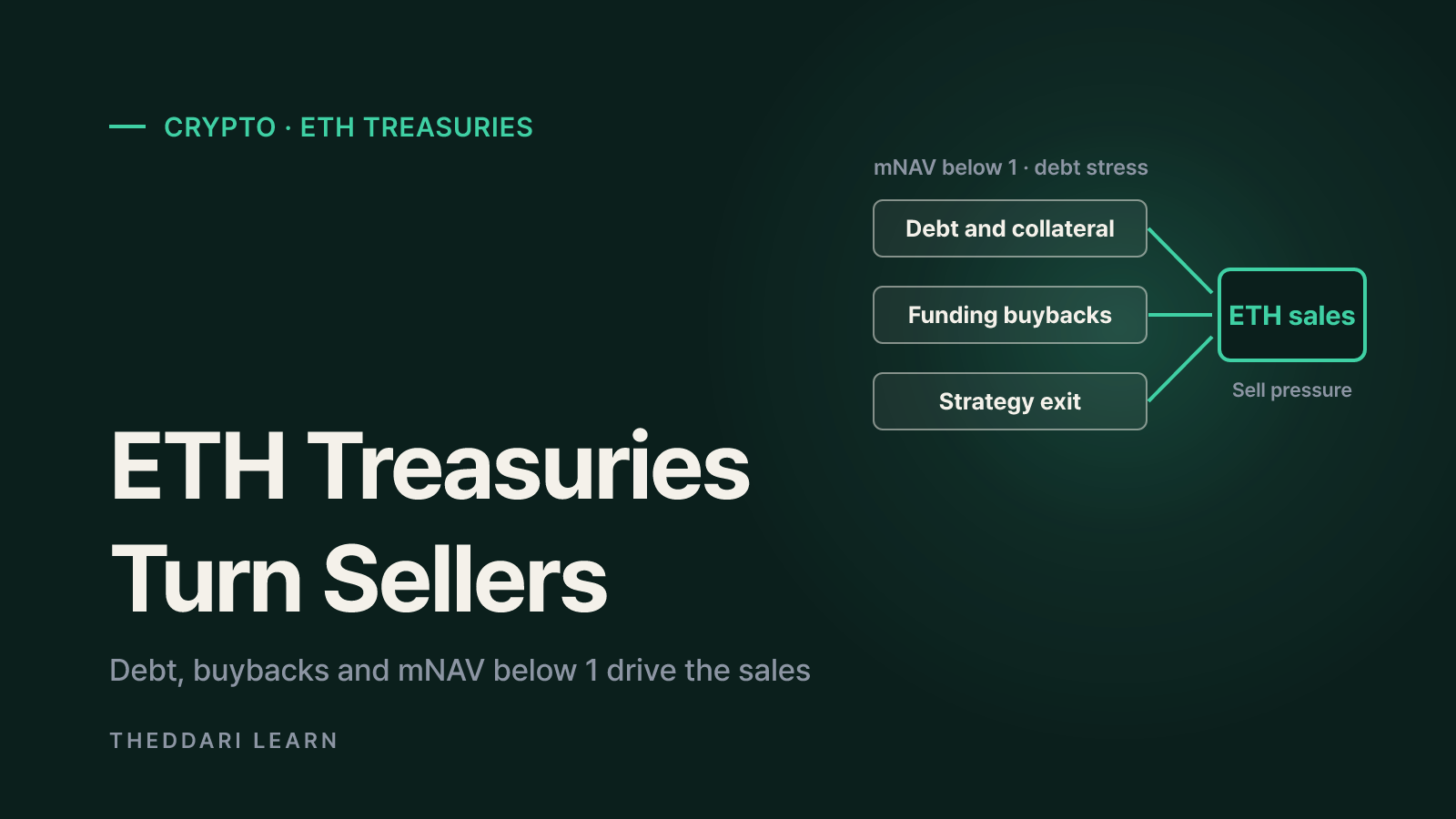
Ethereum Treasury Companies Selling ETH: Why mNAV Matters
Some Ethereum treasury companies are now selling ETH below cost. Using BTCS's November 2026 filings, BitMine's data and DefiLlama figures, this guide explains why firms sell, how Aave liquidation lines work and how to check a sale claim.
 Crypto
ETH Whales Selling at a Loss? Reading On-Chain Whale Data
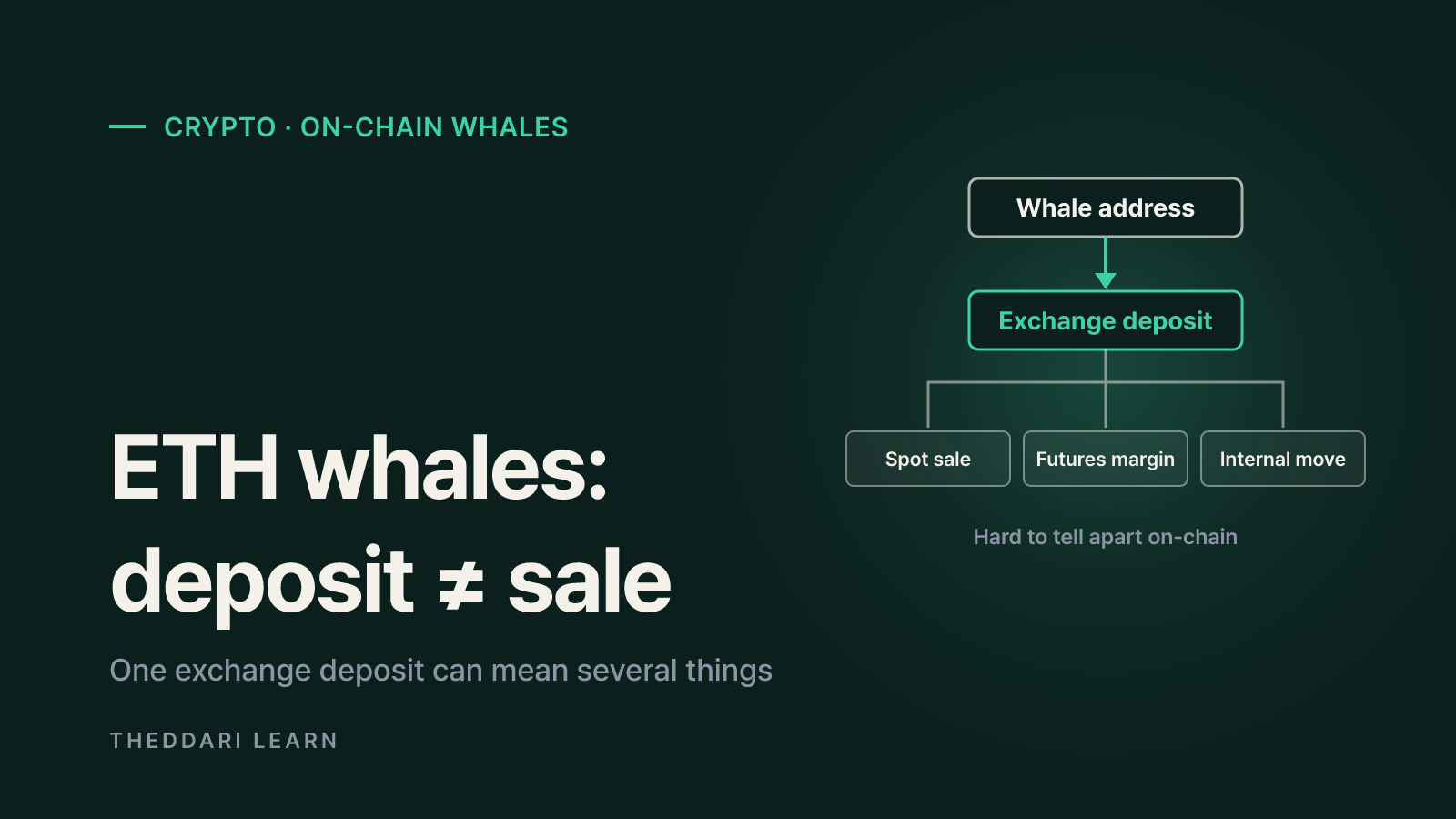
Headlines about Ethereum whales dumping at a loss are often read as a bottom signal or a warning. Here is how to check the wallet cohorts, exchange inflows and labels behind them, using November 2026 data.
 Crypto
Anthropic PreStocks Token: How It Works, Risks After IPO
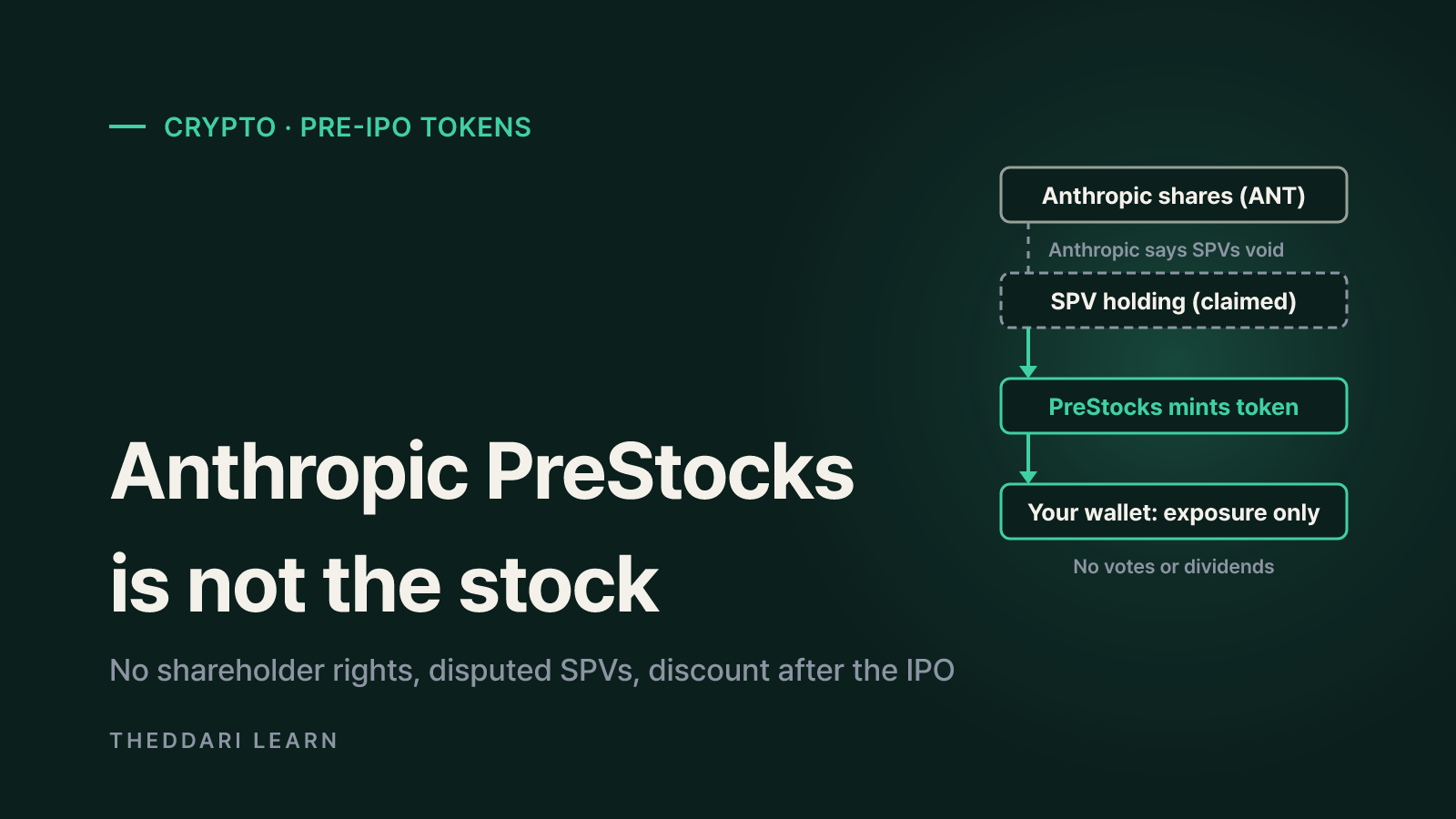
The ANTHROPIC token from PreStocks offers economic exposure only, with no shareholder rights. Here is how it is structured, why Anthropic disputes SPV transfers, and what the Nasdaq listing changes for holders.