Nvidia Spy Plot Report: Does Key-Person Risk Hit the Stock?
What is confirmed in the reported spy plot targeting Nvidia CEO Jensen Huang, how key-person risk reaches a stock, and which filings and dates to watch.
Contents7 sections
Key takeaways
- Per an October 29, 2026 NYT report, US intelligence suspects Megaspeed executive Alice Huang of spying on Nvidia; Jensen Huang is described as her target and faces no reported charges.
- Nvidia calls the contacts routine customer meetings with nothing relevant to national security; China's foreign ministry called the report groundless speculation.
- Three House committee chairs asked Huang for a closed-door briefing on November 18, the day after Nvidia reports third-quarter results.
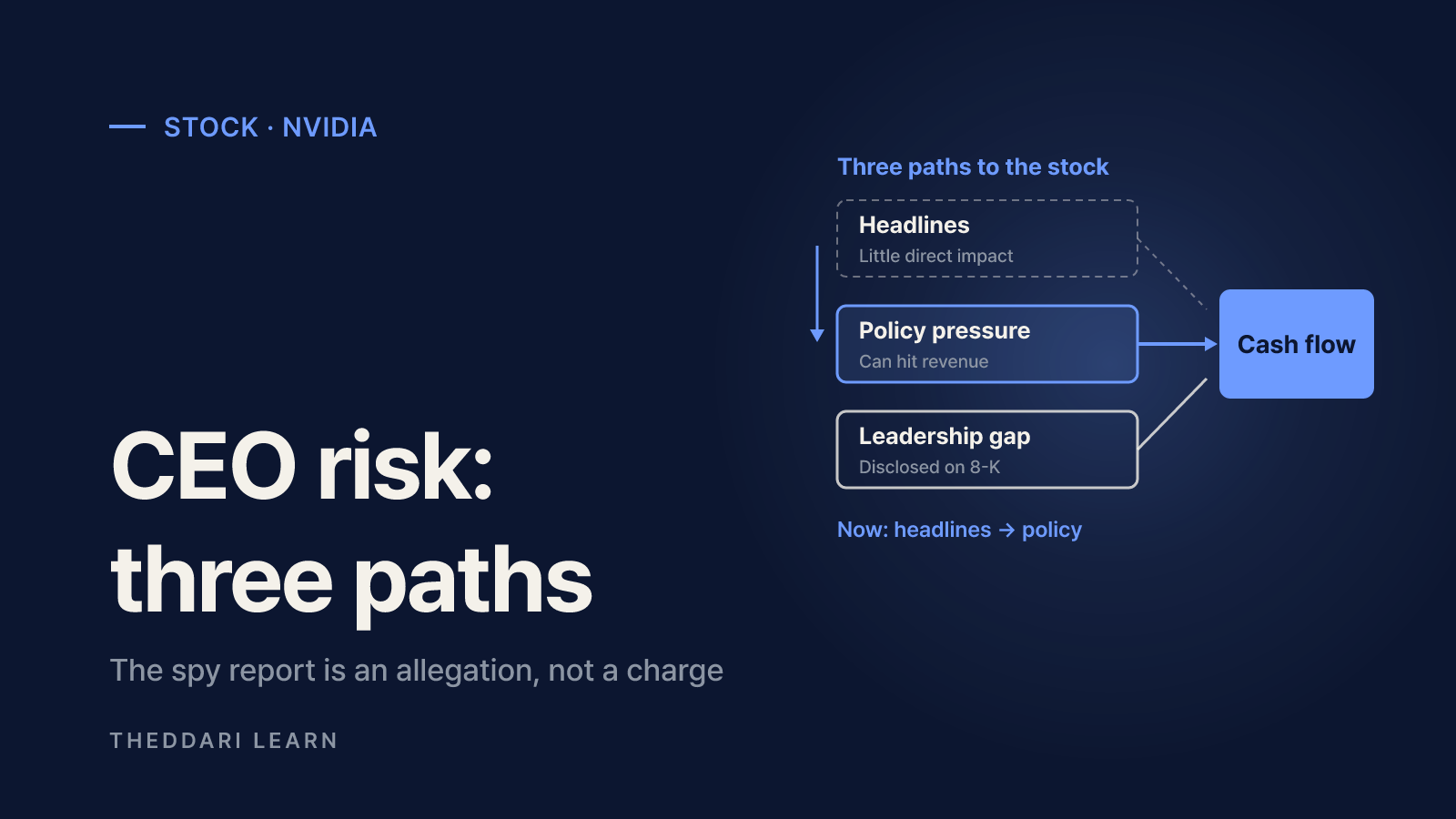
- Key-person risk reaches a stock via headlines, regulatory pressure or a real leadership gap; only the last two clearly touch cash flow.
- A CEO departure must be disclosed on Form 8-K under Item 5.02, so filings are a firmer guide than viral video titles.
Short answer: as of November 6, 2026, the reported Nvidia spy plot is an allegation about someone close to Jensen Huang, not a case against him. The person US intelligence reportedly suspects is a customer executive, and Nvidia's CEO is described as her target. No charges or findings against Huang have been reported. Whether this matters for the stock depends less on the headline and more on whether it turns into regulatory pressure on Nvidia's business or an actual disruption at the top. This guide separates confirmed facts from open questions and shows how to read key-person risk through filings and dates rather than viral video titles.
The Nvidia spy plot report: what is confirmed and what is not
According to the BBC, The New York Times reported on October 29, 2026 that US intelligence officials believe Alice Huang, a Chinese businesswoman linked to Singapore-based data center company Megaspeed, was gathering information on Nvidia for Beijing. She is not related to Jensen Huang. Surveillance reportedly picked up her communications with an American citizen who was later identified as Jensen Huang through a process known as unmasking.
The allegation
- What was said
- US intelligence concluded Alice Huang passed Nvidia-related information to China
- Type of source
- Press report citing unnamed sources
Nvidia
- What was said
- Routine customer meetings; regional cloud customers get ordinary business information and nothing relevant to national security
- Type of source
- Company statement
China
- What was said
- Groundless speculation and an attempt to smear China
- Type of source
- Foreign ministry briefing
Megaspeed
- What was said
- Hired outside legal advisers for an internal review and offered to cooperate with the US government
- Type of source
- Company comment, as reported
Congress
- What was said
- Three House committee chairs requested a closed-door joint briefing on November 18
- Type of source
- House committee press release
Open questions
- What information was allegedly passed, when it started and how valuable it was remain unclear, according to the BBC.
- No public report has shown that Jensen Huang handed over sensitive material, and Nvidia denies it.
- CNBC says Nvidia did not directly answer whether Huang will attend the requested briefing.
- The Times also reported that President Trump was briefed about a year ago and chose not to act. That claim rests on unnamed sources.
Video titles that talk about a spy plot can sound stronger than the underlying reporting. The House committee release calls Alice Huang a publicly reported PRC intelligence asset; we did not find any official document describing Jensen Huang as a participant.
Three ways key person risk reaches Nvidia stock
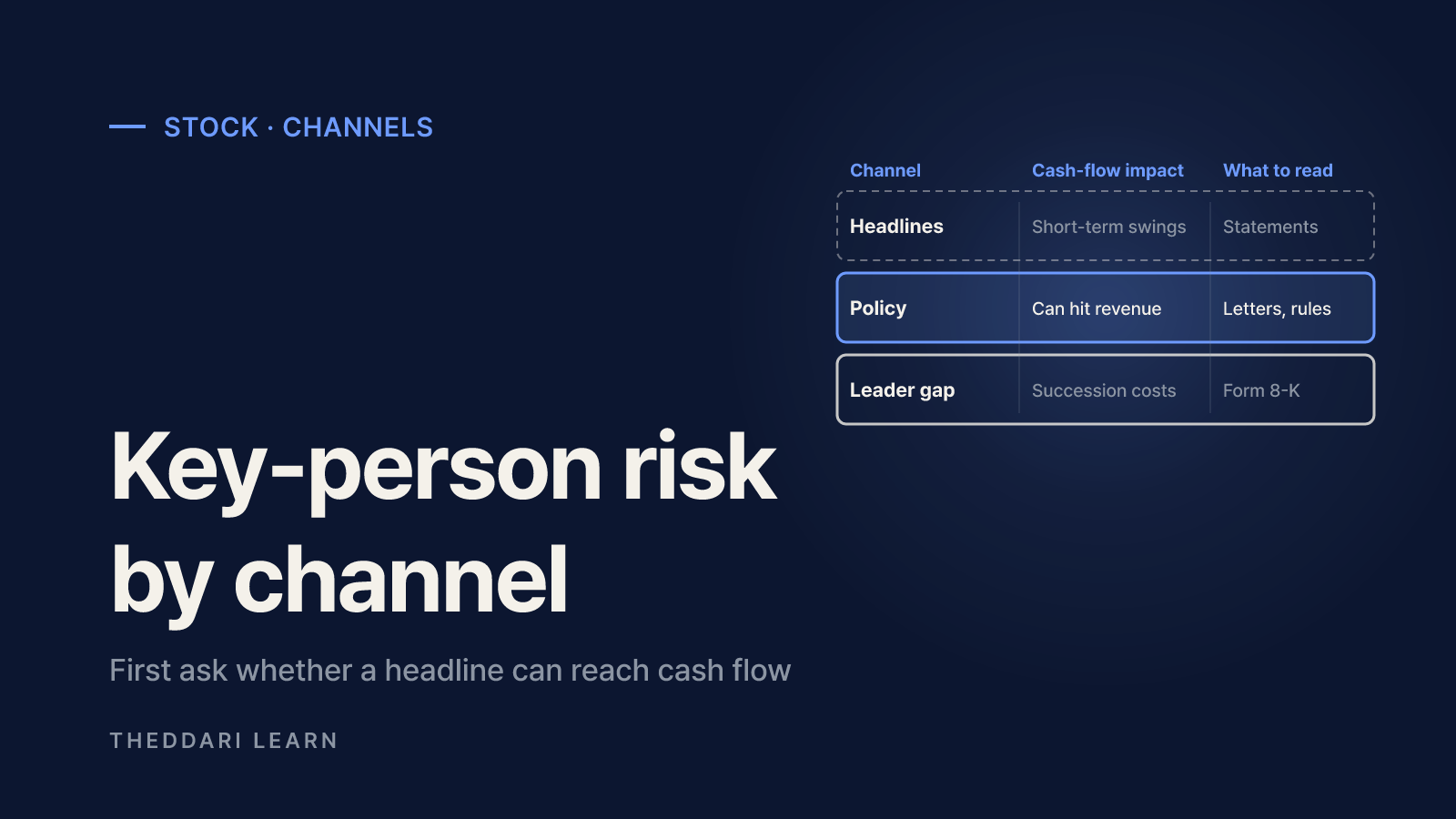
Key-person risk is the chance that something happening to one individual spills over into a company's value because so much depends on that person's judgment, relationships or reputation. Nvidia's fiscal 2025 Form 10-K notes that Huang co-founded the company in 1993 and has been president and CEO since its inception, and its risk factors include the risk of failing to retain executives and key employees. Still, not every person-related headline works the same way.
Headline and reputation
- Examples
- Press allegations, social media buzz
- Cash-flow impact
- Small and mostly short-term volatility
- What to read
- Company statements, follow-up reporting
Regulatory and policy pressure
- Examples
- Congressional probes, tighter export rules, customer investigations
- Cash-flow impact
- Can affect revenue if markets or customers are restricted
- What to read
- Committee letters, Commerce Department rules, guidance
Actual leadership gap
- Examples
- CEO resignation, removal or limited role
- Cash-flow impact
- Strategy, customer ties, succession costs
- What to read
- Form 8-K Item 5.02, board announcements
Where this story sits today
Based on public information as of November 6, 2026, the story is moving from the first channel toward the second. The chairs' letter asks not only about Huang's personal contacts but also about Nvidia's security protocols against foreign adversary espionage. The BBC notes that Washington has restricted exports of the most advanced Nvidia chips to China since 2022 and has investigated whether companies in third countries help Chinese buyers reach restricted hardware. If congressional attention turns into stricter customer screening or export controls, that is the most realistic path from this headline to revenue.
The founder premium cuts both ways
A long-tenured founder CEO can be a reason investors pay up, because strategy and key relationships sit with one trusted leader. The same concentration is why a sudden absence would be hard to replace. Markets therefore ask two separate questions: can this person keep doing the job, and do his outside relationships constrain the company? The current report is about the second question. Nothing confirmed so far challenges the first.
November dates that matter for the Nvidia CEO story
The earnings release and the requested briefing fall one day apart. Dates do not tell you which way a stock will move, but knowing when new information could surface makes it easier to ignore noise in between.
- 1
November 11: deadline to respond
The House Foreign Affairs Committee release says the chairs asked Huang to accept the date or offer an alternative by November 11, 2026.
- 2
November 17, 5 p.m. ET: Q3 earnings call
Per Nvidia's investor relations notice, the company will discuss results for the third quarter of fiscal 2027, which ended October 25, 2026. Listen for analyst questions on China, customer screening or security.
- 3
November 18: requested closed-door briefing
Because the session is closed, details may not be released. Watch for committee statements or follow-up letters afterward.

Macro releases in the same week can move chip stocks just as much, so check the economic calendar to separate a company-specific reaction from a market-wide one.
How to check key-person risk in SEC filings
Person-focused news invites competing interpretations. Documents a company must file by law make a steadier reference point. For a US-listed company like Nvidia, start with these three.
- Form 10-K risk factors (Item 1A)
- Look for language on dependence on the executive team and succession planning, and compare wording year over year.
- Form 8-K current reports
- The SEC's Investor.gov bulletin explains that if a CEO, president, CFO or similar officer retires, resigns or is terminated, the company must disclose it under Item 5.02, and most 8-K items are due within four business days of the event.
- Proxy statement
- Check how the board describes its oversight of CEO succession and related governance policies.
No 8-K about officer changes means no formal leadership departure has occurred. The reverse is not true: a congressional inquiry or press report does not automatically trigger a filing, so a quiet EDGAR page does not mean zero risk.
Mistakes to avoid when reading Nvidia stock news
- Treating a one-day move as the headline's effect. Compare NVDA with the semiconductor group, the Nasdaq and rates on the same day before attributing anything to this story.
- Treating view counts as evidence. Popular videos often sharpen the wording. Compare their claims with the original reporting and official documents.
- Treating denials as closure. Nvidia and Beijing have denied the allegations, but the congressional process is still open.
- Treating key-person risk as a sell signal. Identifying a risk and deciding on a trade are separate steps; the same news means different things depending on position size and time horizon.
To gauge how much attention the story is getting among traders, the Telegram stock trends page tracks mention volume. Attention is not accuracy, though, and it does not predict direction.
A quick checklist
- Confirm from original reporting and official documents who is suspected of what.
- Line up the statements from Nvidia, China and Megaspeed side by side.
- Track signals that could reach revenue, such as committee letters and export-rule changes.
- Watch official releases around the November 17 earnings call and the November 18 briefing request.
- Use 8-K and 10-K filings, not social media, to judge whether a real leadership gap exists.
Frequently asked questions
Has Jensen Huang been accused of espionage?
Will the spy report push Nvidia stock down?
How do investors measure key person risk?
When exactly are Nvidia's earnings and the requested briefing?
Sources and references
- 1BBC: China denies allegations of spy operation targeting Nvidia CEO(opens in a new tab)www.bbc.com
- 2CNBC: Nvidia's Huang is asked to brief Congress on reported Chinese spy relationship(opens in a new tab)www.cnbc.com
- 3House Foreign Affairs Committee: Chairmen Request Jensen Huang Brief Congress(opens in a new tab)foreignaffairs.house.gov
- 4NVIDIA: NVIDIA Sets Conference Call for Third-Quarter Financial Results(opens in a new tab)investor.nvidia.com
- 5Investor.gov (SEC): How to Read an 8-K(opens in a new tab)www.investor.gov
- 6SEC EDGAR: NVIDIA Form 10-K (fiscal year ended January 26, 2025)(opens in a new tab)www.sec.gov
Related articles
 Stocks
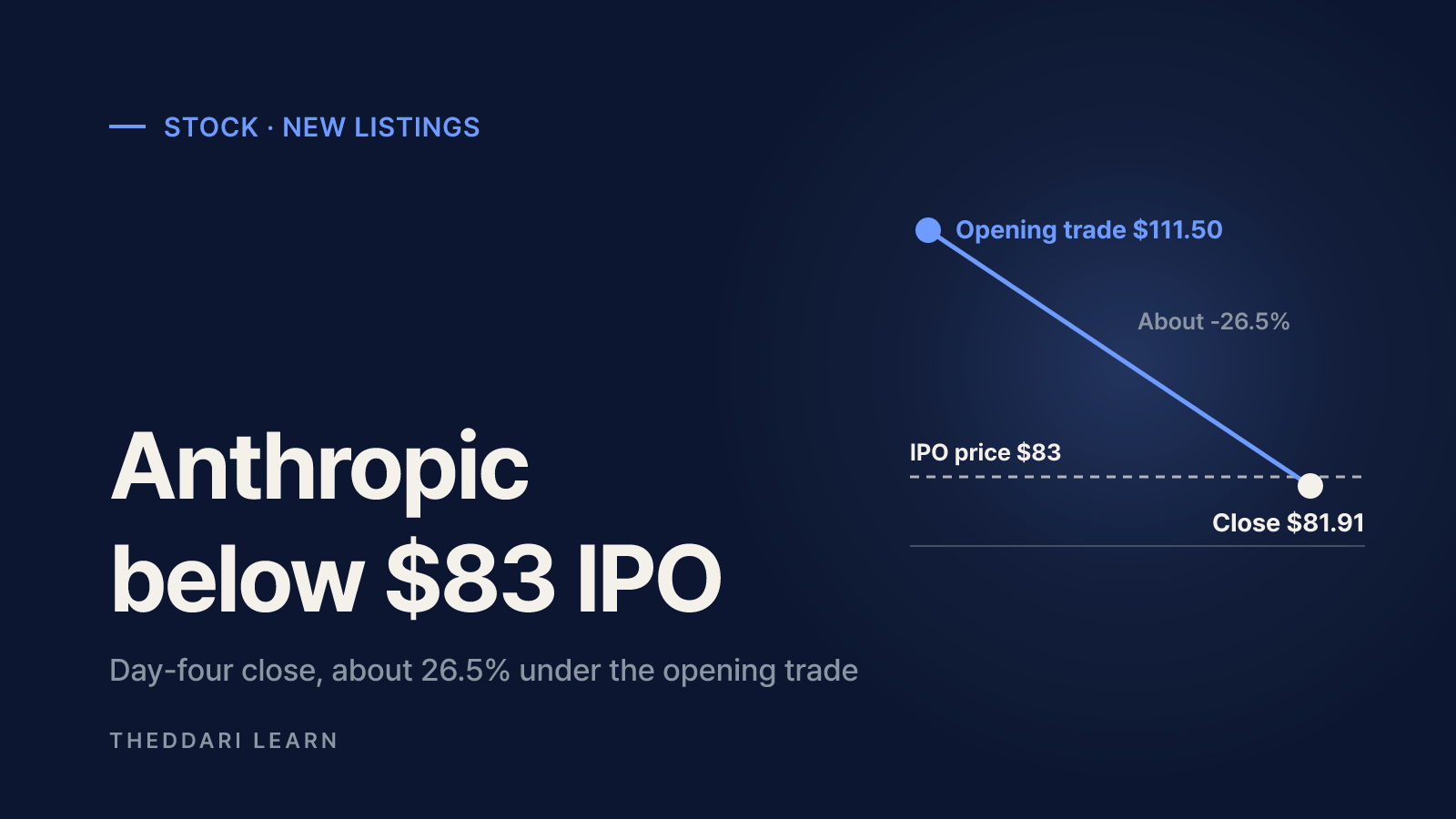
Anthropic IPO Price Broken at $83: What to Check Next
Anthropic shares slipped below their $83 offer price four sessions after a record debut. Here is how IPO prices are set, what underwriter support does and does not do, and a filing-by-filing checklist for any new listing trading under its offer price.
 Stocks
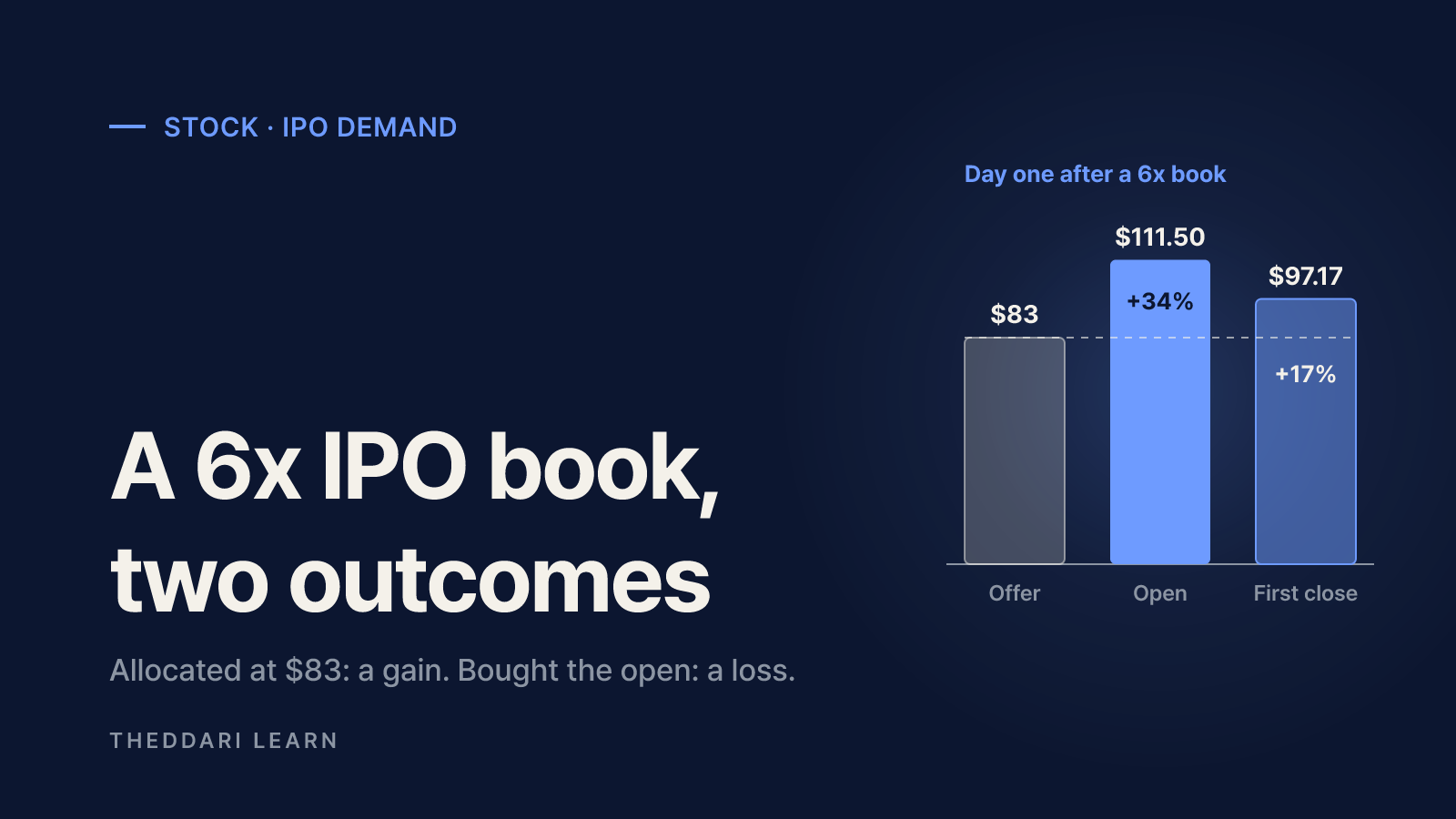
Anthropic IPO Demand: Does Oversubscription Mean Gains?
A 6x order book does not promise a rising stock. Using Anthropic's actual listing numbers, here is how to read oversubscription, price revisions, the opening trade and the supply calendar.
 Stocks
What Is ANTH.PVT on Yahoo Finance? Private Prices Explained
ANTH.PVT is not a stock you can trade. It was Yahoo Finance's model-based price for Anthropic while the company was private. Here is how Forge Price works, why it can mislead, and what changed after Anthropic listed as ANT.