Anthropic IPO Demand: Does Oversubscription Mean Gains?
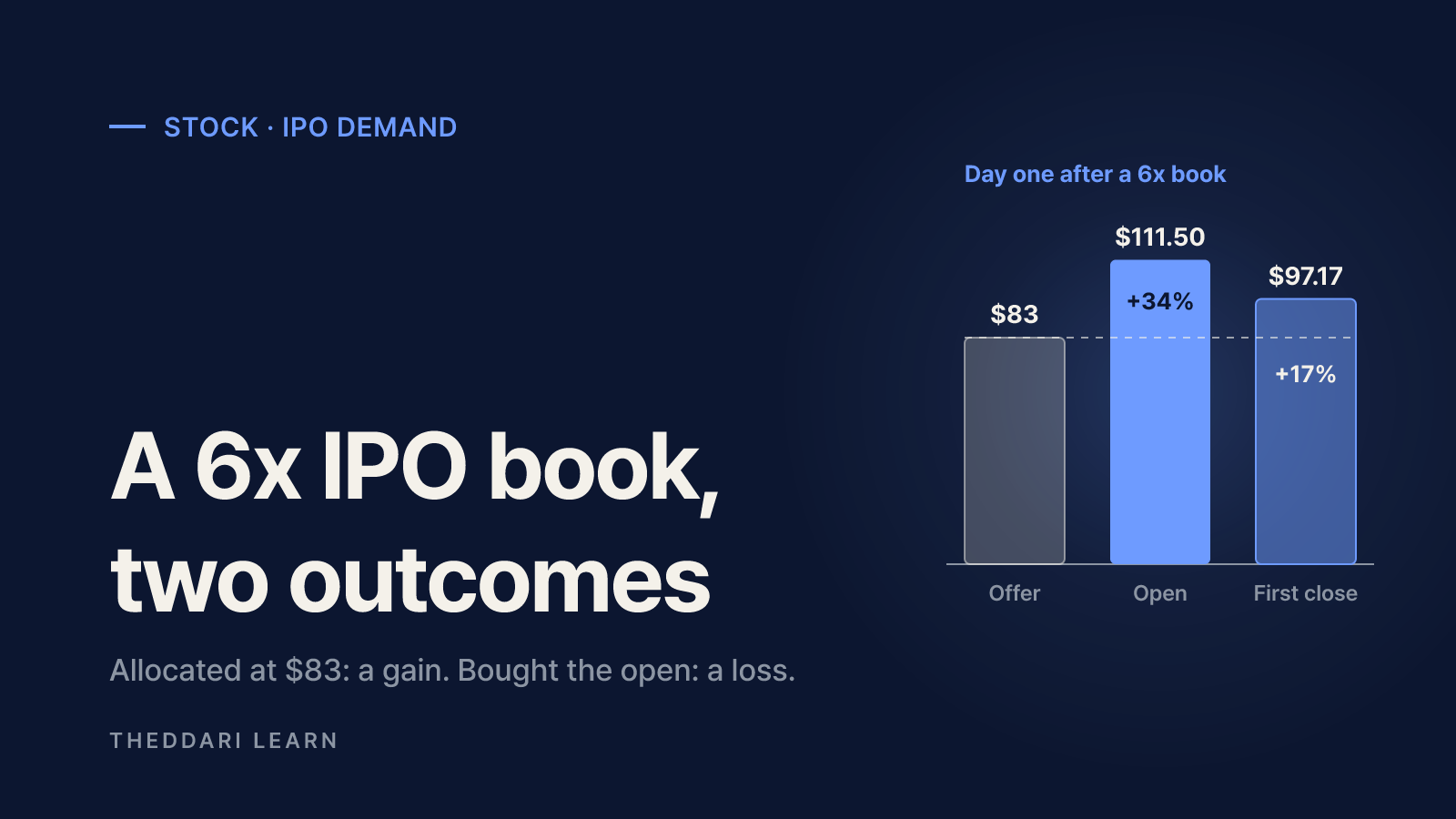
Anthropic's IPO was reportedly about 6x oversubscribed, priced at $83 and closed day one at $97.17. Learn what IPO demand signals reveal and what they miss.
Contents8 sections
Key takeaways
- Reuters and Bloomberg, citing unnamed sources, reported Anthropic's book at about 2x after the first roadshow day and about 6x by November 12, 2026, with a caveat that figures could change.
- Anthropic priced 980 million shares at $83 on November 18. ANT opened at $111.50 on Nasdaq and closed its first session at $97.17.
- Investors allocated at $83 were up about 17% at the first close; anyone who bought at the $111.50 open was down about 13% the same day.
- Oversubscription depends on deal size, padded orders and the price at which demand was measured, so it is a weak predictor of post-listing returns.
- After listing, the overallotment option, lock-up expirations, index inclusion dates and valuation assumptions all shape the share price.
Strong Anthropic IPO demand told investors the deal would get done at a higher price, but it did not tell them where the stock would trade afterward. As of November 25, 2026, the record is clear: Anthropic (ticker ANT) priced at $83, opened on Nasdaq at $111.50 and closed its first session at $97.17. Allocated investors finished day one with a gain, while anyone who bought the opening trade finished it with a loss. This guide uses those numbers to explain how to read an oversubscribed book, a price revision, the opening print and the share-supply calendar for mega IPOs. It focuses on interpreting demand signals rather than on S-1 basics or lock-up dates.
Anthropic IPO demand by the numbers
According to Reuters, orders reached about two times the shares available by the end of Tuesday, November 10, the first day of the roadshow, and about six times by the end of Thursday, November 12. The same report noted that a single-digit subscription rate would be considered modest for many highly anticipated IPOs, yet bankers and investors called it impressive given the size of the offering. The figures came from people speaking anonymously, and the report warned that details, including demand, could change. In other words, the 6x number was never a company disclosure.
The confirmed numbers come from the company. In its pricing announcement, Anthropic said it priced 980,000,000 Class A shares at $83.00 on November 18. Of those, 956,351,354 were sold by the company and 23,648,646 by selling stockholders, whose proceeds do not go to Anthropic. Underwriters received a 30-day option to buy up to 147,000,000 additional shares, and the company's November 20 closing notice is titled as including full exercise of that option.
Nov 10, end of roadshow day one
- Figure
- About 2x oversubscribed
- Type of source
- Anonymous sources via Reuters
Nov 12, end of day
- Figure
- About 6x oversubscribed
- Type of source
- Anonymous sources via Reuters and Bloomberg
Nov 18, pricing
- Figure
- $83, 980 million shares
- Type of source
- Company announcement
Nov 19, first trade
- Figure
- $111.50, about 34% above the offer
- Type of source
- Exchange and press
Nov 19, close
- Figure
- $97.17, about 17% above the offer
- Type of source
- Press (CNBC)
Nov 25, checked
- Figure
- $75.90 quoted
- Type of source
- Investing.com quote display
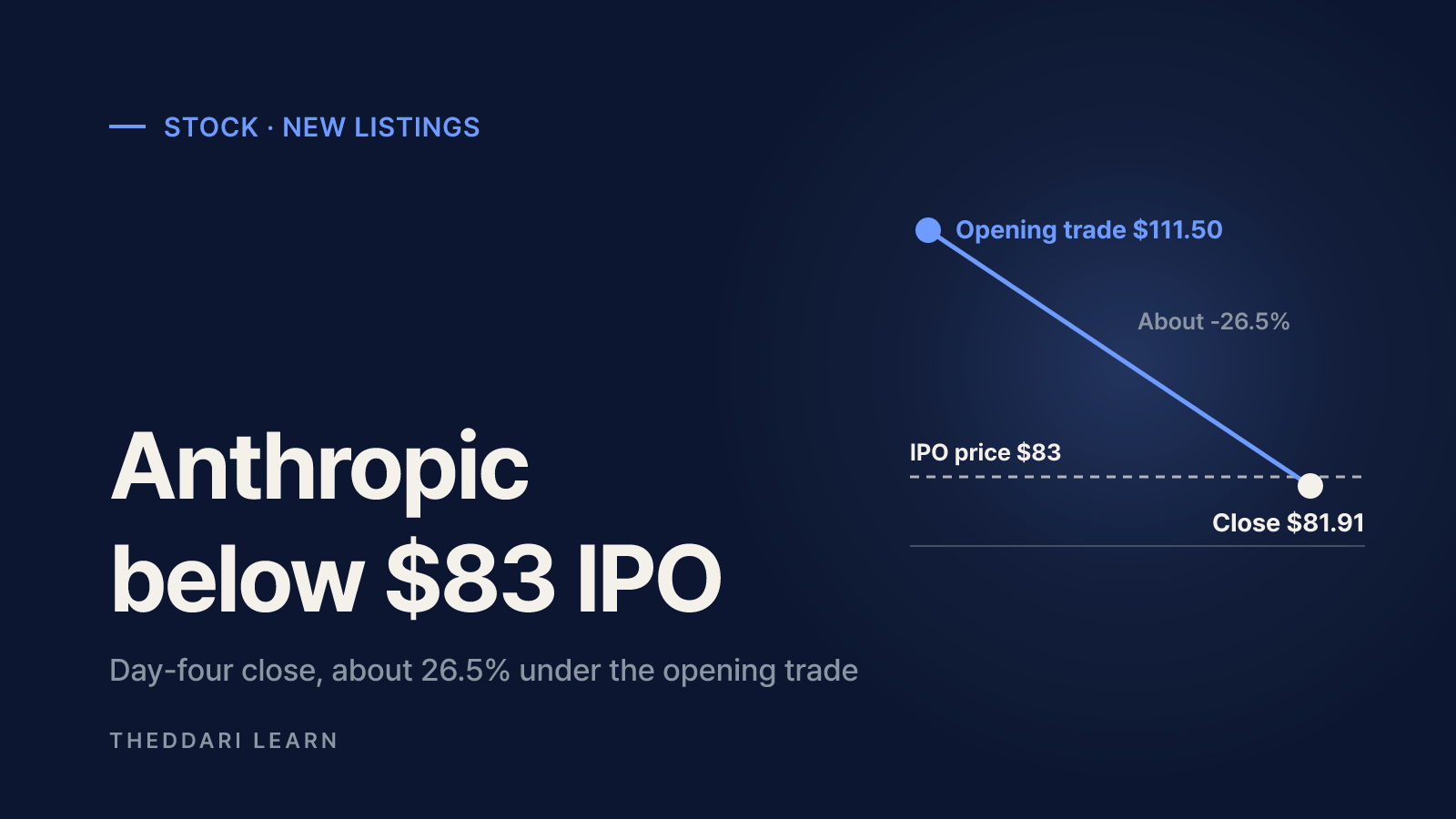
CNBC reported that Anthropic raised $81.3 billion after lifting both the size and the price of the offering. More than 846 million shares changed hands on day one, and the fully diluted market value at the close was roughly $1.8 trillion. When this guide was written on November 25, the Investing.com page displayed ANT at $75.90, below the $83 offer price. Quotes move constantly, so check a live feed with your broker. The lesson is simple: the same 6x book produced very different outcomes depending on whether you measured from the offer, the open or a later date.
What an oversubscribed IPO tells you, and what it does not
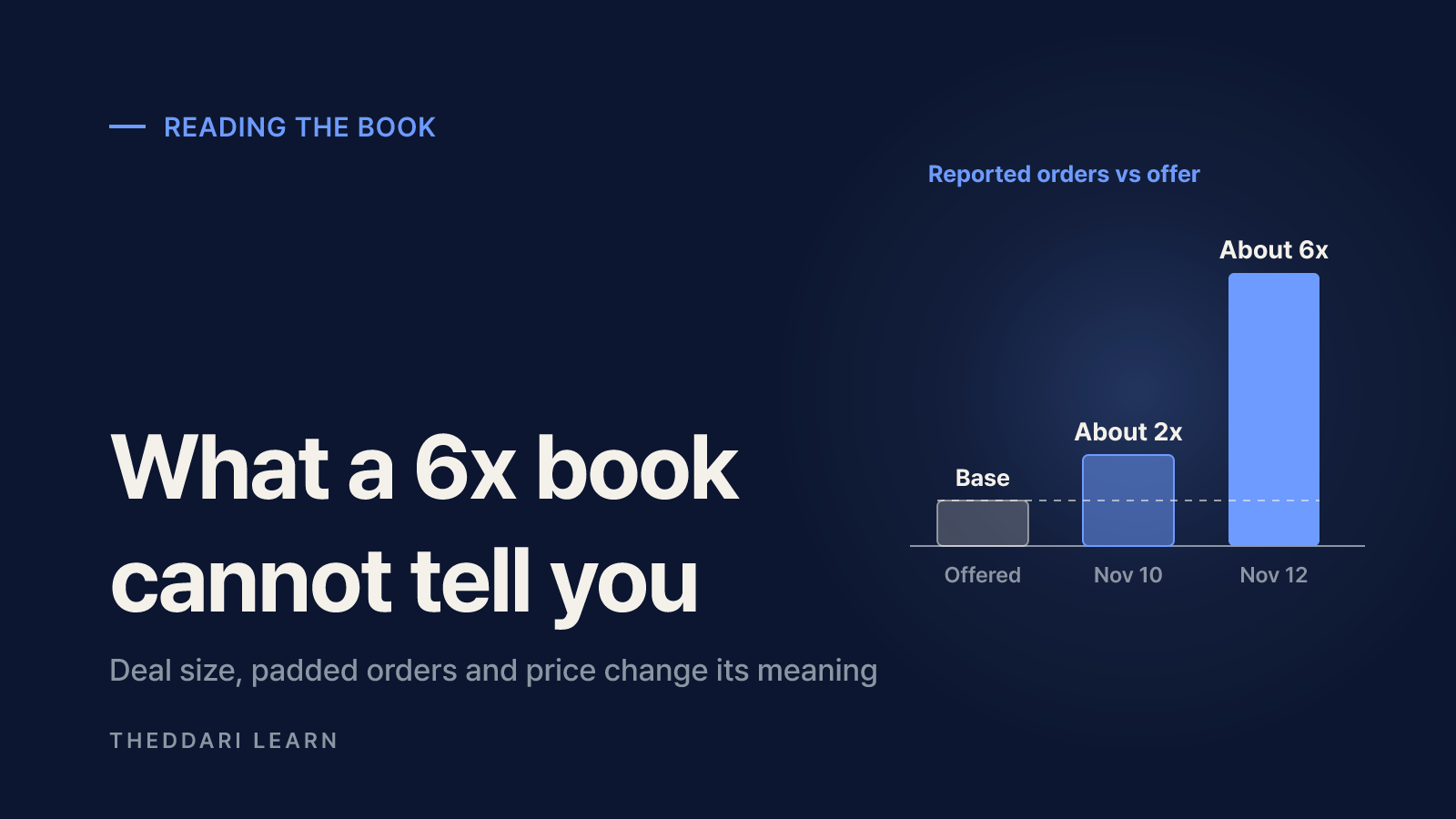
Most US IPOs use book building. During the roadshow, underwriters collect non-binding indications of interest from institutions, noting how many shares each would buy and at what price. They then use that book to set the final price and size. The oversubscription multiple is simply total orders divided by shares offered. A 6x book means indications for six times the available stock. That is useful context, but its meaning is narrower than headlines suggest.
Deal size changes the weight of the multiple
Small IPOs can attract dozens of times their offering in orders. Filling a book several times over for a deal measured in tens of billions of dollars requires vastly more capital. That is why Reuters' sources framed a single-digit multiple as strong in Anthropic's case. Comparing the multiple of a small listing with that of a mega IPO, without adjusting for size, misjudges demand in both directions.
Orders can be padded
When investors expect allocations to be cut back, some ask for more shares than they actually want. That inflates the multiple without adding lasting demand at the offer price or above it. CNBC reported that Anthropic favored institutions it already knew, leaving roughly half of the firms that placed orders with no shares. Retail allocation came in at around 15%, below the company's 20% estimate but above the typical 5% to 10%. Shut-out investors may buy in the open market, which can lift early trading, but the book cannot tell you how long that buying lasts.
The multiple is not a price signal
Every order assumes a price. Raise the offer and some orders drop out; open far above the offer and fewer buyers remain willing to pay. There is no reason to assume that 6x demand at $83 still existed at $111.50. Treat any reported multiple as a snapshot taken on a specific date at a specific price range.
Price revisions and the IPO first day return
When demand is strong, the issuer and underwriters raise the price, the share count, or both. A higher offer price moves part of the potential first-day pop into the company's proceeds. First-day gains are still common because issuers rarely price in all the demand. The IPO data maintained by Jay Ritter at the University of Florida breaks down first-day returns by how far the offer price was revised from the original filing range, and tracks the share of deals priced above the midpoint of that range as a measure of how hot the IPO market is. Long-run returns are compiled separately, a reminder that day-one performance and multi-year performance answer different questions.
$83 offer price
- Who it applies to
- Investors allocated in the IPO
- Result at the $97.17 first close
- About +17%
$111.50 opening trade
- Who it applies to
- Buyers of the first trade
- Result at the $97.17 first close
- About -13%
$75.90 quoted on Nov 25
- Who it applies to
- Later reference quote
- Result at the $97.17 first close
- About 9% below the offer
Headline first-day returns run from the offer price to the first close: (97.17 - 83) / 83 is about 17% for Anthropic. From the opening trade, the math is (97.17 - 111.50) / 111.50, or about -13%. Most retail investors buy in the market rather than through an allocation, so run both numbers.
A wide gap between the offer and the open means allocated investors and market buyers can have opposite experiences. Anthropic opened about 34% above its offer price, so market buyers started from a much higher base. Order type matters too. A market order prioritizes execution, while a limit order prioritizes price, and fills on a newly listed stock can differ sharply from what you expected.
What moves a new stock after listing
Demand signals capture the mood just before pricing. After listing, other forces take over, and with mega IPOs the supply calendar is crowded.
- Overallotment option: Underwriters received an option on 147 million extra shares, and the closing notice says it was fully exercised. The option is tied to early price stabilization, and its exercise increases the share count available to trade.
- Lock-up expirations: Pre-IPO holders and employees are usually barred from selling for a set period. Check the final prospectus for dates and conditions, since tradable supply can rise around each release.
- Index inclusion: CNBC reported that the Morningstar US Total Market Index adds the stock after five trading days, the Nasdaq-100 after December 18, and the S&P 500 not for at least a year. Index-fund buying arrives on each index's own schedule.
- Valuation debate: Reuters reported that banks anchored valuations to projected 2028 revenue of about $270 billion to $280 billion, while one investor who passed on the deal sat about 30% below that estimate. The same company can justify very different prices under different growth assumptions.
- Anti-flipping rules: Some brokerages restrict retail investors who sell allocated shares quickly, which affects who can sell and when.
Looking at how private shares were priced before a listing can help you gauge the gap between the offer price and market expectations. The theddari pre-IPO page collects price information on companies before they list. Keep in mind that private-market prices are thinly traded and calculated in different ways.

A checklist for reading IPO demand
- 1
Classify the source
Is the multiple from a filing or from anonymous sources quoted in the press? If it is reported, note the date and any caveat that numbers could change.
- 2
Compare the final terms with the range
Check whether the final price moved above or below the original range and whether the share count grew, using the pricing release and final prospectus. Anthropic raised both.
- 3
Pick your reference price
Separate the offer price, the opening trade and the price you could actually pay, and calculate returns from each. The goal is to avoid mistaking a headline return for your own.
- 4
Map the supply calendar
Mark overallotment exercise, lock-up expirations and index inclusion dates. Note whether earnings or major economic releases fall in the same window.
- 5
Write down the valuation assumptions
State what revenue growth the current price implies and how it changes under a conservative case. If you cannot explain the assumption, you need more research.
A newly public company's first quarterly report is the first real test of the growth story told on the roadshow. Use the theddari earnings calendar to track report dates and the economic calendar to follow rate and inflation releases that move growth stocks broadly. Both tools organize schedules; neither predicts price direction.
Bottom line: demand is the starting line
Anthropic shows both the use and the limits of IPO demand data. The reported 6x book was strong enough to push the price and size higher, and the first-day return from the offer price was positive. Yet the stock opened so far above its offer that market buyers began with a loss, and a week later it was quoted below $83. The multiple measures interest at a particular price just before listing. What happens next depends on the opening level, the supply calendar, index flows and whether earnings confirm the growth the market paid for. The next time a mega IPO is called oversubscribed, check the source, the price revision, your reference price, the supply schedule and the assumptions, in that order.
Frequently asked questions
Does a heavily oversubscribed IPO usually go up after listing?
Why are US IPO subscription numbers so hard to verify?
What is the difference between the IPO price and the opening price?
Can retail investors flip IPO shares they were allocated?
Sources and references
- 1Anthropic: Anthropic prices initial public offering (Nov 18, 2026)(opens in a new tab)www.anthropic.com
- 2Reuters via Investing.com: Investors flock to Anthropic IPO but question durability of AI lead (Nov 13, 2026)(opens in a new tab)www.investing.com
- 3CNBC: Anthropic IPO live updates, ANT stock price and Nasdaq debut (Nov 19, 2026)(opens in a new tab)www.cnbc.com
- 4Jay R. Ritter, University of Florida: IPO Data(opens in a new tab)site.warrington.ufl.edu
Related articles
 Stocks
Anthropic IPO Price Broken at $83: What to Check Next
Anthropic shares slipped below their $83 offer price four sessions after a record debut. Here is how IPO prices are set, what underwriter support does and does not do, and a filing-by-filing checklist for any new listing trading under its offer price.
 Stocks
What Is ANTH.PVT on Yahoo Finance? Private Prices Explained
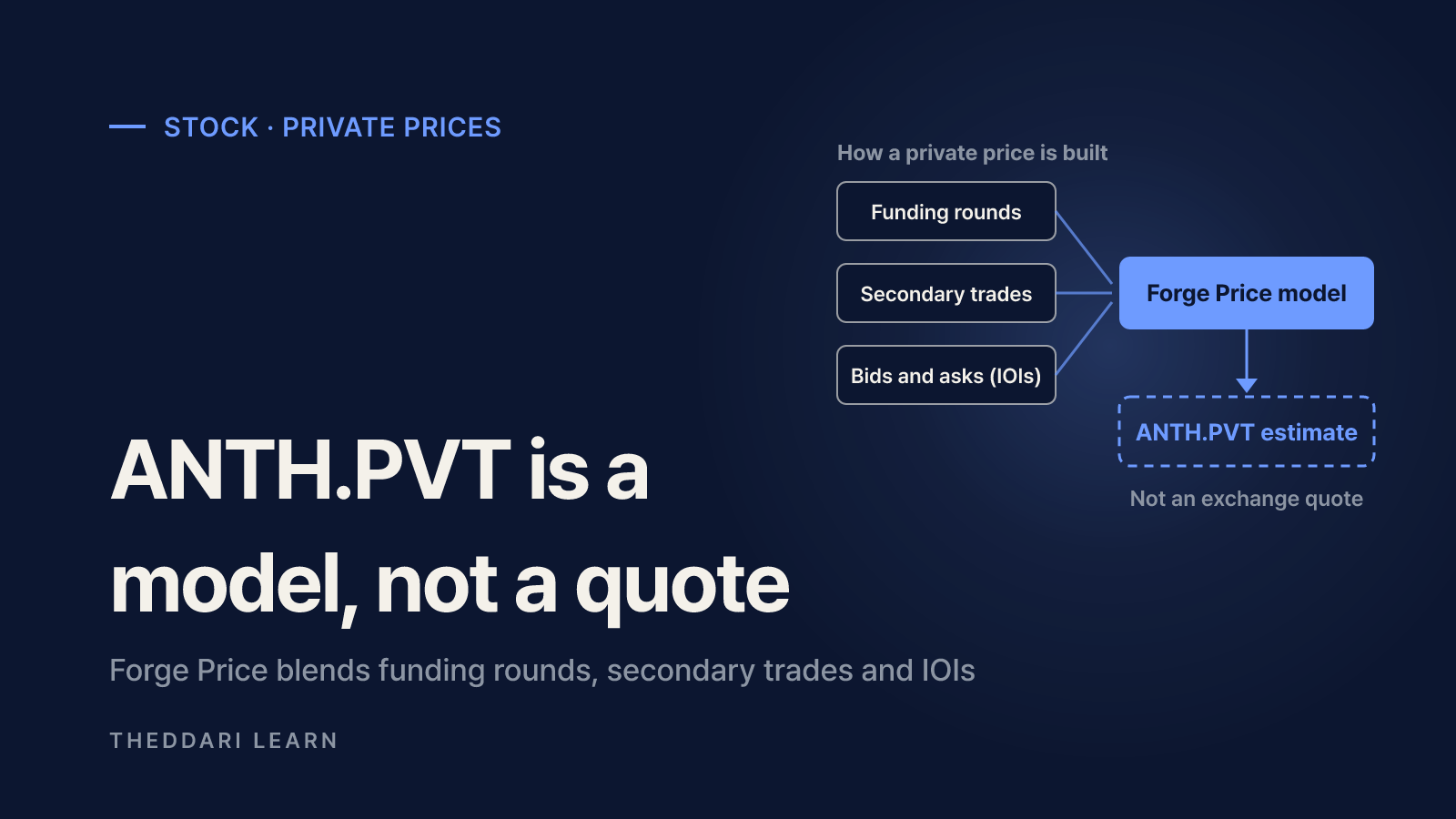
ANTH.PVT is not a stock you can trade. It was Yahoo Finance's model-based price for Anthropic while the company was private. Here is how Forge Price works, why it can mislead, and what changed after Anthropic listed as ANT.
 Stocks
CrowdStrike Zscaler Acquisition: Terms, Risks for Holders
It is a signed merger agreement, not a rumor. Here is how the CrowdStrike–Zscaler all-stock deal announced on November 23, 2026 works, what CRWD and ZS shareholders should check, and where the deal could stall or break.