What Are Neoclouds? CoreWeave and Nebius vs Hyperscalers
Neoclouds like CoreWeave and Nebius rent GPUs for AI. See how they differ from AWS, Azure and Google Cloud on pricing and funding, plus the debt and GPU risks.
Contents7 sections
Key takeaways
- Neoclouds are cloud providers that specialize in renting GPU servers and high-speed networking for AI training and inference, rather than selling thousands of services like AWS, Azure or Google Cloud.
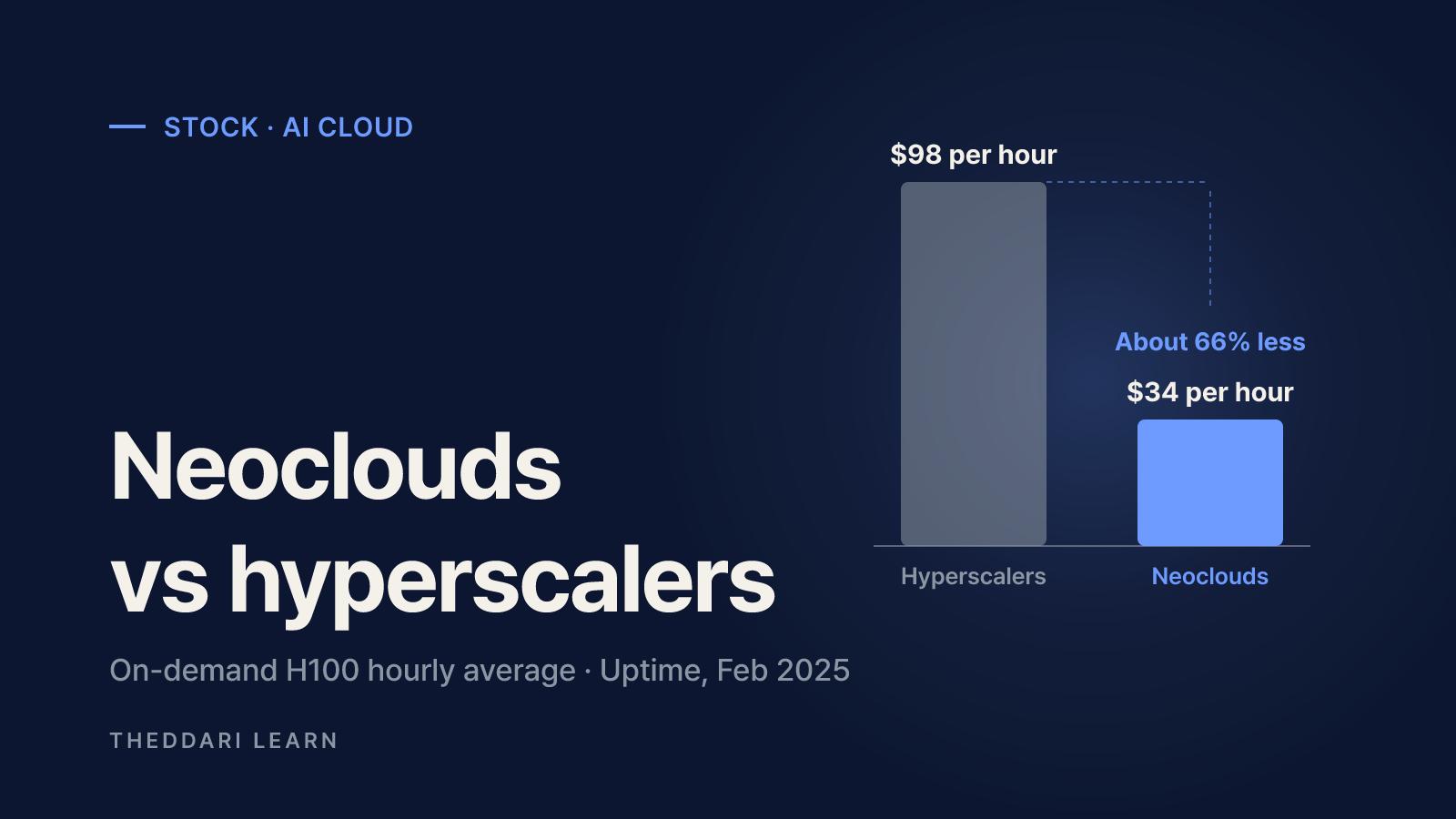
- Uptime Institute (Feb 2025) found an on-demand Nvidia DGX H100 instance averaged $98 an hour at hyperscalers vs $34 at neoclouds, mostly a margin gap.
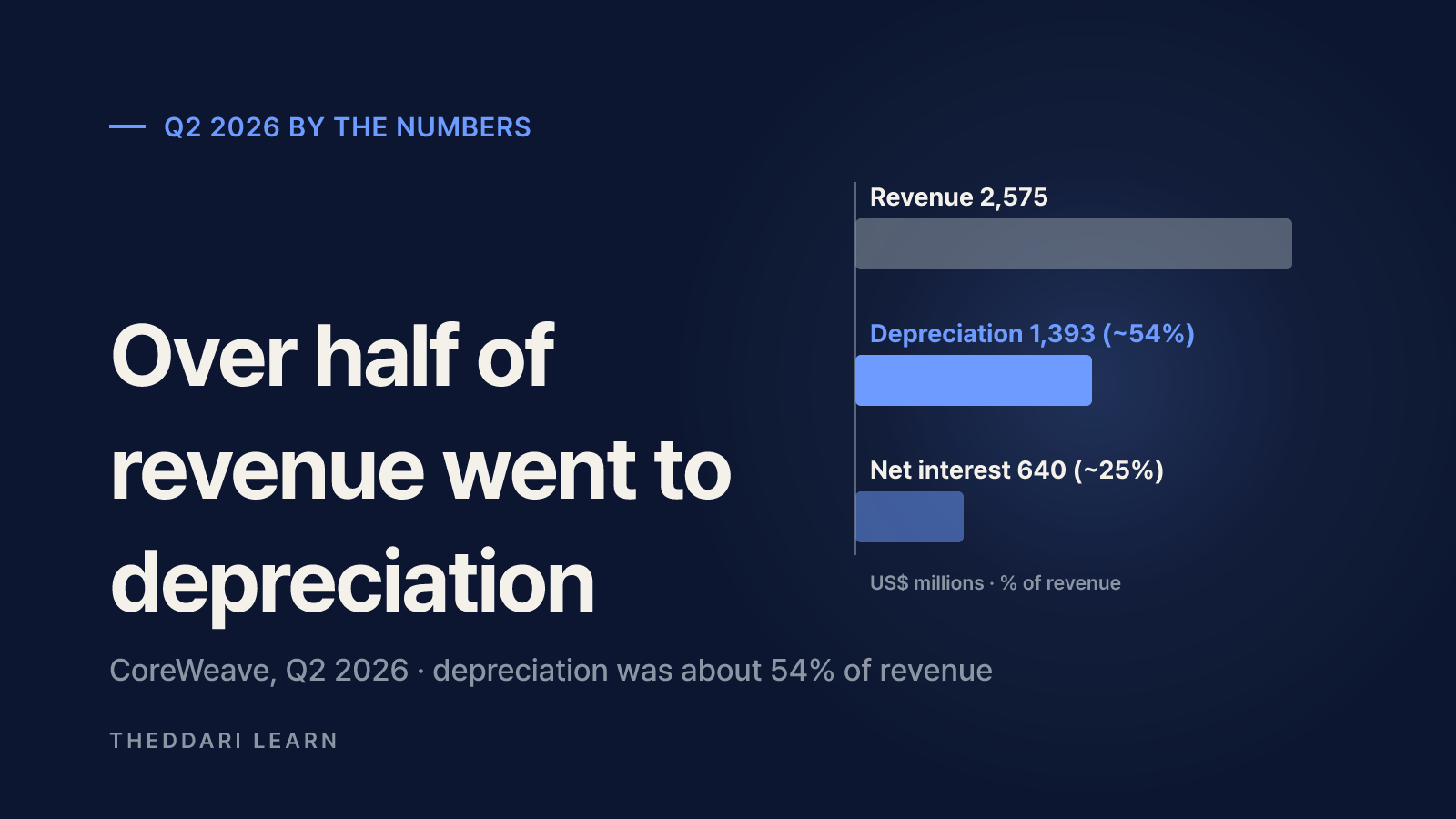
- CoreWeave reported Q2 2026 revenue of $2.575 billion and a revenue backlog of about $104 billion, but also $1.393 billion of depreciation and $640 million of net interest expense.
- Nebius reported Q2 2026 revenue of $582.3 million, annualized run-rate revenue of $3.0 billion and roughly $5.7 billion of capital expenditures.
- Neocloud stocks should be judged on funding costs, customer concentration and GPU depreciation, not on revenue growth alone.
Neoclouds are cloud providers built around one job: renting out GPU capacity for AI model training and inference. CoreWeave and Nebius are the most widely followed listed examples. Where hyperscalers such as Amazon Web Services, Microsoft Azure and Google Cloud sell thousands of services, from storage and databases to analytics, neoclouds keep the product list short and compete on getting large GPU clusters online quickly and at a lower hourly price. This guide uses Q2 2026 company filings and industry research available as of October 2026 to explain the neocloud vs hyperscaler difference and the risks investors should track.
The short answer: neoclouds usually charge less for GPUs and can add capacity fast, but they pay more for capital, depend on a small number of very large customers, and must earn back expensive hardware that ages quickly and is often bought with borrowed money. Revenue growth tells only part of the story.
What are neoclouds and why did they appear?
Uptime Institute, a data center research firm, describes neoclouds as a new category of providers specializing in GPU-backed servers and virtual machines, often priced below the hyperscalers. It notes that in early 2024 hyperscalers struggled to meet GPU demand, with some GPU instance prices exceeding $100 per hour when capacity was available at all. Neoclouds grew by filling that gap.
The business model is straightforward. A neocloud buys Nvidia GPUs in volume, installs them in data centers with enough power and cooling, and rents the capacity to AI labs, startups and enterprises, either by the hour or under multi-year contracts. Some of the biggest customers are hyperscalers themselves, which rent neocloud capacity when AI demand outruns their own construction schedules.
Why power now matters as much as chips
Large training runs tie thousands of GPUs together for weeks, which is a different requirement from the elastic, general-purpose computing that public clouds were designed for. Neoclouds design around dense GPU servers and fast interconnects from day one. In 2026, securing electricity has become a central constraint: CoreWeave reported 1.5 GW of active power and roughly 3.7 GW of contracted power at the end of June 2026.
Neocloud vs hyperscaler: products, pricing and funding
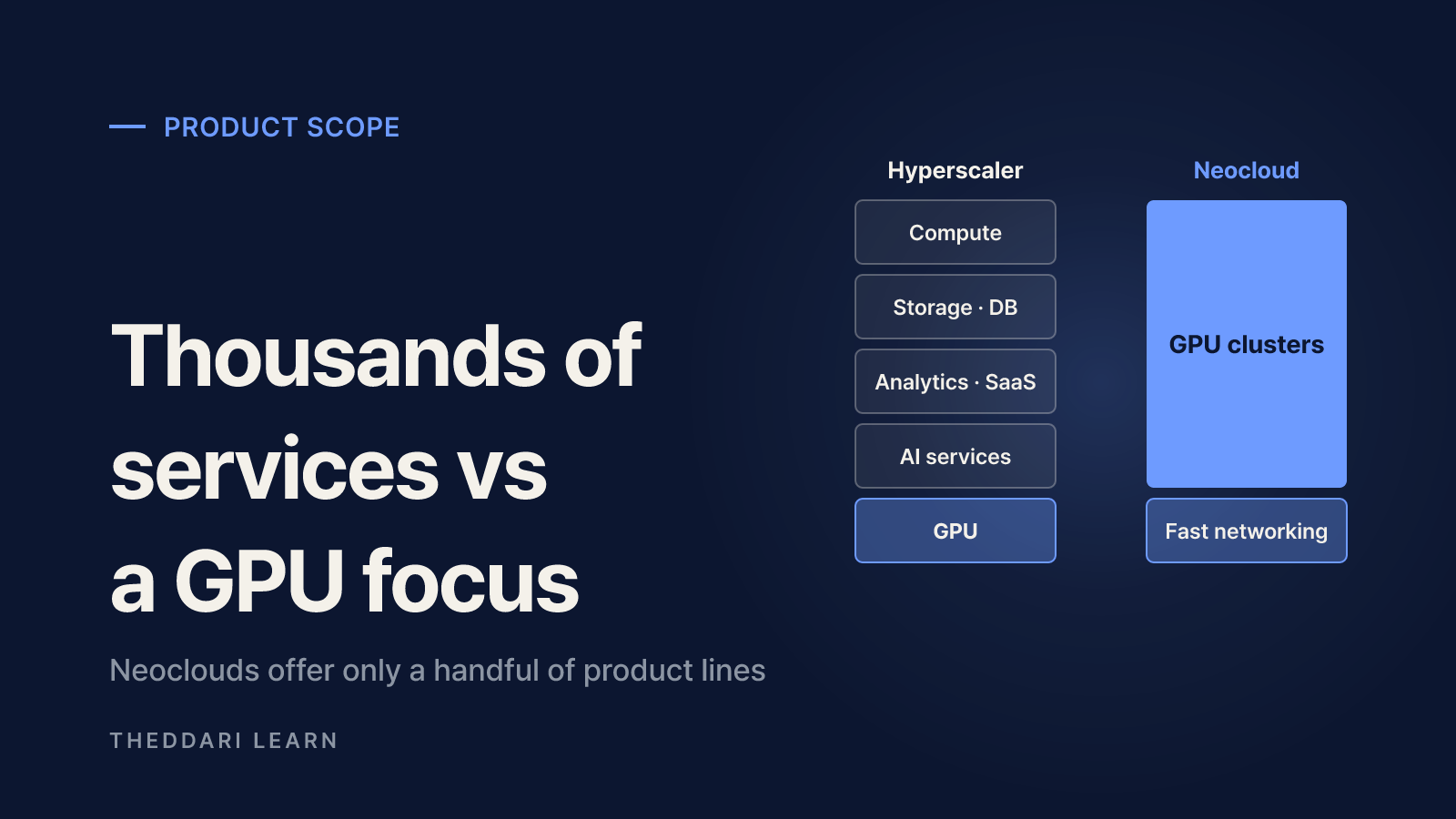
Both groups may rent the same Nvidia GPU, but they differ in what they bundle with it, how they price it and how they pay for it. According to Uptime Institute, hyperscaler clouds offer dozens of products with millions of individual line items, while neoclouds offer only a handful of product lines with variations in the tens. That narrow focus lets them run a more uniform fleet with leaner staffing.
Core offer
- Hyperscalers (AWS, Azure, Google Cloud)
- Thousands of services across compute, storage, databases and AI
- Neoclouds (CoreWeave, Nebius and others)
- GPU servers and clusters, networking, some training and inference software
On-demand DGX H100 price (Uptime, Feb 2025)
- Hyperscalers (AWS, Azure, Google Cloud)
- About $98 per hour on average
- Neoclouds (CoreWeave, Nebius and others)
- About $34 per hour on average
Why prices differ
- Hyperscalers (AWS, Azure, Google Cloud)
- Captive customer base supports higher margins
- Neoclouds (CoreWeave, Nebius and others)
- Lower margins and a simpler product set
Funding
- Hyperscalers (AWS, Azure, Google Cloud)
- Cash flow from established businesses, low cost of capital
- Neoclouds (CoreWeave, Nebius and others)
- Heavy use of debt, convertibles, prepayments and new shares
Customer base
- Hyperscalers (AWS, Azure, Google Cloud)
- Spread across many enterprises
- Neoclouds (CoreWeave, Nebius and others)
- Concentrated in a few large AI labs and hyperscalers
Competitive exposure
- Hyperscalers (AWS, Azure, Google Cloud)
- Non-GPU revenue cushions pricing pressure
- Neoclouds (CoreWeave, Nebius and others)
- Direct price competition among sellers of the same GPUs
The price gap is large, so it is worth understanding where it comes from. Uptime Institute calculated that an on-demand Nvidia DGX H100 instance in Northern Virginia cost about $98 per hour on average from three hyperscalers, versus about $34 from three neoclouds, roughly 66% less. Yet it also argued that hyperscalers buy GPUs more cheaply thanks to their scale, so most of the difference reflects gross margin, not underlying cost. Hyperscalers also offer reserved instances and commitment discounts that narrow the gap in practice. In other words, the neocloud price advantage looks more like a strategic choice to accept thinner margins than a lasting cost edge.
Switching costs help the hyperscalers too. Many companies prefer one set of APIs, one console and one invoice, even if that means paying more for GPUs. Neoclouds therefore tend to position themselves as part of a multi-cloud setup, handling GPU-heavy work such as training large models. CoreWeave's Q2 2026 launch of private fiber links to other hyperscale platforms, starting with Google Cloud, fits that partner-not-rival pitch.
CoreWeave and Nebius by the numbers (Q2 2026)
The figures below come from second-quarter (April to June) 2026 results published in August 2026: CoreWeave's earnings release, and Nebius's results announcement and earnings call transcript. Amounts are in millions of US dollars.
Q2 revenue
- CoreWeave (CRWV)
- 2,575 (+112% year over year)
- Nebius (NBIS)
- 582.3 (+454% year over year)
Adjusted EBITDA
- CoreWeave (CRWV)
- 1,510 (59% margin)
- Nebius (NBIS)
- 236.2 (41% margin)
Depreciation and amortization
- CoreWeave (CRWV)
- 1,393
- Nebius (NBIS)
- Check filing
Net interest expense
- CoreWeave (CRWV)
- 640
- Nebius (NBIS)
- Check filing
Net loss
- CoreWeave (CRWV)
- 626
- Nebius (NBIS)
- 190.4
Capital spending
- CoreWeave (CRWV)
- 6,422 property and equipment purchases
- Nebius (NBIS)
- About 5,700
Forward revenue indicator
- CoreWeave (CRWV)
- Backlog of about 104,000
- Nebius (NBIS)
- Annualized run-rate revenue of 3,000
CoreWeave shows why adjusted EBITDA can mislead in this sector. Its 59% adjusted EBITDA margin looks healthy, but depreciation of $1.393 billion equaled about 54% of revenue and net interest expense of $640 million about 25%. The company posted an operating loss of $49 million and a net loss of $626 million. At June 30, 2026 it carried about $31.4 billion of recourse debt and $3.7 billion of non-recourse debt against roughly $5.0 billion of stockholders' equity, and it raised $13.457 billion of new debt during the quarter alone. Its roughly $104 billion backlog excludes more than $25 billion of commitments added in early Q3.
Nebius is smaller but growing faster from a lower base. Annualized run-rate revenue reached $3.0 billion at the end of June, up from $1.9 billion at the end of March, and management reaffirmed 2026 revenue guidance of $3.0 billion to $3.4 billion. It ended the quarter with about $8 billion in cash. Management said 70% of deals closed in the quarter included prepayments and that it expects about $9 billion of customer prepayments in 2026. Prepayments are cheaper than debt, but they also tie the company's cash flow closely to the terms of a few large contracts.
Key risks of AI cloud stocks: debt, concentration, depreciation
Debt-funded GPUs and interest rates
Neoclouds typically sign a contract, buy the GPUs and build or lease the data center first, then recover the outlay through rental income over several years. The gap is filled with loans, convertible notes, new equity and customer prepayments. Higher rates or tighter credit markets raise funding costs, and new share issuance dilutes existing holders. Central bank decisions and inflation releases can therefore matter for this group's financing costs and valuations.

Customer concentration
Because AI labs and hyperscalers sign multibillion-dollar contracts, a few customers can make up a large share of revenue. If one of them scales back or moves workloads in-house, both revenue and debt repayment plans can be affected. CoreWeave's Q2 2026 materials emphasized new enterprise and AI-native customers, a sign that diversification is a central investor question. Check the risk factors and customer disclosures in the 10-Q or annual report rather than relying on headlines.
GPU depreciation and product cycles
Every new Nvidia generation can push down rental rates for older chips. Reported profits depend heavily on the useful life a company assigns to its servers, so watch the accounting notes for changes in that assumption. Uptime Institute compares GPU rental to trading a commodity that is valuable now but whose value can change; when two providers offer the same GPU in the same region, price decides.
How to follow neocloud earnings and news
- 1
Mark the earnings dates
CoreWeave and Nebius report results and guidance each quarter. Note whether the release lands after the US market close and download the primary documents rather than relying on summaries.
- 2
Read the cost lines before the growth rate
Express depreciation, net interest expense and net loss as a share of revenue. Adjusted EBITDA excludes the cost of the GPUs themselves, so it can flatter profitability.
- 3
Test the quality of the backlog
Look beyond the backlog or run-rate headline to timing, top customers, prepayment terms and contract length. Construction or power delays can push revenue recognition later.
- 4
Track financing filings
Convertible notes, share sales and secured loans change dilution and interest burden. Use social media chatter only to gauge sentiment and confirm facts in the filings.
Neoclouds grew because AI demand outran supply and they could deliver GPUs faster and cheaper than the largest clouds. The deeper difference from hyperscalers is the capital structure rather than the product list. Each quarter, check whether growth continues and whether utilization and pricing stay high enough to cover interest and depreciation, and whether the customer base is genuinely broadening.
Frequently asked questions
Which companies are considered neoclouds?
Does a large revenue backlog lock in future revenue?
Will neoclouds become unnecessary once hyperscalers have enough GPUs?
How is a neocloud stock different from owning Nvidia?
Sources and references
- 1Uptime Institute: Neoclouds: a cost-effective AI infrastructure alternative (2025-02-26)(opens in a new tab)journal.uptimeinstitute.com
- 2CoreWeave: Second Quarter 2026 Results (2026-08-11)(opens in a new tab)investors.coreweave.com
- 3Nebius: Second quarter 2026 financial results (2026-08-12)(opens in a new tab)nebius.com
- 4Nebius (NBIS) Q2 2026 Earnings Call Transcript(opens in a new tab)www.fool.com
Related articles
 Stocks
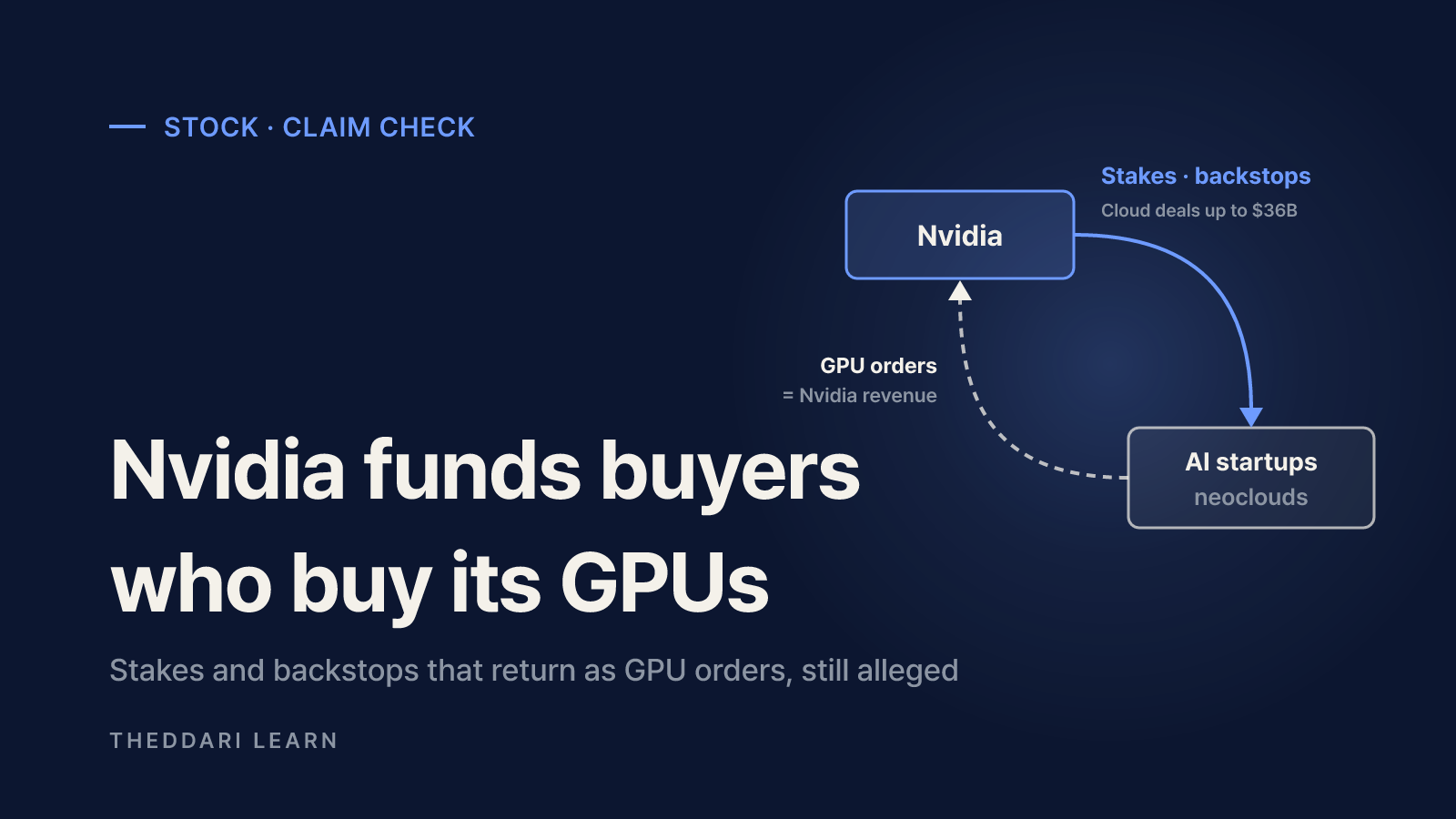
Nvidia Circular Financing Claims: What Holders Should Check
A Wall Street Journal report, relayed by tech outlets, says Nvidia leaned on investments and guarantees to keep customers buying GPUs. Here is how to separate the allegation from the filings and what to watch on the Q3 call.
 Stocks
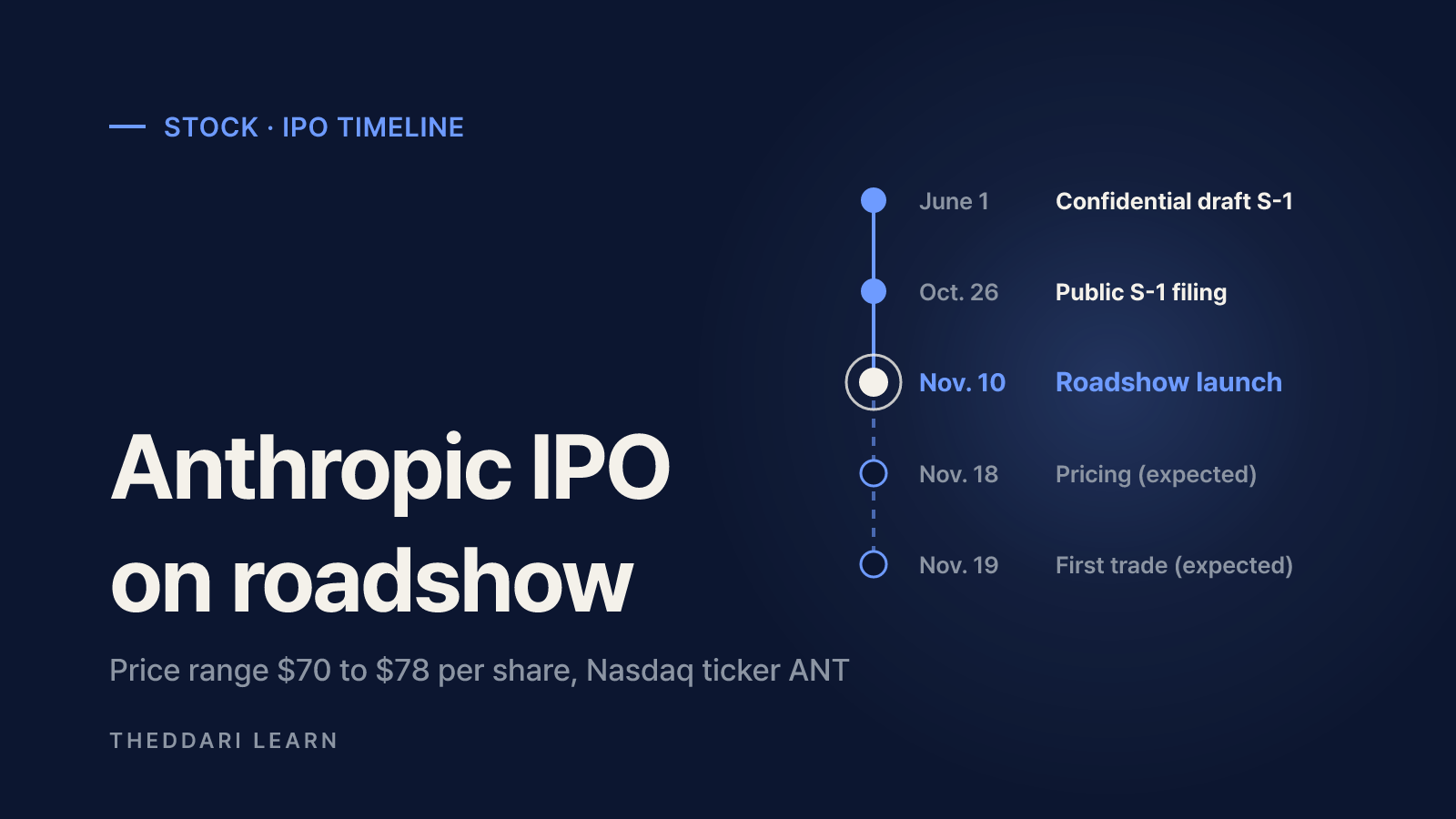
Anthropic IPO: What to Check in the S-1, Timing and Access
Anthropic launched its IPO roadshow on Nov. 10, 2026. Here is how to verify the process in SEC filings, which S-1 numbers matter, the expected timeline and who can actually buy shares at the offer price.
 Stocks
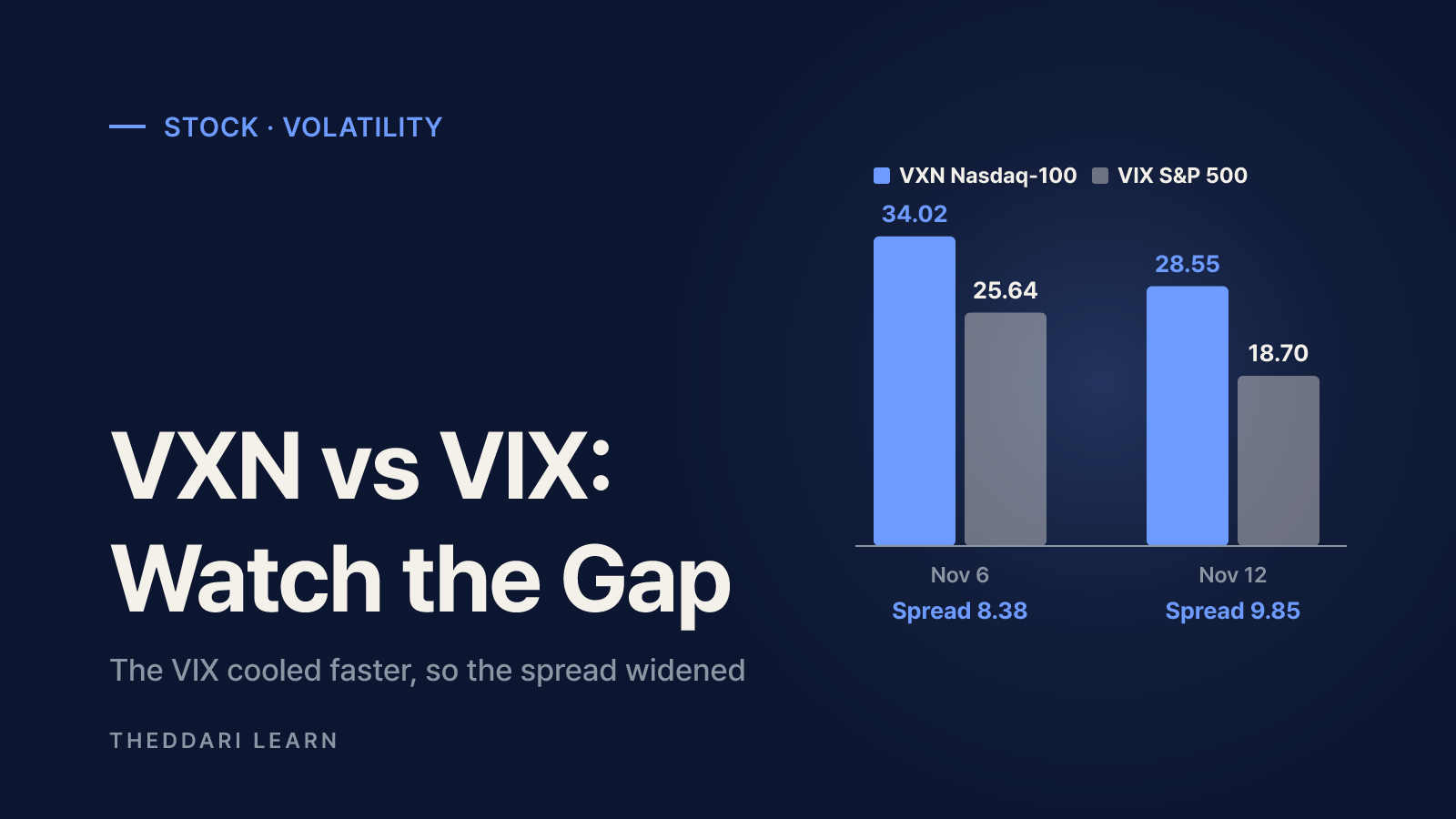
What Is the VXN? Nasdaq Volatility Index vs the VIX
The VXN is the Nasdaq-100's fear gauge; the VIX covers the S&P 500. Using closing data from November 2026, this guide shows how to read the level, the spread and the ratio when both indexes jump.