Jensen Huang Return Petition: Can Staff Reinstate a CEO?
Nvidia employees want Jensen Huang back, but a petition has no legal force. See who can reinstate a CEO under Delaware law and how OpenAI 2023 differs.
Contents7 sections
Key takeaways
- On November 12, 2026, Nvidia's board said Jensen Huang resigned as President, CEO and director effective immediately; CFO Colette Kress is interim CEO.
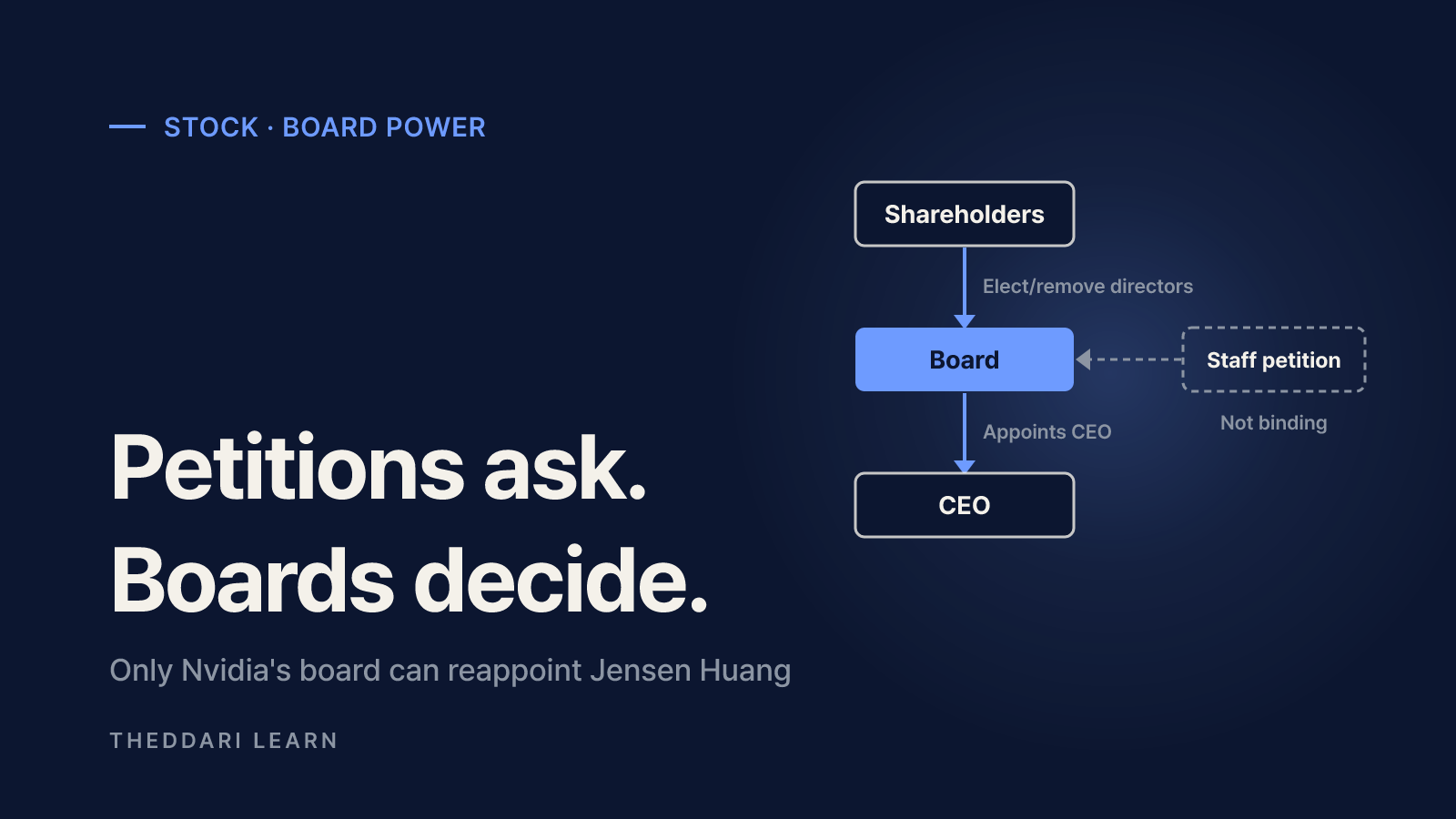
- An employee petition is a signal, not a vote. Under Delaware corporate law, officers are chosen as the bylaws or the board decide.
- Because Huang also left the board, returning as CEO and returning as a director are two separate processes, and directors ultimately answer to shareholders.
- OpenAI's 2023 Altman comeback happened alongside a brand-new board. Nvidia is a public company with an independent investigation still running.
- For NVDA holders, board statements, SEC 8-K filings, the investigation outcome and the November 17 earnings call matter more than signature counts.
Short answer: a Jensen Huang return petition cannot, by itself, put him back in the CEO chair. At a US public company, the board of directors hires and removes the CEO, and shareholders decide who sits on the board. Employee pressure is something directors may weigh, not a binding vote. This guide is current as of November 17, 2026 and is based on Nvidia's own releases, WIRED's original reporting and the text of the Delaware General Corporation Law.
The story is moving quickly. Below, confirmed facts are kept separate from reporting that relies on anonymous sources, so you can tell which is which before acting on any headline.
What the Jensen Huang return petition actually is
All dates below are US local time in 2026.
Nov 8 (Sun)
- What happened
- Board announces an internal investigation; Huang emails staff admitting an affair
- Source
- WIRED
Nov 10
- What happened
- Independent directors retain Joon H. Kim, former acting US Attorney for SDNY, and Wachtell, Lipton, Rosen & Katz
- Source
- Nvidia statement
Nov 12 (Thu)
- What happened
- Huang resigns as President, CEO and director; CFO Colette Kress becomes interim CEO; Harvey C. Jones named first-ever board chair
- Source
- Nvidia release
Nov 12 onward
- What happened
- An internal suggestion-box post draws more than 1,600 comments, most backing his return
- Source
- WIRED
According to Nvidia's announcement, Kress keeps her CFO role while serving as interim CEO, and the board will consider internal and external candidates for a permanent successor. The independent directors' statement named the outside investigators two days earlier.
It started as a suggestion-box post, not a signed petition
WIRED reported that a longtime engineer posted to Nvidia's internal suggestion box before the resignation, asking the board to consider employee sentiment and share its findings before acting. After Huang left, the post drew more than 1,600 comments. One employee sent a companywide email demanding transparency, and about two dozen staff posted support on LinkedIn.
Separate public letters and online signature drives have also been reported. Treat any signature count with care: online petitions rarely verify who signs, and organizers decide how employees or shareholders are counted. Ask who ran the tally and how identities were checked.
The official reason for the resignation is still unstated
Nvidia's release gives no reason. WIRED's resignation story cites a source saying an alleged relationship with a direct report and dealings with Megaspeed, a Singapore AI company, likely mattered more to the board than the espionage allegations. That is single-source reporting until the investigation concludes.
CEO removal board power: who decides under Delaware law
For a company incorporated in Delaware, the rules are fairly clear. You can confirm a company's state of incorporation on the cover of its annual report (Form 10-K). The points below summarize Title 8, Subchapter IV of the Delaware Code.
- Section 141(a): the business and affairs of the corporation are managed by or under the direction of the board.
- Section 142(b): officers, including the CEO, are chosen as the bylaws prescribe or as the board determines, and serve until a successor is chosen or they resign or are removed.
- Section 142(e): an officer vacancy from resignation or removal is filled as the bylaws provide, or otherwise by the board.
- Section 141(k): directors can be removed by a majority of shares entitled to vote in director elections; if the board is classified, only for cause unless the charter provides otherwise.
Employees are not part of that chain. An employee who owns stock can vote as a shareholder at a meeting, but a petition is not a shareholder vote and cannot compel the board to act.
Returning as CEO and returning as a director are different
Huang resigned from the board as well as the CEO role. A board resolution could reappoint him as an officer, but a board seat would need to be filled under the bylaws or through a shareholder election. Being a cofounder does not restore either position automatically.
Why employee sentiment still matters
Directors must act in the company's interest, and a wave of senior engineering departures is a real business risk for a chip designer. WIRED notes the board is largely made up of early investors and long-time Huang confidants. Against that, the board has to weigh the open investigation, scrutiny from Washington, and customer confidence.
How this differs from OpenAI's 2023 Altman reversal
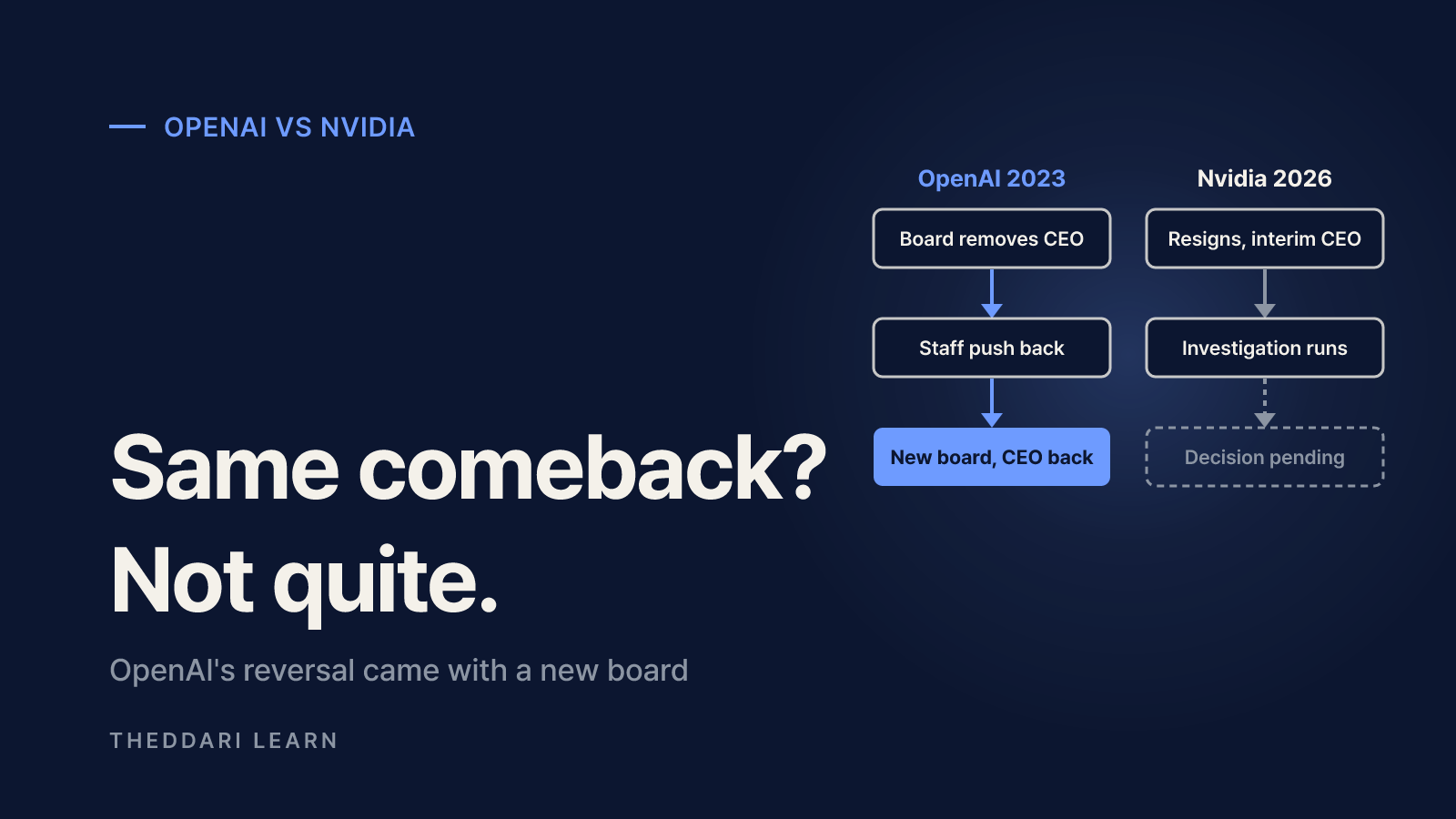
The best-known case of staff pressure bringing a CEO back is OpenAI. Its official post on November 29, 2023 announced Sam Altman's return together with a new initial board: Bret Taylor as chair, Larry Summers and Adam D'Angelo. Altman wrote that the company did not lose a single employee through the episode.
How the CEO left
- OpenAI (2023)
- Removed by the board
- Nvidia (2026)
- Resigned per official release, including board seat
Employee action
- OpenAI (2023)
- Mass internal pushback before the return
- Nvidia (2026)
- Suggestion-box comments, staff email, reported outside petitions
Company type
- OpenAI (2023)
- Private, unusual governance
- Nvidia (2026)
- Nasdaq-listed (NVDA)
Who decided the outcome
- OpenAI (2023)
- A reconstituted board
- Nvidia (2026)
- The current board, with a new chair
Process underway
- OpenAI (2023)
- Independent review launched after the return
- Nvidia (2026)
- Outside investigation led by independent directors
The key difference: OpenAI's reversal came with a change of board, not as the same directors changing their minds. Nvidia's board has already named an interim CEO and its first independent chair, and its investigation has barely started. Reversing before findings arrive would carry governance and regulatory costs.
What would have to happen for a return
- 1
Investigation findings
The outside counsel's conclusions are the biggest swing factor. Watch whether a full report or only a summary is released.
- 2
Board resolution
Appointing a CEO is a board action that must meet the quorum and voting rules in the bylaws.
- 3
Board seat
Rejoining the board requires filling a vacancy under the bylaws or a shareholder election.
- 4
Disclosure
Officer changes are disclosed through SEC Form 8-K filings and press releases, which outrank rumors and social posts.
- 5
Outside pressure
Congressional and FBI scrutiny, export-control debates and major customers can all shape the board's choice.
What NVDA holders should watch now
WIRED reports that the crisis has wiped about $1 trillion off Nvidia's market value since the allegations surfaced, alongside investigations from lawmakers and the FBI and the prospect of new chip export controls. Petition news may lift sentiment briefly, but it sits outside the formal decision path.
- Earnings: Nvidia said it will report third-quarter fiscal 2027 results on November 17 at about 1:20 p.m. PT, with the call at 2 p.m. PT. Listen for leadership questions and guidance.
- 8-K filings: look for officer changes, separation terms or investigation updates.
- Board statements: watch for a CEO search scope or an investigation timeline.
- Talent signals: check whether reports of senior departures actually materialize.
- Source quality: separate anonymous-source stories from company disclosures.

The earnings calendar above tracks report dates, and the stock Telegram trends page below shows which headlines traders are passing around. Neither tool predicts whether a CEO comes back; they help you see the schedule and the narrative in one place.
Signature tallies, talk of comeback negotiations and leaks about the board's mood mostly rest on unverified counts or anonymous sources. Trading leveraged products on that alone exposes you to sharp swings.
Bottom line: an employee petition is a loud signal to the board, not a decision. Any return would have to run through the investigation, a board resolution and possibly a shareholder vote. Tracking the filings along that path is more useful than tracking the petition's size.
Frequently asked questions
Can an employee petition legally force a board to rehire a CEO?
Was Jensen Huang fired or did he resign?
Can shareholders vote Jensen Huang back in as CEO?
Could Nvidia reverse course in days like OpenAI did?
What does this mean for Nvidia stock?
Sources and references
- 1NVIDIA Announces CEO Transition (NVIDIA Newsroom, Nov 12, 2026)(opens in a new tab)nvidianews.nvidia.com
- 2Statement From the Independent Members of the NVIDIA Board (Nov 10, 2026)(opens in a new tab)nvidianews.nvidia.com
- 3‘Bring Back THE Boss’: Nvidia Employees Petition for Jensen Huang’s Return (WIRED)(opens in a new tab)www.wired.com
- 4Jensen Huang Resigns as Nvidia CEO (WIRED)(opens in a new tab)www.wired.com
- 5Delaware Code Title 8, Chapter 1, Subchapter IV: Directors and Officers(opens in a new tab)delcode.delaware.gov
- 6Sam Altman returns as CEO, OpenAI has a new initial board (OpenAI)(opens in a new tab)openai.com
Related articles
 Stocks
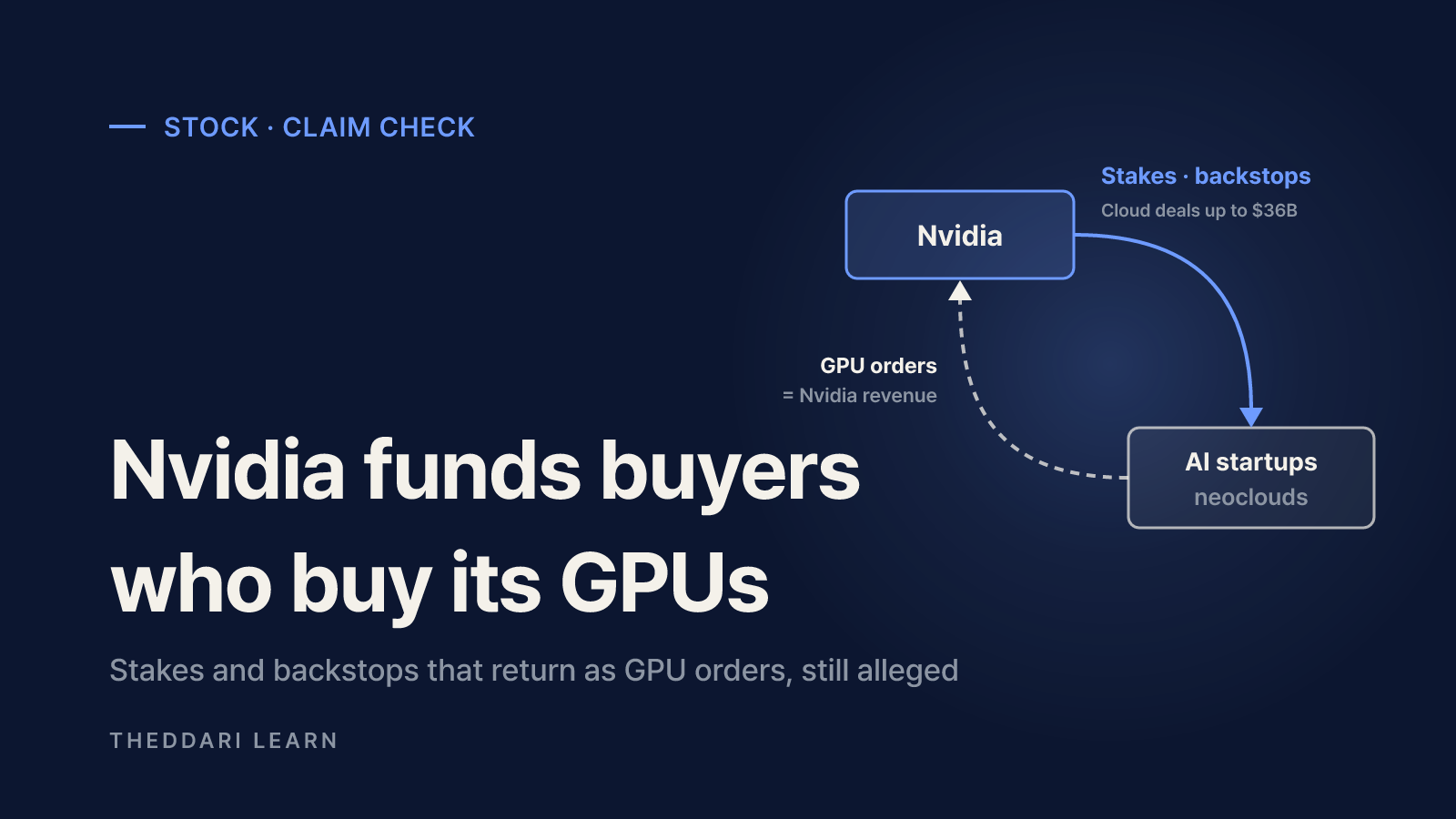
Nvidia Circular Financing Claims: What Holders Should Check
A Wall Street Journal report, relayed by tech outlets, says Nvidia leaned on investments and guarantees to keep customers buying GPUs. Here is how to separate the allegation from the filings and what to watch on the Q3 call.
 Stocks
Anthropic IPO: What to Check in the S-1, Timing and Access
Anthropic launched its IPO roadshow on Nov. 10, 2026. Here is how to verify the process in SEC filings, which S-1 numbers matter, the expected timeline and who can actually buy shares at the offer price.
 Stocks
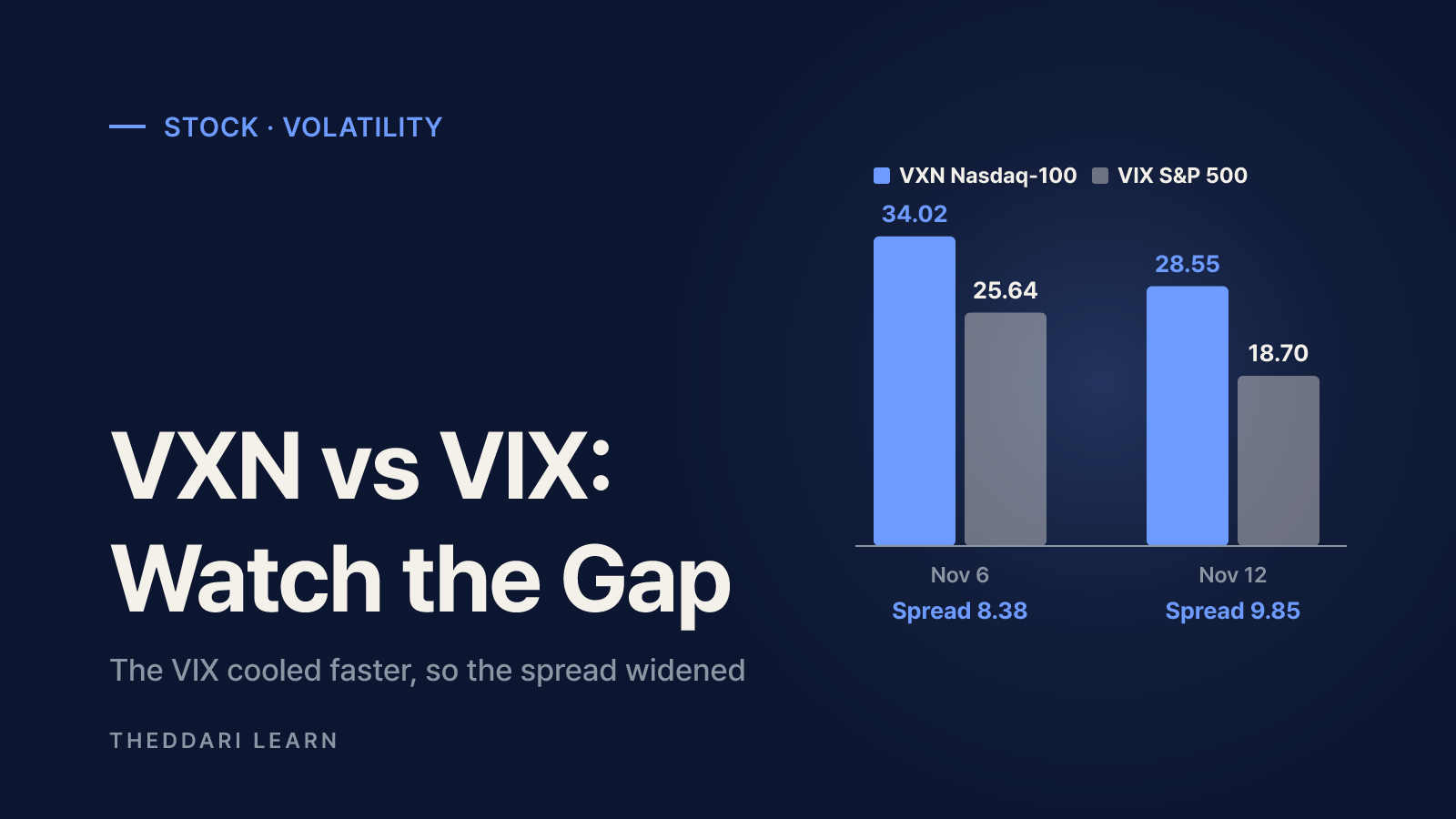
What Is the VXN? Nasdaq Volatility Index vs the VIX
The VXN is the Nasdaq-100's fear gauge; the VIX covers the S&P 500. Using closing data from November 2026, this guide shows how to read the level, the spread and the ratio when both indexes jump.