Ethena USDe Explained: Synthetic Dollar Yield and Risks
How Ethena USDe holds its dollar value with spot crypto and short perps, where sUSDe yield comes from, what ENA does, and the depeg risks to check.
Contents8 sections
Key takeaways
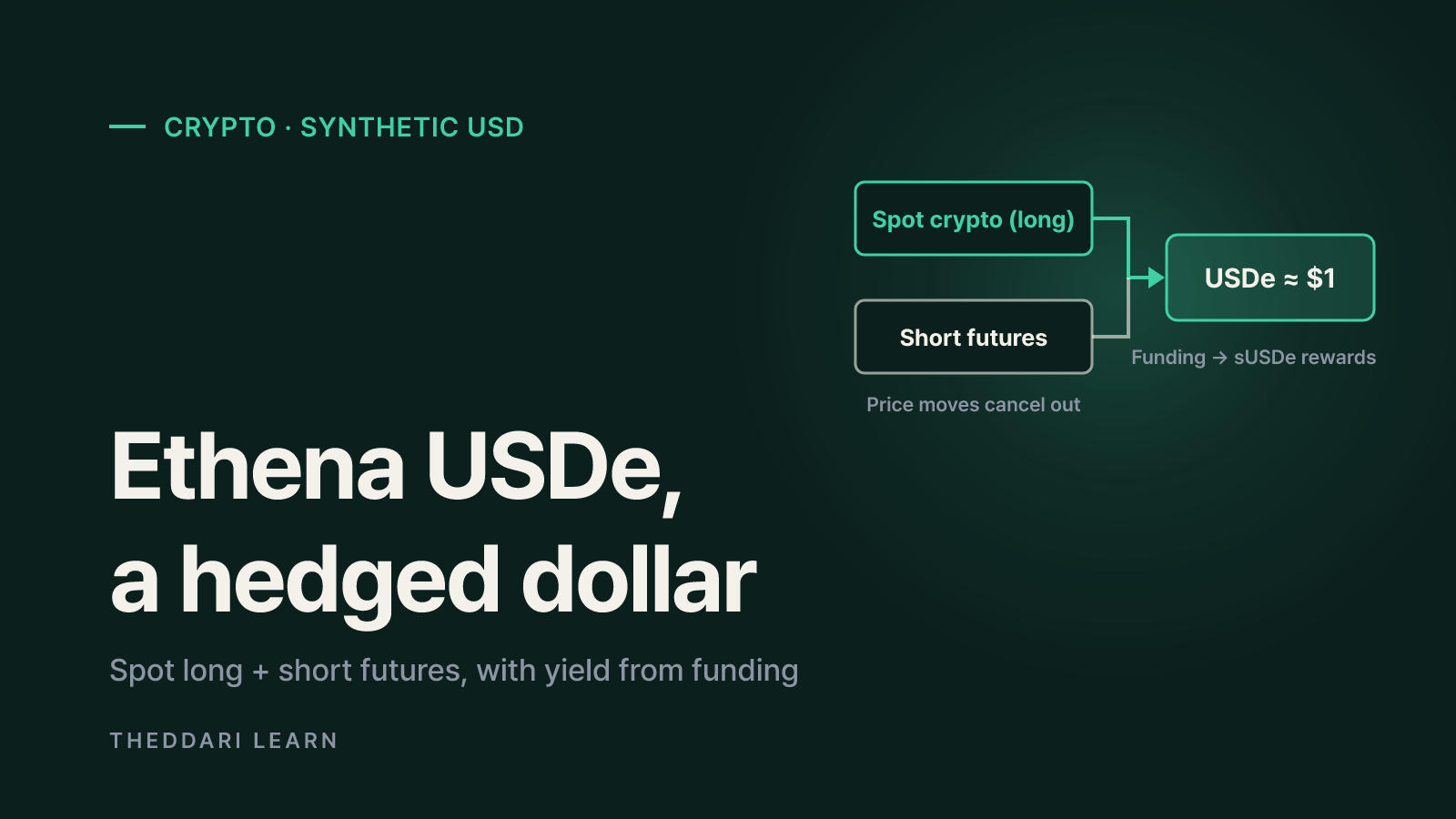
- Ethena USDe is a synthetic dollar: it holds spot crypto and an equal-sized short futures position (delta-neutral), plus liquid stablecoins, instead of cash and Treasuries held by an issuer.
- Protocol revenue comes from staked ETH rewards, perpetual funding and futures basis, and rewards on liquid stablecoins. Holders only receive a share by staking USDe into sUSDe, and the rate floats.
- The main risks are persistently negative funding, custody and exchange failures, and thin liquidity on individual venues where most retail users trade.
- During the October 10-11, 2025 crash, USDe traded as low as 0.65 USDT on Binance while major on-chain pools held near 0.99, and about $1.9 billion of redemptions were processed over two days.
- ENA is the governance token. It votes on backing composition, new strategies, revenue allocation and the Risk Committee; it is not collateral behind USDe.
Ethena USDe is a synthetic dollar: instead of holding cash in a bank, it holds spot crypto and shorts an equal amount of futures so that price moves cancel out, leaving a position worth roughly $1. That design lets it earn funding payments from leveraged traders, but it also moves the risk away from bank solvency and toward funding rates, exchanges and liquidity. This guide, based on Ethena's documentation and governance forum as of October 2026, explains the mechanism, where the yield comes from, what the ENA token does, and what a real stress event revealed.
How does Ethena USDe keep its dollar value?
According to Ethena's documentation, USDe is backed by a delta-neutral portfolio. Volatile assets such as BTC and ETH are paired with short futures of approximately the same notional size. If ETH rises 10%, the short loses about the same amount; if ETH falls 10%, the short gains. The combined value stays close to flat in dollar terms. Assets that are already dollar-stable, such as liquid stablecoins and short-duration real-world assets, are held without a hedge.
- 1
Mint
A whitelisted user deposits about $100 of an asset like USDT and receives about 100 USDe, minus gas and hedge execution costs. Ethena says it earns no profit on minting or redeeming.
- 2
Hedge
The protocol opens a short perpetual futures position of roughly the same notional value on a derivatives exchange.
- 3
Custody
Backing assets sit with off-exchange settlement providers on-chain. Exchanges receive delegated margin, not custody, which is meant to limit damage if an exchange fails.
- 4
Redeem
Redemptions reverse the process: the short is closed and backing is returned. Speed and cost matter most when redemptions spike.
So USDe is less a token pegged by promise and more a tokenized hedge position. Its stability depends on the hedge continuing to work, on custodians and exchanges staying operational, and on enough market liquidity to keep secondary prices close to redemption value.
Where does the yield come from? Funding rates and sUSDe
Ethena's FAQ lists three revenue sources: staked ETH rewards (described as around 3-4%), perpetual funding rates or dated futures basis, and fixed rewards on liquid stablecoins roughly in line with the traditional risk-free rate. Funding is the piece that moves the most.
What is a funding rate? Perpetual futures never expire, so exchanges keep their price near spot by having longs and shorts pay each other periodically. When funding is positive, longs pay shorts; when it is negative, shorts pay longs. In bullish markets demand for leveraged longs usually keeps funding positive, and a short-side holder like Ethena collects it.
Ethena's funding risk page, using data updated to December 31, 2024, reports that BTC and ETH funding averaged between 7.8% and 9% annualized over three years on an open-interest or volume-weighted basis. It also notes that 17.5% of days for ETH and 15.9% for BTC had negative returns, and that the longest negative streak lasted 13 days. Ethena acknowledges that this history predates its own launch and does not capture its market impact. A protocol that holds a large share of all shorts can itself push funding lower, which is worth keeping in mind as supply grows.
USDe vs sUSDe
Plain USDe in a wallet earns nothing. Staking it gives you sUSDe, whose USDe value rises as rewards accrue. Per the docs, sUSDe only receives positive or flat rewards: periods of negative protocol revenue are absorbed by the Reserve Fund, and rewards are typically not paid during them. Treat the quoted rate as a floating number driven by funding, staking rewards and interest rates, not as a fixed coupon. You can compare current funding across venues with theddari's funding rate tool.

USDe vs USDT and USDC
Backing
- USDe (Ethena)
- Spot crypto plus short futures, liquid stablecoins, short-duration RWAs
- USDT / USDC (fiat-backed)
- Cash and short-term government securities
How value holds
- USDe (Ethena)
- Delta-neutral hedge plus mint/redeem arbitrage
- USDT / USDC (fiat-backed)
- Issuer redeems 1:1
Yield source
- USDe (Ethena)
- Staked ETH, funding and basis, stablecoin rewards (via sUSDe)
- USDT / USDC (fiat-backed)
- Not paid to holders; issuer keeps reserve income
Direct mint/redeem
- USDe (Ethena)
- KYC'd whitelisted addresses; app not available to US users
- USDT / USDC (fiat-backed)
- Approved issuer customers
Key risks
- USDe (Ethena)
- Negative funding, exchange and custody, liquidation, backing assets
- USDT / USDC (fiat-backed)
- Issuer credit, banking partners, reserve management, regulation
Ethena's risk overview lists funding risk, liquidation risk, custodial risk, exchange failure risk, backing assets risk, stablecoin-related risk and margin collateral risk. A simple way to frame it: with USDT or USDC you are trusting an issuer and its banks; with USDe you are trusting a trading strategy and the exchange and custody stack around it. Neither is risk-free. They fail in different places.
Stablecoin liquidity risks: the October 2025 test
On October 10-11, 2025, total crypto market capitalization fell about 21%, roughly $850 billion out of $4.08 trillion. A Blockworks Advisory analysis on Ethena's governance forum found that USDe traded as low as 0.65 on Binance's USDe/USDT market and 0.92 on Bybit, while major on-chain pools on Ethereum and Plasma averaged about 0.99.
- On Binance, USDe stayed below 0.90 for 23 minutes, below 0.95 for 53 minutes and below 0.99 for 86 minutes.
- The analysis blamed Binance using only its own order book as the price oracle for USDe, and said affected users were compensated.
- About $1.9 billion of USDe was redeemed over the two days, more than 13% of a $14.6 billion starting market cap, without tapping the Reserve Fund.
- Liquidations on Aave tied to USDe and sUSDe collateral totaled under $50,000.
Two lessons stand out. First, a working redemption channel and deep on-chain pools let the price recover quickly even under heavy selling. Second, retail holders without redemption access get the price of the venue they use. A thin order book, a bad oracle or paused deposits can produce a deep local discount and cascading liquidations even when backing is fine. If you post USDe as margin, also understand how your exchange handles liquidations and auto-deleveraging.
Warning signs to monitor
- BTC and ETH funding staying negative across major exchanges for several days.
- Changes in reported Reserve Fund size and in the share of backing moved into stablecoins.
- Order book depth on the venue you use, and whether it has direct mint/redeem integration.
- Sharp drops in USDe supply or any notice of delayed redemptions.
- Withdrawal halts or incidents at custodians and exchanges holding backing or margin.
What does the ENA token do?
Ethena's ENA page describes ENA as the protocol's governance token. Holders vote on USDe backing composition, new backing strategies, future allocation of protocol revenue, and the membership and remit of the Risk Committee, which sets parameters such as backing asset eligibility, exposure and counterparty limits, and when the Fee Switch can activate. ENA can be staked into sENA, and unstaking is subject to a cooldown.
That makes ENA a very different asset from USDe. USDe aims to stay near $1, and its risks sit in backing, hedging and liquidity. ENA floats freely and can swing sharply with sentiment, token supply schedules and expectations about USDe growth. Trending on CoinGecko signals attention, not safety.
Checklist before using USDe
- Know whether you hold USDe or sUSDe, and check the unstaking terms if it is sUSDe.
- Treat the displayed rate as a variable return tied to recent funding, not a forecast.
- If you cannot redeem directly, check the liquidity and price oracle of your exchange or DEX.
- If you borrow against USDe or use it as margin, model what a local drop like 0.65 would do to your position.
- Check rules where you live and whether your exchange lists it; Ethena's app is not offered to US users.
Ethena USDe packages a crypto-native income stream, funding payments, into a dollar-like token. It has handled large redemptions, but its stability rests on a hedge, on exchange and custody infrastructure, and on market liquidity rather than on bank deposits. Before looking at the yield, work out the situations in which you could lose money.
Frequently asked questions
Is Ethena USDe a real stablecoin?
Where does sUSDe yield come from, and can it go negative?
Can anyone mint or redeem USDe at $1?
Does holding the ENA token pay me USDe revenue?
What are the main stablecoin liquidity risks with USDe?
Sources and references
- 1Ethena Docs — How USDe Works(opens in a new tab)docs.ethena.fi
- 2Ethena Docs — Funding Risk(opens in a new tab)docs.ethena.fi
- 3Ethena Docs — Risks(opens in a new tab)docs.ethena.fi
- 4Ethena Docs — FAQ(opens in a new tab)docs.ethena.fi
- 5Ethena Docs — ENA(opens in a new tab)docs.ethena.fi
- 6Ethena Governance — USDe Analysis during the Oct 10th-11th Volatility Event(opens in a new tab)gov.ethenafoundation.com
Related articles
 Crypto
GTA 6 Memecoins on CoinGecko Trending: What to Check First
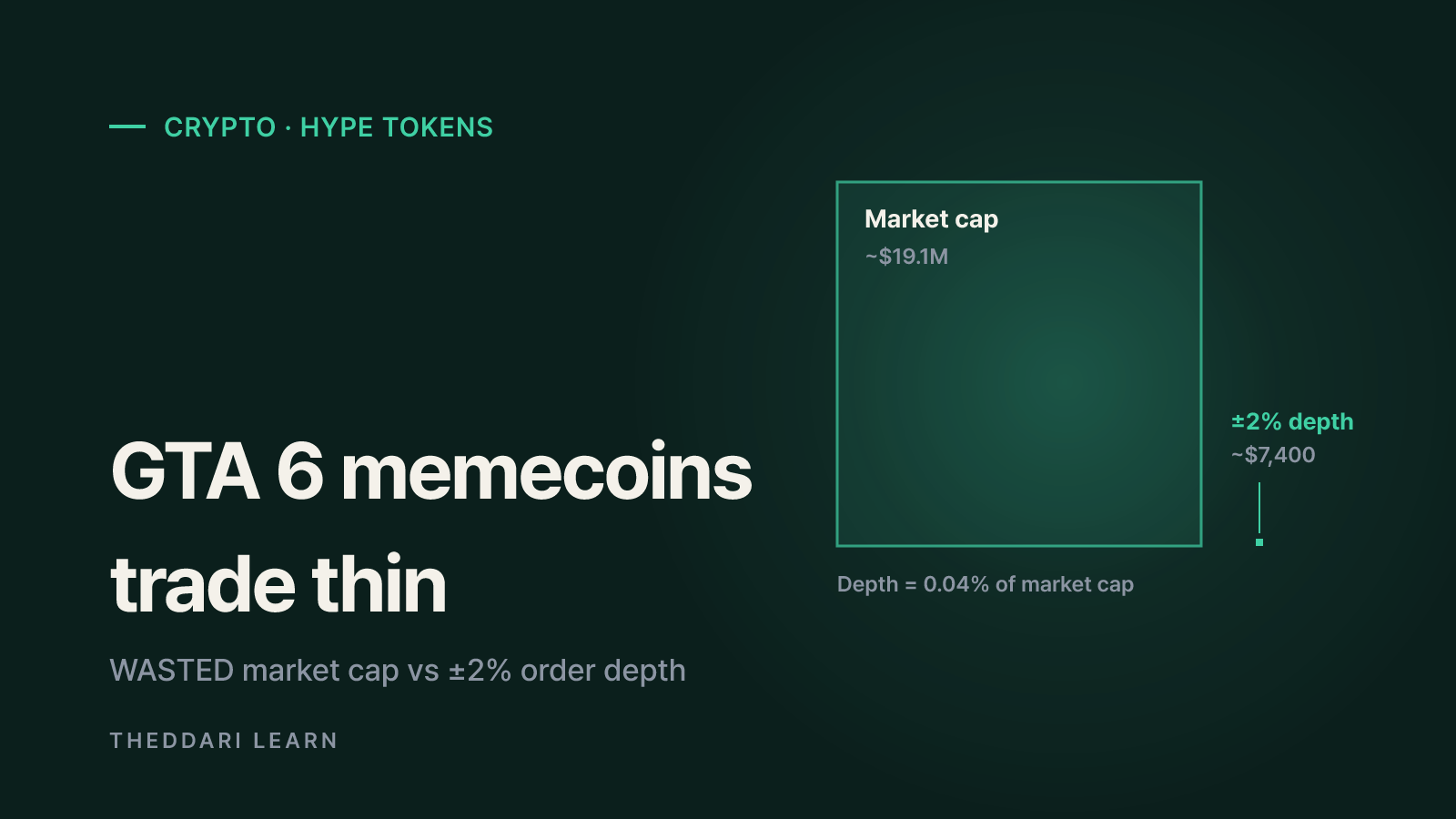
On November 19, 2026, GTA 6 launch day, three GTA-themed tokens hit CoinGecko's trending list. Here is what the data showed, why market cap misleads, and a step-by-step checklist before buying a hype token.
 Crypto
Ethereum Store of Value Debate: Supply, Burn, Digital Gold
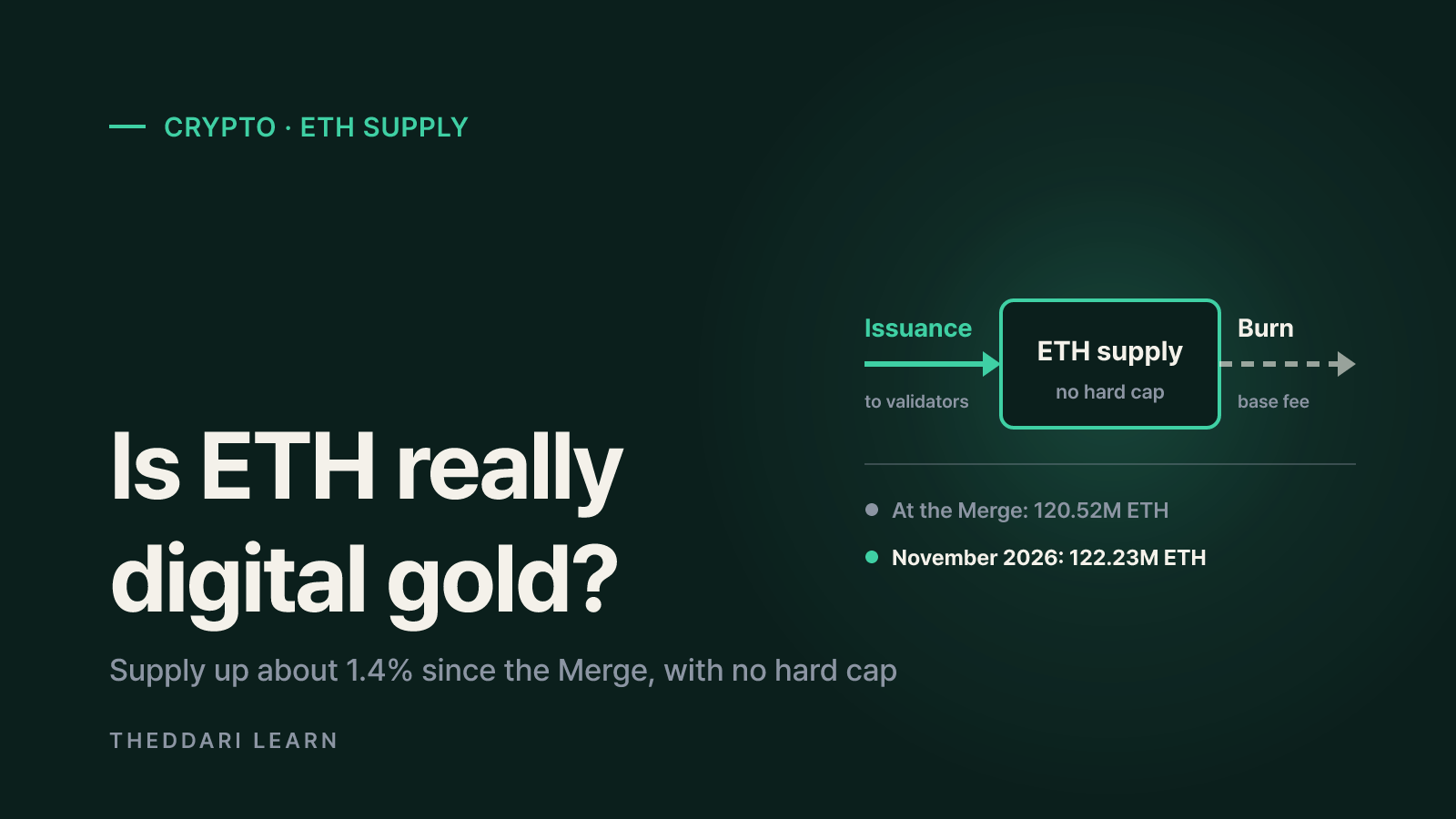
Ethereum has no supply cap: its supply moves with validator issuance minus the EIP-1559 fee burn. Here is what November 2026 data says about the ultrasound money and digital gold claims.
 Crypto
What Is the Bless Token? CoinGecko Trending Coin Checklist
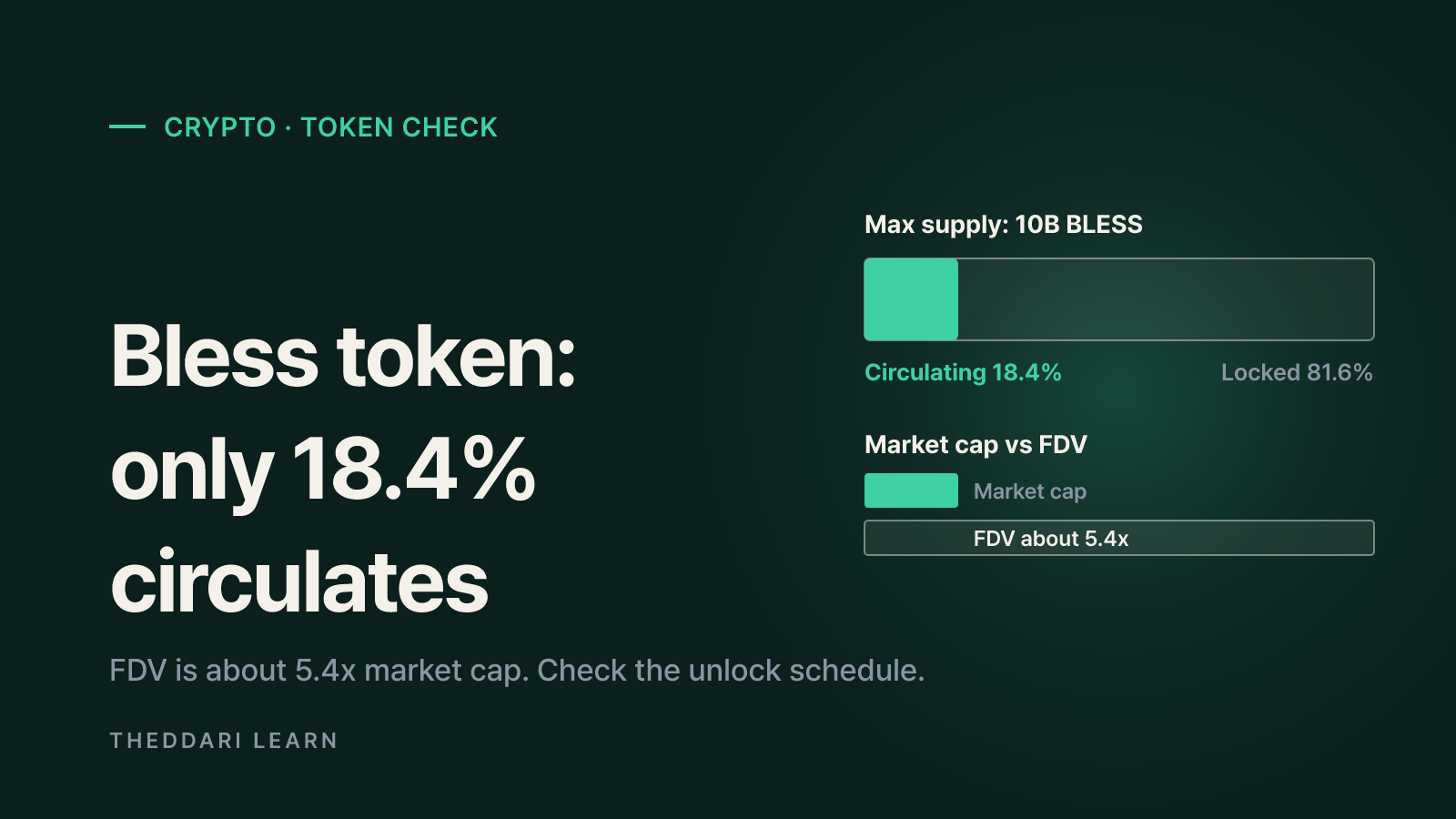
Bless (BLESS) is a DePIN token that pools spare compute from everyday devices. Before buying the CoinGecko trending coin, check supply unlocks, where volume really trades, and the two official contract addresses.