AI Agents Talking to Each Other: A2A vs MCP Explained
How do AI agents talk to each other? See how multi-agent systems exchange tasks, how the A2A protocol differs from MCP, and the cost and security risks.
目录6 个章节
核心要点
- AI agents talking to each other is structured machine-to-machine messaging: tasks, status updates and artifacts, not free-form chat.
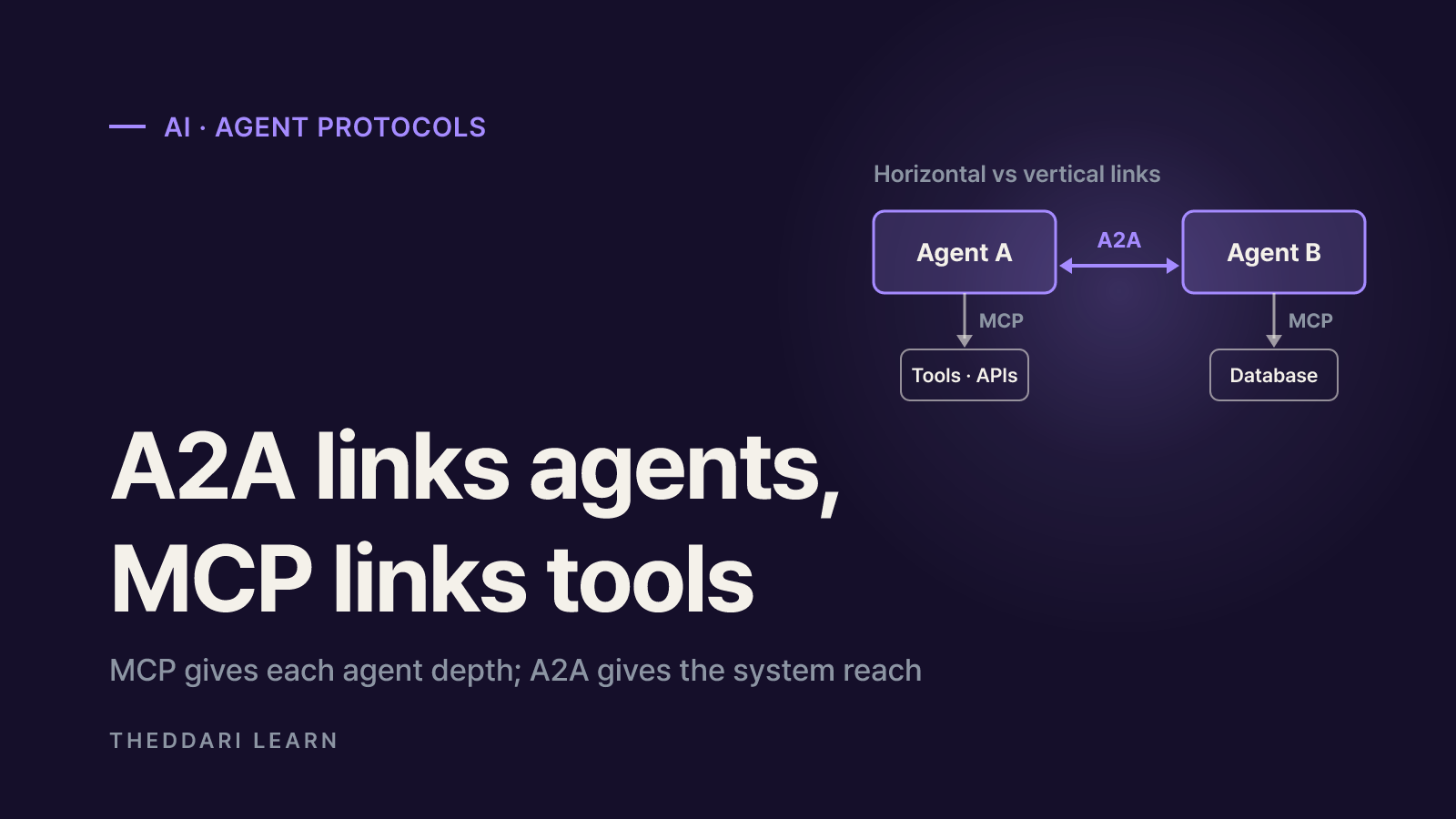
- MCP connects one agent to tools and data (vertical); A2A connects independent agents across teams and vendors (horizontal).
- The A2A project describes the two protocols as complementary, and many systems use both.
- As of October 2026, A2A has a stable v1.0 specification and joined the Agentic AI Foundation, home of MCP, in August 2026.
- Anthropic reported multi-agent setups using about 15x the tokens of a chat, so they fit only high-value, parallelizable work.
AI agents talking to each other do not chat the way people do. They exchange structured messages, task status updates and result files over an agreed protocol. Two open standards cover most of the ground: the Model Context Protocol (MCP) defines how an agent uses tools and data sources, and the Agent2Agent (A2A) protocol defines how independent agents, often built by different teams or vendors, discover each other and delegate work. This guide explains, as of October 2026 and based on the official specifications, how multi-agent communication works, where A2A and MCP differ, and what costs and risks to weigh before you wire agents together.
AI agents talking to each other: how multi-agent systems communicate
A multi-agent system is several agents working toward one goal. In its write-up of Claude's Research feature, Anthropic defines an agent as an LLM autonomously using tools in a loop, and describes an orchestrator-worker design: a lead agent plans the work, spawns subagents that search in parallel, then combines what they return. What travels between those agents is not small talk. Each subagent needs an objective, an output format, guidance on which tools and sources to use, and clear task boundaries. Without that, Anthropic found, agents duplicated work, left gaps or misread the task.
When every agent runs inside one program, a framework's function calls or shared memory can carry those messages. The hard case is agents on different servers, written in different languages, owned by different companies. The caller needs to know what the remote agent can do, where to send requests, how to authenticate, and whether a job finished or failed. The A2A project's August 2026 announcement notes that before A2A, handing work between agents on different frameworks meant writing custom integration code for every new pairing. A protocol fixes those conventions in advance.
Common communication patterns
- Orchestrator-worker: a lead agent splits the job, delegates pieces and merges the results. This is the most common pattern.
- Sequential pipeline: each agent hands its output to the next. If the path is fixed, a plain workflow may be simpler than agents.
- Peer collaboration: independent agents find a suitable counterpart, delegate a task and get a result back. Cross-organization links live here, and this is the space A2A targets.
- Shared artifact store: subagents write outputs to storage and pass back lightweight references, which Anthropic says reduces the game-of-telephone effect of copying everything through the coordinator.
MCP vs A2A: agent-to-tool versus agent-to-agent
The A2A project's comparison page frames the difference by direction. MCP is vertical: each MCP connection hands a single agent another tool, resource or capability, deepening what it can do on its own. A2A is horizontal: it lets an agent reach across a boundary to agents run by another team, department or partner, to discover them, negotiate and exchange information. In the page's words, MCP gives each agent depth and A2A gives the system reach. The two are described as complementary rather than competing.
Connects
- MCP
- Agent to tools, data and APIs
- A2A
- Agent to other agents
Counterpart
- MCP
- Well-defined, often stateless functions
- A2A
- Autonomous systems that plan and keep state
Core objects
- MCP
- Tools, Resources, Prompts
- A2A
- Agent Card, Task, Message, Part, Artifact
Wire format
- MCP
- JSON-RPC 2.0
- A2A
- JSON-RPC, gRPC or HTTP+JSON bindings
Typical use
- MCP
- Query a database, call a weather API
- A2A
- Support agent delegates a billing question
Internals
- MCP
- Tool descriptions and input schemas are exposed
- A2A
- Remote agent stays opaque; memory and tools hidden
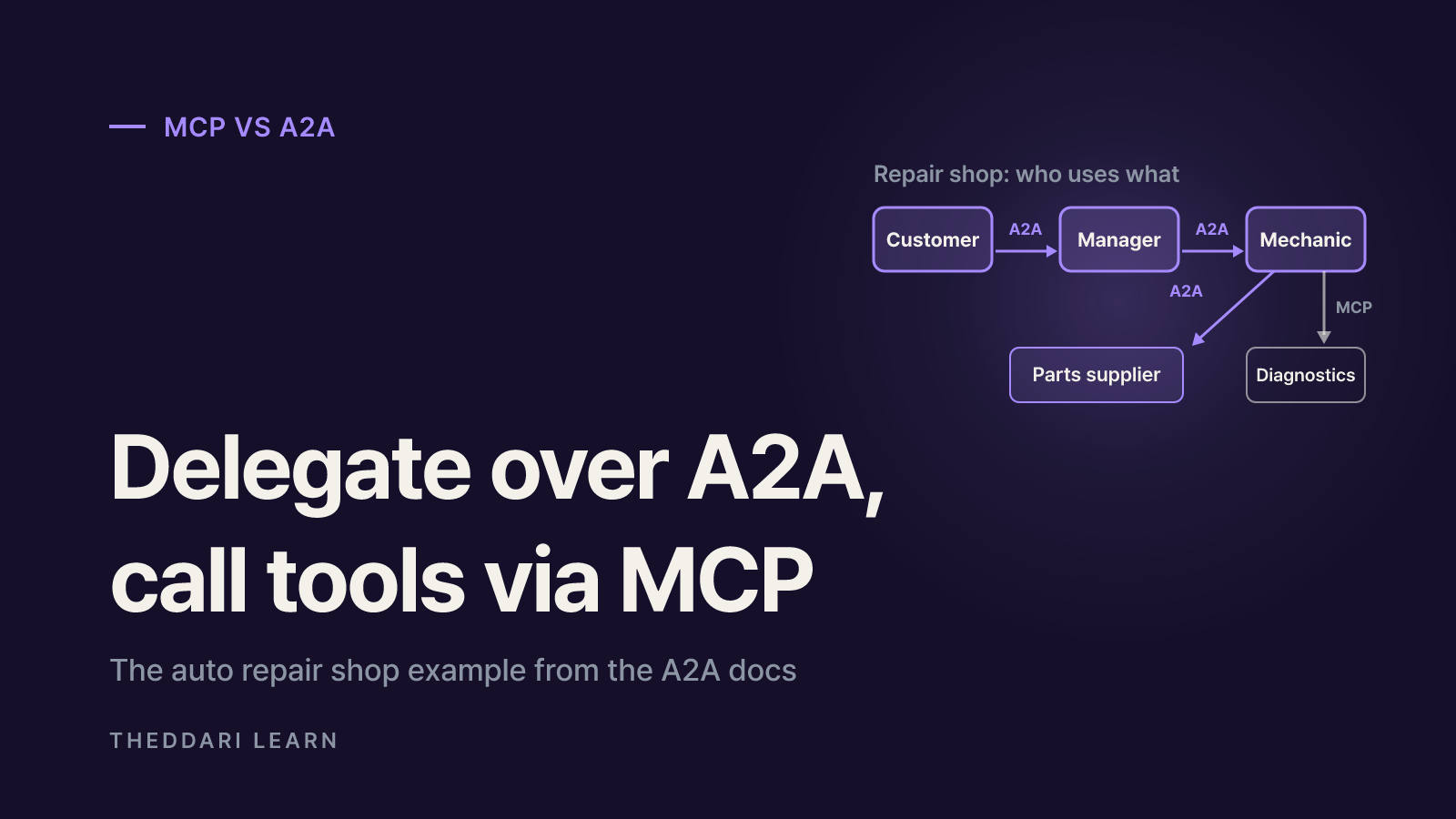
The specification's auto repair shop example makes the split concrete. A customer, or the customer's assistant agent, talks to a shop manager agent; the manager assigns the job to a mechanic agent; the mechanic asks an outside parts supplier agent whether a part is in stock. All of those conversations run over A2A. When the mechanic calls a diagnostic scanner, a repair manual database or a platform lift, those are MCP tool calls. Conversation and negotiation go through A2A; calling a defined function goes through MCP.
Where the line blurs
An A2A agent can expose some skills as MCP-style tools, and the comparison page says this works best when a skill is well defined and can be called in a stateless way. A2A's main strength remains multi-turn, long-running, stateful collaboration, including steps that wait for a human. A useful rule of thumb from the same page: A2A is about agents partnering on tasks, while MCP is about agents using capabilities.
How an A2A conversation actually flows
Using the A2A v1.0 change log as the reference, a typical exchange between two agents looks like this.
- 1
Discover the remote agent
The remote agent publishes an Agent Card, a JSON document listing its name, description, skills, endpoints, supported bindings and authentication requirements, typically at a well-known URI. In v1.0, endpoint URL, binding and protocol version are grouped per entry in supportedInterfaces.
- 2
Send a message
The client agent calls SendMessage. Content is carried in Parts, each holding text, a file (by URL or raw bytes) or structured data. The server can reply with a direct Message or create a trackable Task.
- 3
Track the task
Each Task has an ID and a state such as submitted, working, completed, failed, canceled, rejected, input required or auth required. Those states let software see whether the other side is waiting for a person or has given up.
- 4
Receive results
Short jobs finish in one request and response. Long jobs stream progress over Server-Sent Events or send push notifications to a webhook. Final outputs arrive as Artifacts.
On the MCP side, the current specification, revision 2026-07-28, uses JSON-RPC 2.0 messages between hosts, clients and servers, and lists an optional Tasks extension for long-running operations. Its standard transports are stdio for a locally launched subprocess and Streamable HTTP for remote servers. This revision carries the protocol version and client capabilities in every request body, and implementations that talk to older initialize-based servers need a fallback. Names and structures have changed between versions of both protocols, so check which revision your SDK targets before building.
Governance in 2026
On August 27, 2026, the A2A project announced it had been accepted as a Growth Stage project at the Agentic AI Foundation (AAIF), a Linux Foundation-directed body whose sibling projects include MCP, goose and AGENTS.md. The announcement says A2A is backed by more than 150 organizations; that is the project's own claim, so confirm support in the documentation of the platform you actually plan to use.
Agent news moves quickly. The theddari AI Telegram trends page and blog trends page are handy for spotting which agent and protocol stories are getting attention; verify any technical detail against the official specification before relying on it.

Costs, failure modes and security risks
Letting agents talk to each other is now practical, but not free. Anthropic reported that agents typically use about 4x more tokens than chat interactions, and multi-agent systems about 15x more. The same post says a setup with a Claude Opus 4 lead and Claude Sonnet 4 subagents beat a single Claude Opus 4 agent by 90.2% on Anthropic's internal research evaluation. That is one company's internal benchmark on breadth-first research, not a general result for every workload.
Token cost
- What goes wrong
- Context and messages are duplicated across agents
- Mitigation
- Cap agents and tool calls by task complexity
Error propagation
- What goes wrong
- One failed step sends later steps down a different path
- Mitigation
- Checkpoints, retries and resume from the failure point
Duplicate or missing work
- What goes wrong
- Vague delegation makes subagents repeat each other
- Mitigation
- State objective, format, tools and boundaries
Trust and security
- What goes wrong
- Remote outputs or tool descriptions are taken at face value
- Mitigation
- Verify auth and Agent Card signatures; validate outputs
Debugging
- What goes wrong
- Runs are non-deterministic and paths differ
- Mitigation
- Full tracing and monitoring of decision patterns
Security is the part no protocol does for you. The MCP specification treats tools as arbitrary code execution, says tool descriptions should be considered untrusted unless they come from a trusted server, and requires hosts to obtain user consent before invoking tools, while also acknowledging that MCP cannot enforce these principles at the protocol level. A2A v1.0 adds OAuth 2.0 updates (PKCE and the device code flow), mutual TLS declarations and JWS signatures for Agent Cards, but deciding which agent may do what is still your design job. Text returned by an outside agent can carry hidden instructions, so do not pipe it straight into another tool call.
A practical adoption checklist
- Try a single agent with MCP tools first and measure whether it falls short.
- Confirm the work splits into independent parallel pieces and is valuable enough to cover the extra tokens.
- Use framework-native sub-agents inside one app; reach for A2A when agents belong to other teams or vendors.
- Check the remote Agent Card's security schemes, signature and protocol version, and use HTTPS only in production.
- Set limits on agents, tokens and tool calls, define resume points, and turn on tracing before launch.
In short, for AI agents to talk to each other they need a way to find one another (the Agent Card), a unit of delegated work (Tasks and Messages), a format for results (Artifacts), and a standard way for each agent to reach its own tools (MCP). The protocols cut integration work, but budgets, error handling and permission design remain your responsibility.
常见问题
Is A2A a replacement for MCP?
Can't I just let two LLM agents chat in plain text?
Are multi-agent systems always better than a single agent?
What should I check before connecting to a third-party A2A agent?
来源与参考资料
- 1A2A Protocol: A2A and MCP Detailed Comparison(在新标签页中打开)a2a-protocol.org
- 2A2A Protocol: What's New in v1.0(在新标签页中打开)a2a-protocol.org
- 3A2A Blog: A New Chapter for A2A, Joining the Agentic AI Foundation (2026-08-27)(在新标签页中打开)a2a-protocol.org
- 4Model Context Protocol Specification (latest)(在新标签页中打开)modelcontextprotocol.io
- 5MCP Specification 2026-07-28: Transports(在新标签页中打开)modelcontextprotocol.io
- 6Anthropic Engineering: How we built our multi-agent research system(在新标签页中打开)www.anthropic.com
相关文章
 AI
Anthropic's Riemann Hypothesis Proof: Is It Verified?
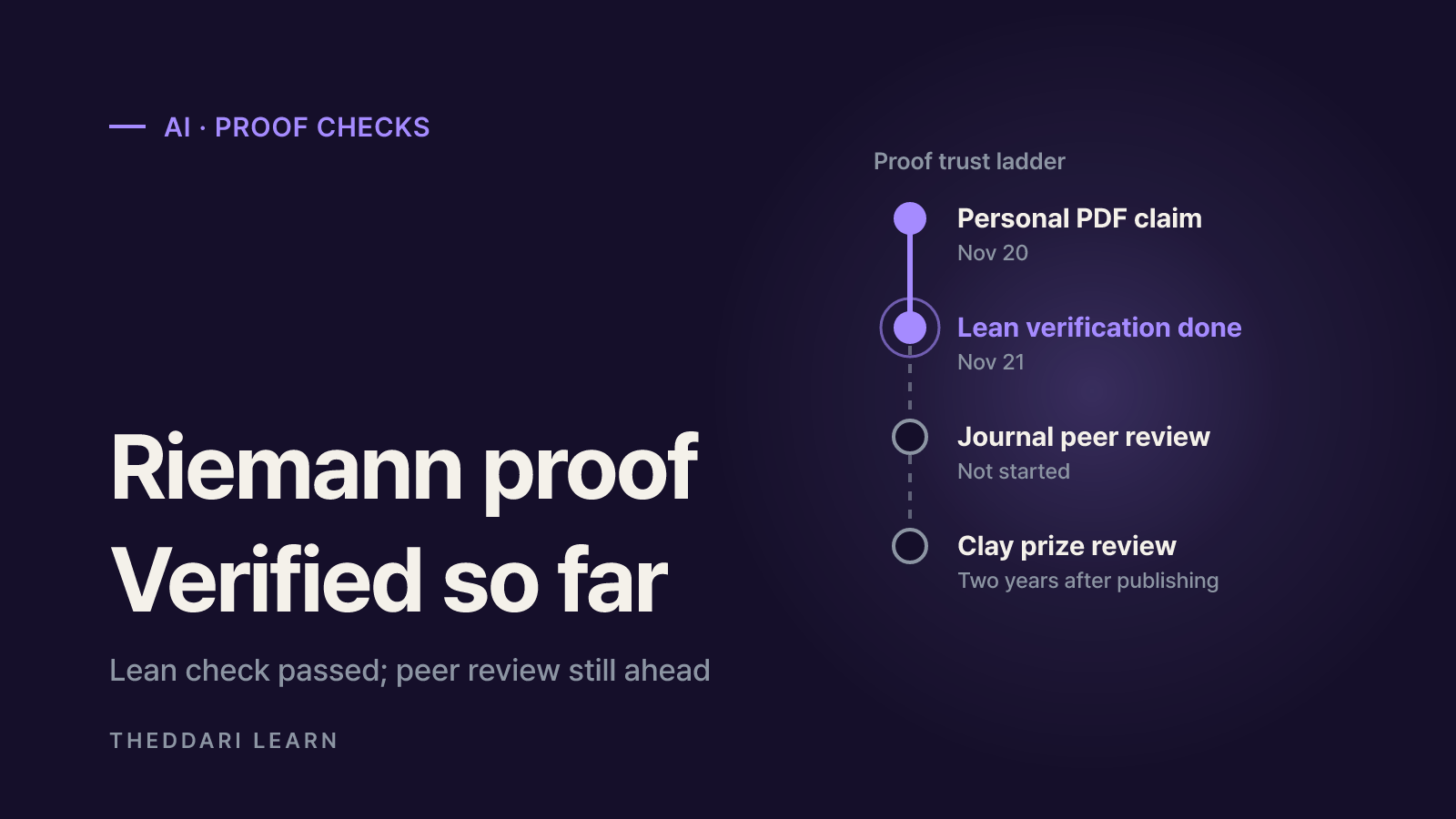
On November 20, 2026, Anthropic researcher Levent Alpöge said he had proved the Riemann Hypothesis with Claude. A day later the Lean and Mathlib communities certified the formal proof. What that means, what is still missing, and a checklist for judging big proof claims.
 AI
AgentRoboCritic: Can Frontier AI Agents Control Robots?
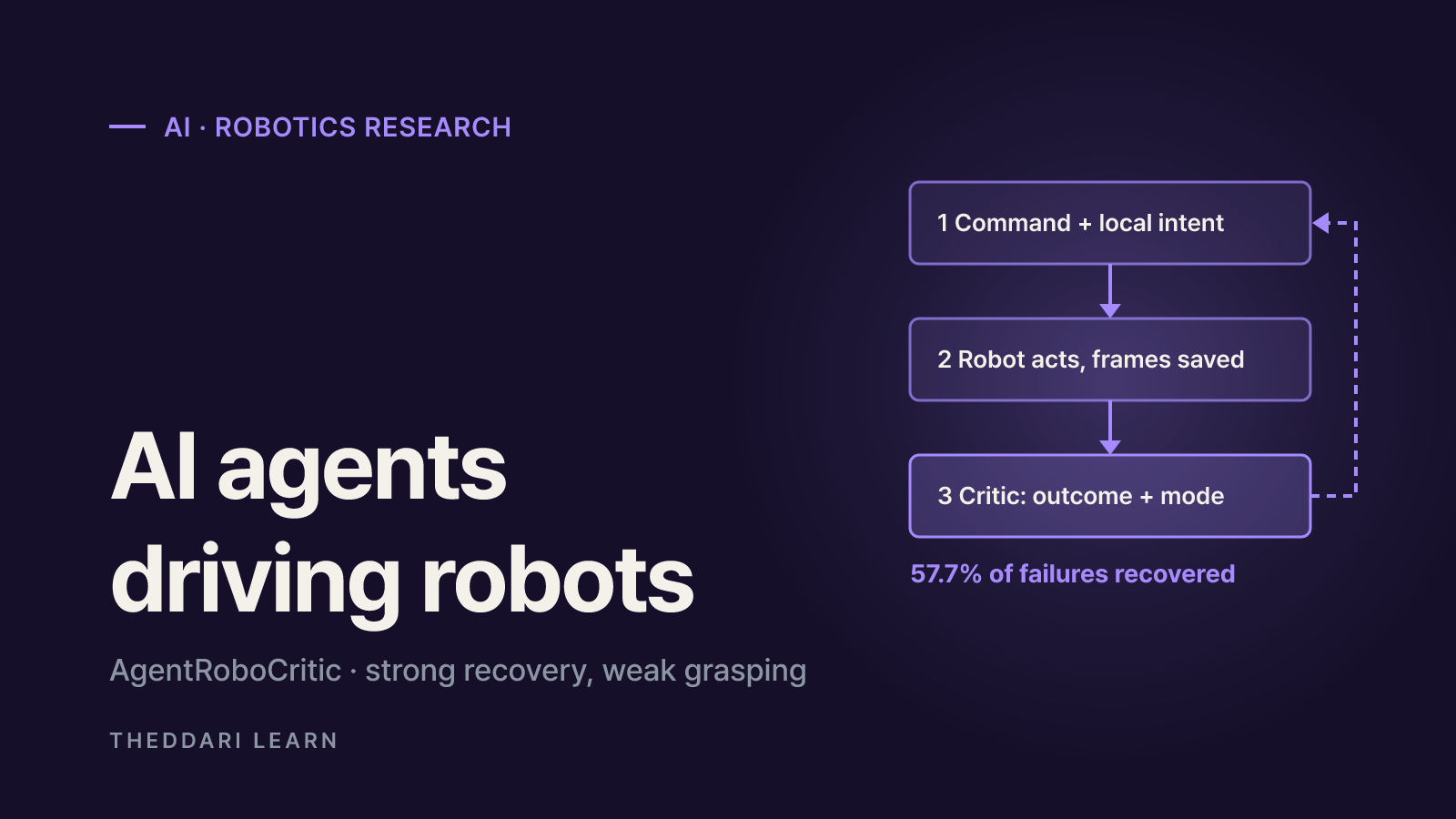
A November 2026 arXiv study from Carnegie Mellon, UIUC and Bosch scores every action a frontier AI agent sends to a robot. Here is what it found about recovery, grasping, alignment, zero-shot success and latency, and how far to trust it.
 AI
Inkling 2 Mini vs Inkling 2 Small: Specs, Local Use, Limits
Thinking Machines released Inkling 2 Mini on November 20, 2026: a 26.4B-parameter open-weights model with a ~20GB checkpoint that runs on 32GB Macs. Here is how it compares with Inkling 2 Small and what to check before you deploy it.