Data Center Opposition Poll: What It Means for AI Stocks
An October 2026 ABC/Post/Ipsos poll found 66% of Americans oppose new data centers. Learn how local delays and power bills can affect AI infrastructure stocks.
目录7 个章节
核心要点
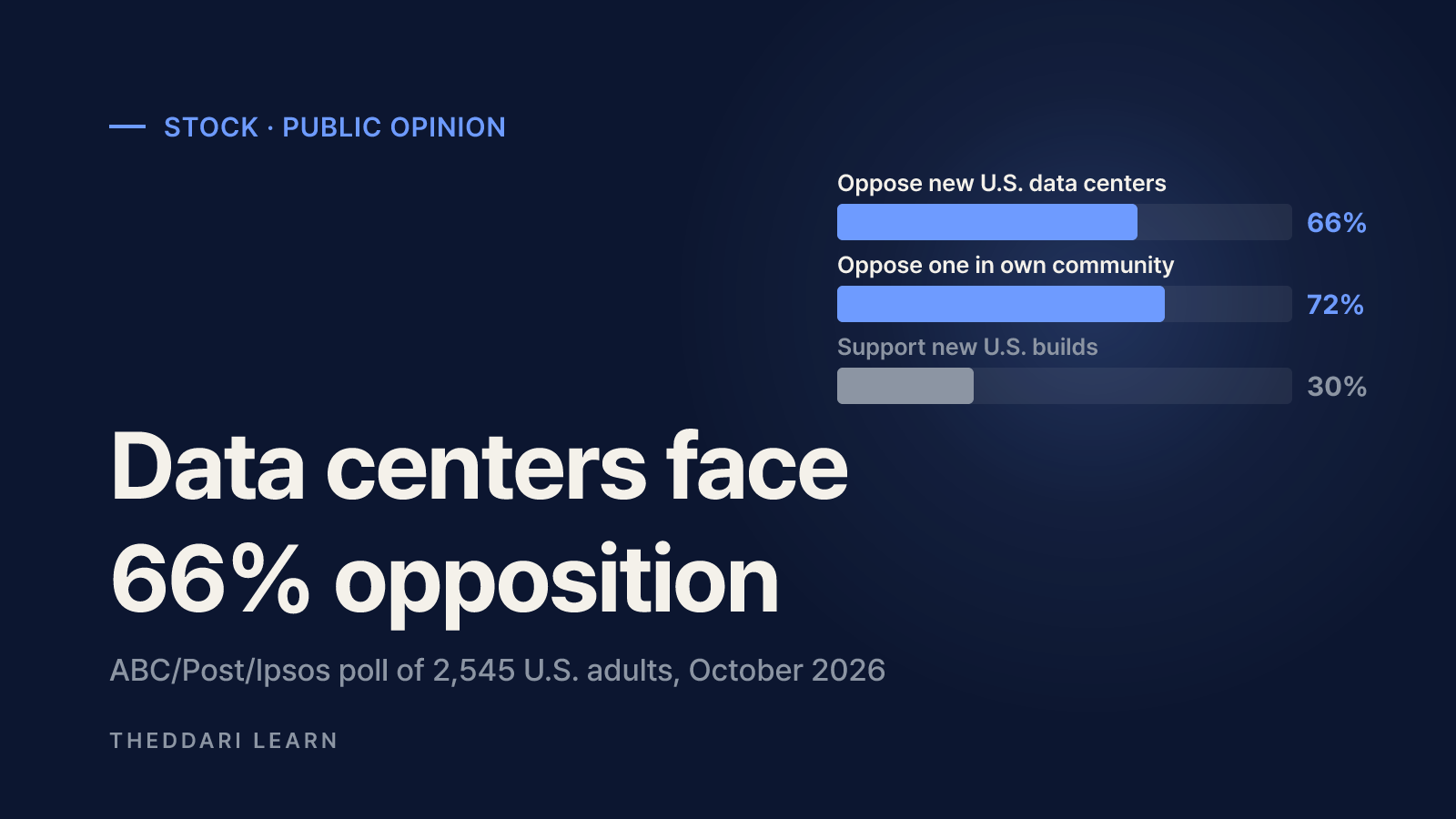
- In an ABC News/Washington Post/Ipsos poll fielded October 9-13, 2026, 66% of U.S. adults opposed building new data centers in the U.S. and 72% opposed one in their own community.
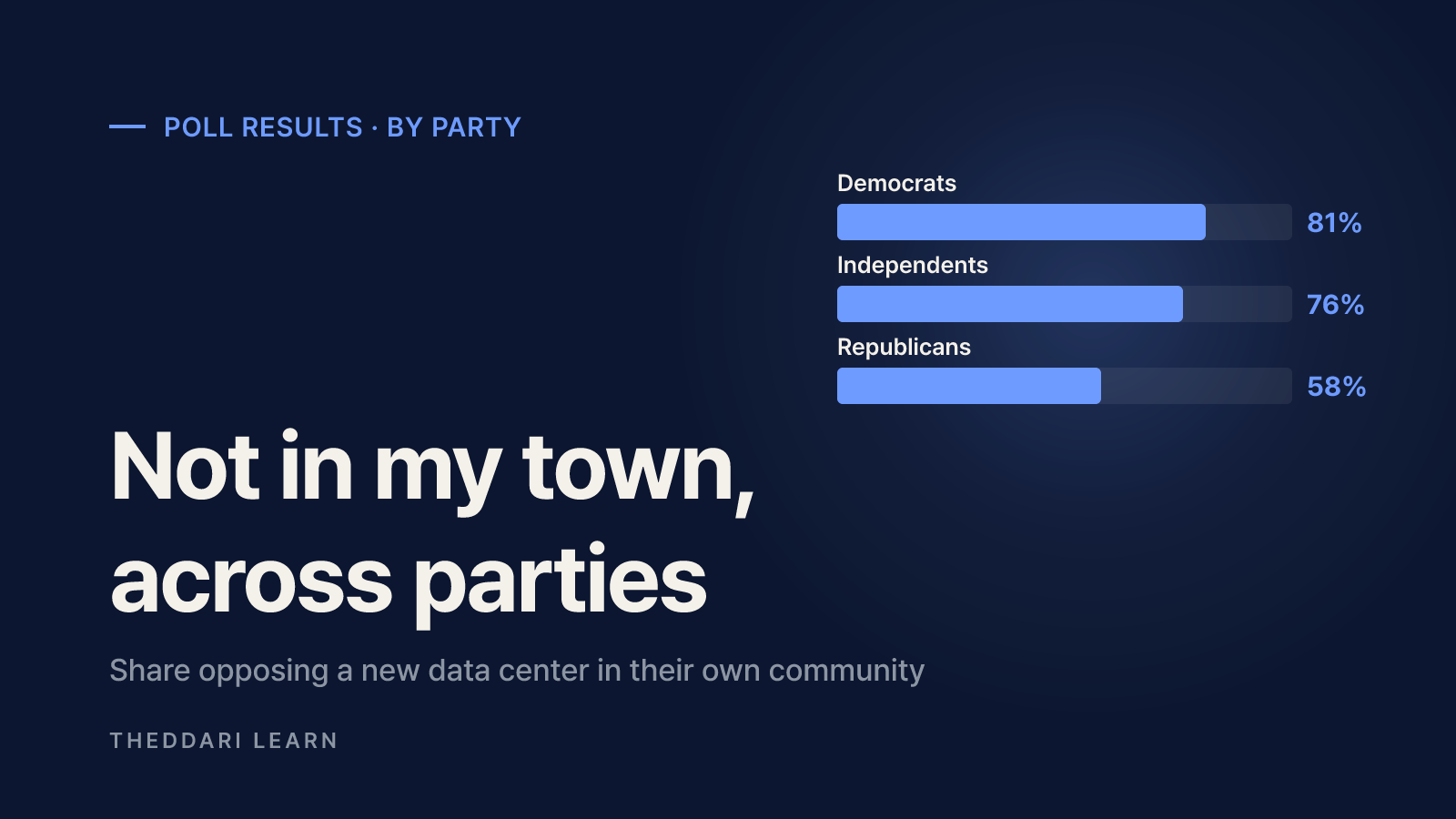
- Opposition crosses party lines: 81% of Democrats, 76% of independents and 58% of Republicans opposed a new data center locally.
- Data Center Watch counted at least 75 projects (about $130 billion) blocked or delayed in Q1 2026 and at least 45 (about $68 billion) in Q2 2026.
- Polls move stocks only indirectly, through zoning votes, state moratoriums, utility rate cases and lawsuits that change timelines and costs.
- Exposure differs by business: hyperscaler capex timing, data center REIT pipelines, utility rate design and equipment backlogs each respond differently.
A new data center opposition poll shows how far public sentiment has shifted. In the ABC News/Washington Post/Ipsos poll released on October 21, 2026, 66% of U.S. adults said they oppose building new data centers in the U.S., and 72% opposed one in their own community. For investors, the useful question is not whether the headline is alarming but how that sentiment reaches project timelines, power costs and company guidance. As of October 2026, this guide walks through what the poll measured, what tracked project delays show, why electricity sits at the center of the fight, and how exposure differs across AI infrastructure stocks. It does not forecast any share price.
What the data center opposition poll found
Ipsos fielded the survey on its probability-based KnowledgePanel from October 9 to 13, 2026, among 2,545 U.S. adults, with a margin of error of plus or minus 2 percentage points. According to the Ipsos methodology note, invitations went to 3,861 panelists, interviews were offered in English and Spanish, and results were weighted to Census benchmarks. Several questions were asked of a half sample of 1,271 to 1,274 adults, where the margin widens to 2.8 points. Subgroup numbers carry larger margins still.
New data centers in the U.S.
- Result
- 66% oppose, 30% support
- Detail
- National framing
New data center in your community
- Result
- 72% oppose
- Detail
- Rural 78%, suburban 72%, urban 69%
Local opposition by party
- Result
- Democrats 81%, independents 76%, Republicans 58%
- Detail
- Majorities in every party group
Is AI good or bad for society?
- Result
- 57% bad, 42% good
- Detail
- 65% of adults under 30 say bad
Federal AI regulation
- Result
- About two-thirds say not enough
- Detail
- 22% say about right
The striking detail is that opposition is not a partisan story. Even among Republicans, 58% opposed a data center in their own area, and 80% of adults under 30 did too, along with 69% of those 65 and older. The only group showing majority support nationally was MAGA Republicans, at 53%. ABC noted that data centers have become a midterm election issue while President Trump strongly backs their construction, so federal support and local resistance are pulling in opposite directions.
Separate views on AI from views on buildings
Saying AI is bad for society is not the same as refusing to use AI. In the same poll, Americans were split almost evenly on whether AI is good (50%) or bad (49%) for them personally. The data center numbers are better read as resistance to the local costs of the physical buildout, such as power bills, water use, noise and land use, rather than as a sign that demand for AI services is collapsing.
How local opposition reaches AI infrastructure investing
A poll does not show up in an income statement. It matters when it turns into zoning denials, state legislation, utility rate decisions or lawsuits. Data Center Watch, which tracks local fights over large projects, provides the clearest evidence that this transmission is already happening.
- Q1 2026 report: at least 75 projects worth roughly $130 billion were blocked or delayed amid local opposition, roughly matching all of 2025 in three months. More than 300 state data center bills were filed in the first six weeks of 2026, statewide moratorium proposals appeared in 14 states, and Maine came within one House vote of a statewide ban.
- Q2 2026 report: at least 45 projects worth nearly $68 billion were blocked or delayed. Thirty statehouses introduced legislation, resolutions or executive actions on siting, electricity, water and cost-sharing, and some communities adopted moratoriums before any developer had applied.
- 2023 to Q1 2025 report: $18 billion of projects were blocked and $46 billion delayed, $64 billion in total. Common complaints were higher utility bills, water consumption, noise, property values and green space.
Read these figures carefully. Data Center Watch itself warns that attributing delays only to local opposition oversimplifies the picture, because grid access, regulatory compliance, incentives and market conditions also play a role. Its definitions matter too: a blocked project was halted by a permit denial or withdrawal, while a delayed project is still pursuing approval. Projects often come back in revised form. Tract withdrew a $14 billion Arizona plan in May 2024 and announced another project in the Buckeye area that August, according to the same report.
Why electricity is the flashpoint
Utility bills top the list of complaints because the load is large. A Lawrence Berkeley National Laboratory report released by the U.S. Department of Energy estimated that data centers consumed about 4.4% of U.S. electricity in 2023, or 176 TWh, and could reach 6.7% to 12% by 2028, or 325 to 580 TWh. Serving that demand means new generation and transmission, and state regulators then decide how the cost is shared between residential customers and large loads. DOE said it is working with stakeholders on new rate structures intended to keep power affordable.
Exposure differs across data center stocks
The phrase data center stocks covers businesses with very different sensitivities. The table below maps where local opposition can bite. Actual exposure for any company depends on its own disclosures.
Hyperscalers and AI labs
- How opposition can reach it
- Slower permits for new campuses, shifts in capex timing
- What to check
- Capex guidance and regional build plans on earnings calls
Developers and data center REITs
- How opposition can reach it
- Rezoning denials, lawsuits, withdrawn projects
- What to check
- Development pipeline, secured land and power, signed leases
Utilities and power producers
- How opposition can reach it
- Large-load rate cases and cost-allocation rules
- What to check
- State commission dockets and large-load tariff terms
Power and cooling equipment
- How opposition can reach it
- Order and delivery timing as projects slip
- What to check
- Backlog, customer concentration, geographic mix
Semiconductors and memory
- How opposition can reach it
- Indirect, through total industry capex
- What to check
- Customer capex outlooks, inventory levels
The same headline can cut both ways. Owners who already hold land with grid connections may find those sites more valuable as new approvals get harder, while firms dependent on fresh greenfield entitlements may face cost overruns and delayed revenue. Scale also matters. Data Center Watch listed the $24.7 billion PW Digital Gateway in Prince William County, Virginia, led by QTS and Compass Datacenters, as delayed by litigation as of March 2025. Whether a setback like that is material depends on how much of a company's plan sits in that one location.
Capex updates usually arrive with quarterly results, so it helps to track reporting dates for the largest spenders on the theddari earnings calendar and confirm them against company investor relations pages.

A checklist for reading AI infrastructure headlines
- 1
Read the poll, not just the story
Check the field dates, sample size, margin of error and exact wording. Do not mix the national question with the in-your-community question, and note when a number comes from a half sample.
- 2
Look for a real policy change
Sentiment becomes a business variable through decisions: a denied rezoning, an enacted moratorium, or a new large-load tariff. Separate bills that were introduced from laws that passed, and record where and when they apply.
- 3
Compare with company disclosures
Search earnings calls and risk factors for permitting, interconnection and community opposition. If capex guidance changes, read whether management blames demand or supply constraints.
- 4
Keep macro events in view
Rate decisions and inflation data move AI infrastructure shares too. Checking the economic calendar keeps you from pinning every price move on a single opinion poll.
To see how market chatter around AI infrastructure is evolving, the theddari Telegram stock trends page shows which topics are gaining attention. Popularity is not verification, so return to primary sources before relying on any number.
Limits of the poll and the case against overreacting
Neither extreme reading holds up well. A poll is a snapshot, and question wording shapes the answer. Data Center Watch's earlier report cited a survey in which most Americans supported data center construction in the abstract but were skeptical of projects near them, so results are hard to compare across pollsters. Many delayed projects are redesigned or relocated rather than abandoned, and the federal government remains openly supportive of the buildout.
On the other side, the risk can be underrated. Adding the two quarterly counts gives at least 120 projects and roughly $198 billion blocked or delayed in the first half of 2026 (a simple sum of 75 projects and $130 billion in Q1 with 45 projects and $68 billion in Q2; some projects may appear in both). That is not a handful of local exceptions. What matters for an investor is where opposition turns into binding decisions, and how much of a given company's pipeline sits in those places.
In short, the October 2026 poll confirms that the U.S. data center buildout is now exposed to local and state politics in a way it was not a few years ago. Verify the poll wording and margins, follow the quarterly delay counts and state legislation, and match both against each company's capex and permitting disclosures. That sequence lets you judge real exposure instead of reacting to the headline.
常见问题
Do most Americans really oppose new data centers?
Will data center stocks fall because of this poll?
Which parts of the AI infrastructure trade are most exposed to local opposition?
Why is electricity at the center of the data center debate?
来源与参考资料
- 1ABC News: Most Americans say AI is bad for society, oppose more data centers (Oct. 21, 2026)(在新标签页中打开)abcnews.com
- 2Ipsos: ABC News/Washington Post/Ipsos Poll, October 2026 (methodology)(在新标签页中打开)www.ipsos.com
- 3Data Center Watch: Q1 2026 Report(在新标签页中打开)www.datacenterwatch.org
- 4Data Center Watch: Q2 2026 Report(在新标签页中打开)www.datacenterwatch.org
- 5Data Center Watch: 2023 to Q1 2025 Report(在新标签页中打开)www.datacenterwatch.org
- 6U.S. Department of Energy: Report Evaluating Increase in Electricity Demand from Data Centers(在新标签页中打开)www.energy.gov
相关文章
 股票
Why the Anthropic IPO Didn't Stop the AI Stock Selloff
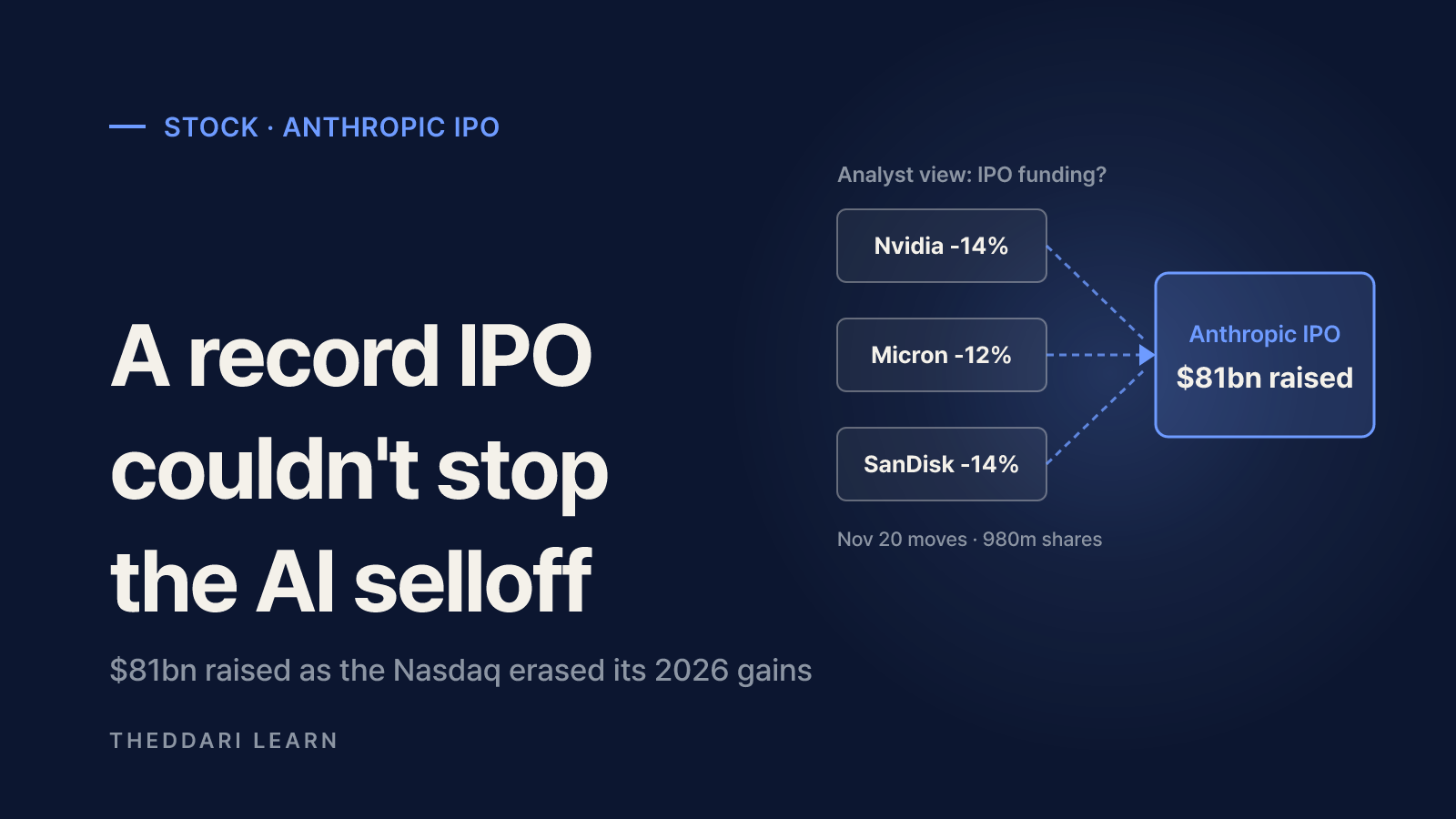
Anthropic raised $81bn in the largest IPO on record, yet the Nasdaq wiped out its 2026 gains the next day. Here is how a blockbuster listing and an AI selloff can happen at once.
 股票
Chip Export Controls: Why TSMC, Samsung Paused China Chips
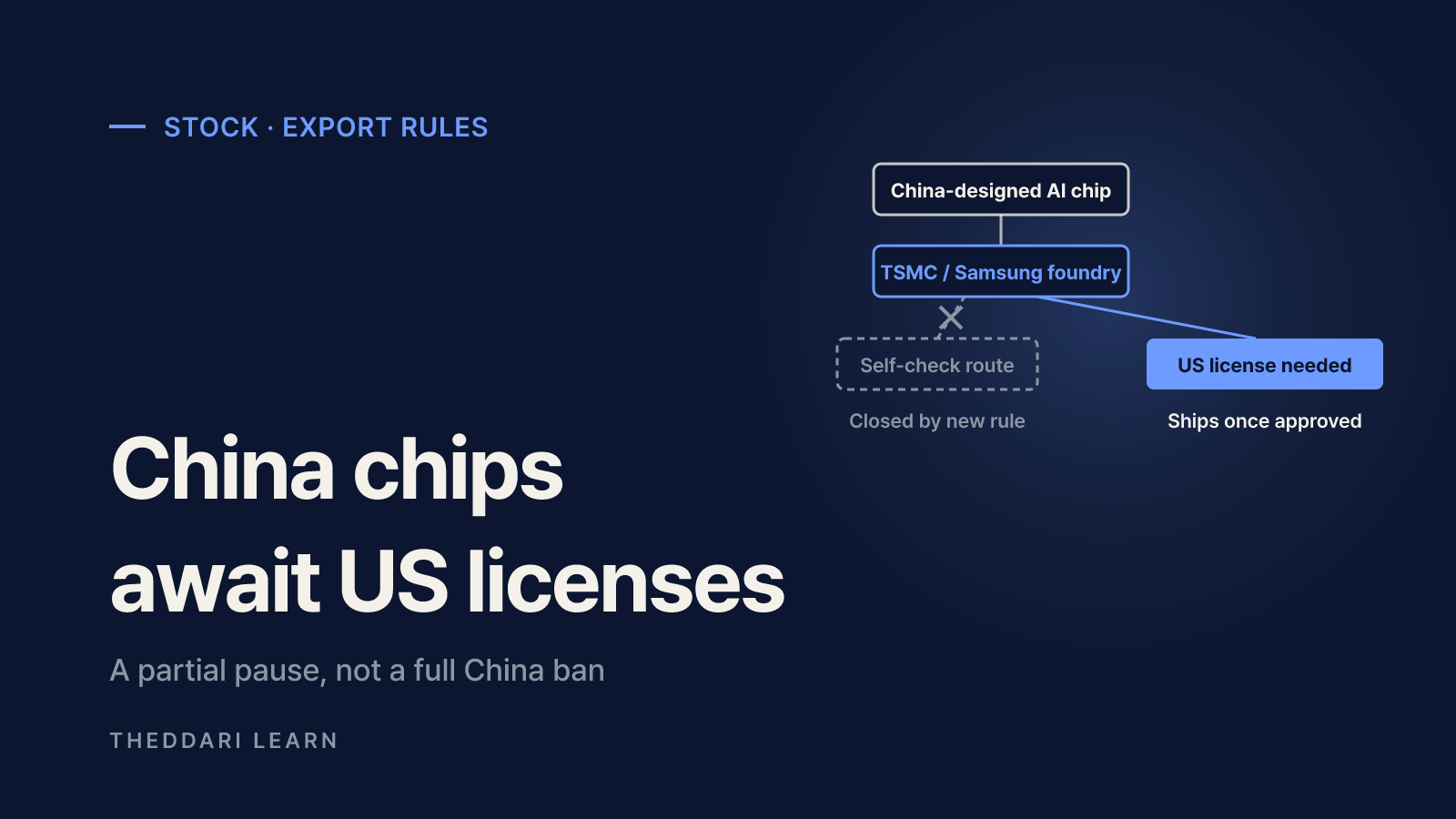
After the US Commerce Department's new chip export rule took effect on November 19, 2026, TSMC and Samsung reportedly paused some deliveries to Chinese customers. Here is what the rule actually changes, which parts are confirmed, and the numbers that matter for TSM and Samsung shareholders.
 股票
Anthropic IPO Lockup Expiration Dates and ANT Price Impact
There is no single Anthropic lockup expiration date. Insider shares unlock in 23 steps, some on fixed dates and the largest ones tied to earnings. Here is the calendar, where to verify it, and how to think about price impact.