Why the Anthropic IPO Didn't Stop the AI Stock Selloff
Anthropic's record $81bn IPO landed in the week the Nasdaq erased its 2026 gains. See why big listings can drain liquidity and which indicators to check next.
目次7セクション
要点
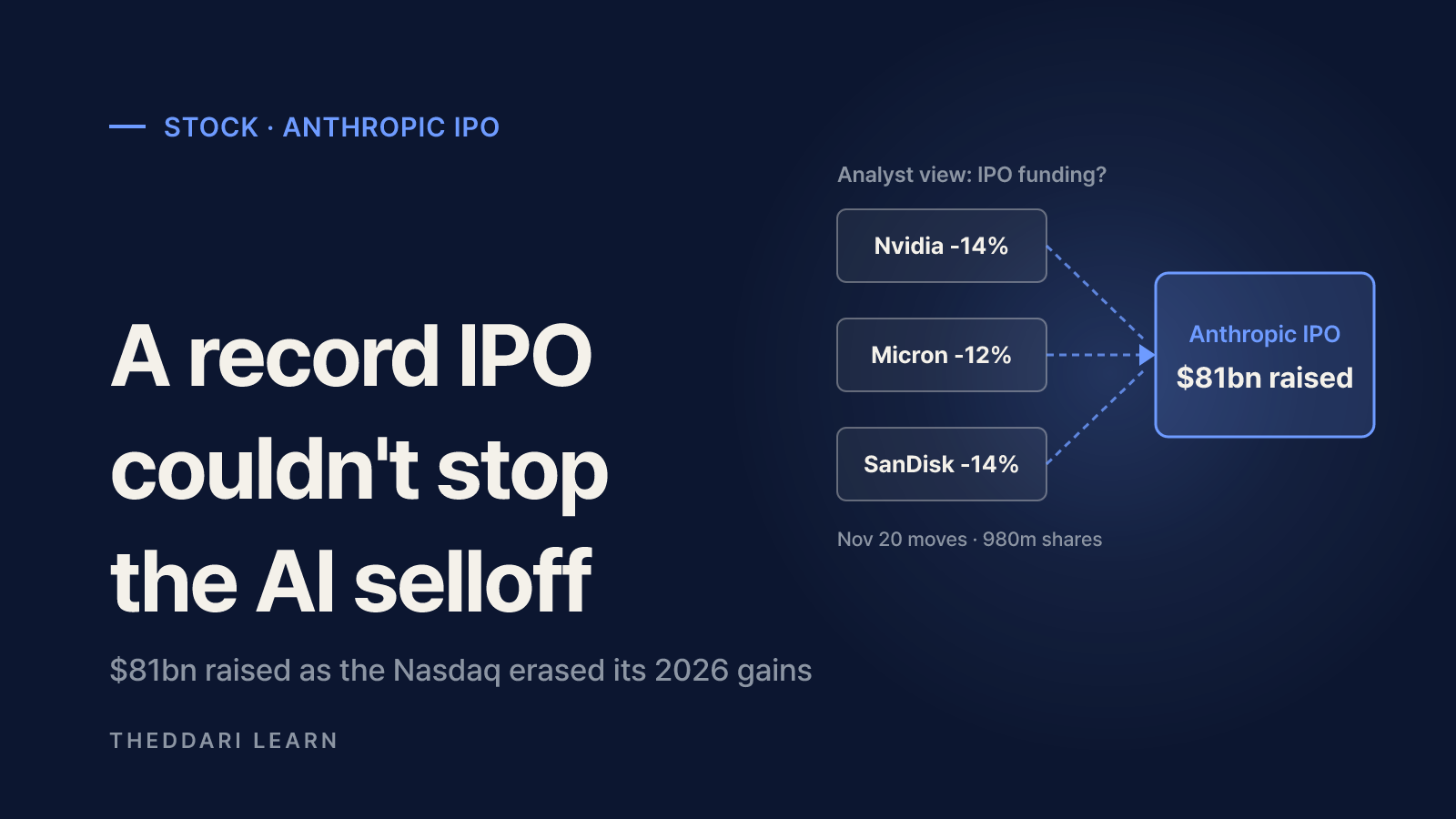
- According to The Guardian, Anthropic priced its IPO at $83 on November 19, 2026, selling 980m shares to raise $81bn, the largest IPO on record.
- On November 20 the Nasdaq Composite closed 5% below its January 1 level, erasing its 2026 gains, while Anthropic fell 9% to $88.30 on its second day.
- A record listing signals demand for AI exposure, but it cannot offset selling to fund the purchase, a re-rating of AI valuations and fears of higher interest rates all at once.
- Newly listed stocks have a small tradable float, temporary underwriter price support and lock-up expiries, so their prices can swing sharply in either direction.
- In a broad selloff, check breadth, chip-stock declines, the dollar and rate calendar, and company-specific dates before blaming a single event.
The Anthropic IPO was the biggest initial public offering on record, but it did not stop the AI selloff. As of reporting on November 20, 2026 (US time), the listing ran into three forces at once: investors selling other tech holdings to fund their Anthropic purchases, growing doubts about whether AI spending will pay off, and fears that US interest rates could rise. This guide sets out the figures reported by The Guardian, explains why a blockbuster listing has limited power over market sentiment, and gives a checklist for reading a broad AI stock slump. It does not suggest when to buy or sell any security, and all figures should be checked against exchange data because they reflect reporting at the time.
What happened in Anthropic IPO week
According to The Guardian's IPO explainer, Anthropic, the maker of the Claude chatbot, began trading in the US on Thursday, November 19. It sold 980m shares to raise $81bn, beating the $75bn record SpaceX set in June 2026. The shares were priced at $83, jumped during the first session and closed about 17% above the offering price, just over $97. Demand was reported to be roughly six times the shares on offer.
The mood turned within a day. On Friday, November 20, Anthropic fell 9% to $88.30, giving back most of its debut gain. The Nasdaq Composite erased all of its 2026 gains and closed 5% below its January 1 level, while the Dow Jones Industrial Average and the S&P 500 closed in correction territory. Citing The Wall Street Journal, The Guardian reported that roughly $4tn in Nasdaq market value was wiped out over the week.
Anthropic IPO price and proceeds
- Reported figure
- $83 per share, $81bn
- Date (US time)
- Nov 19
Anthropic second-day close
- Reported figure
- $88.30 (-9%)
- Date (US time)
- Nov 20
Nasdaq Composite
- Reported figure
- -5% year to date, 2026 gains erased
- Date (US time)
- Nov 20
Nvidia / Micron / SanDisk
- Reported figure
- -14% / -12% / -14%
- Date (US time)
- Nov 20
Taiwan / Kospi / Nikkei
- Reported figure
- -6.7% / -5.5% / -5%
- Date (US time)
- Nov 20
FTSE 100
- Reported figure
- -5.1% for the week
- Date (US time)
- Week to Nov 20
The selling was global. Asian markets had their worst week since 2020, and SoftBank dropped 14.5% in Tokyo. The pan-European Stoxx 600 fell 1.9% on Friday. The dollar rose to a 19-month high, gold headed for its worst week since March, and bitcoin slipped below $60,000 for the first time since early July. Figures are as reported and can differ slightly from other outlets depending on closing times and time zones.
Three reasons a record IPO can't offset an AI selloff
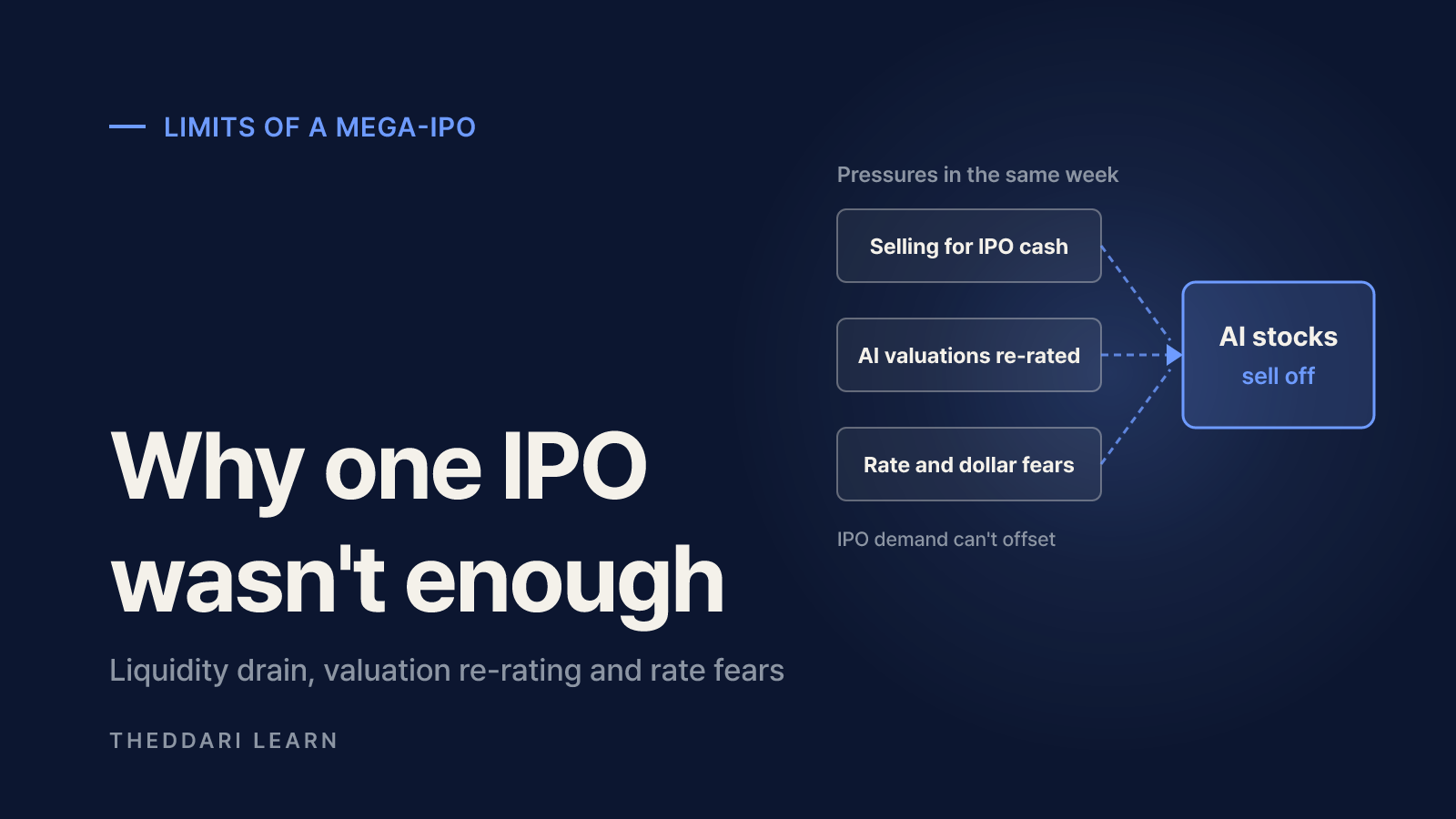
A big IPO is often read as a vote of confidence. Daniela Hathorn of Capital.com said the deal showed that demand for AI exposure remains strong, but added that it was not enough to overcome concerns about elevated valuations, profitability and the sustainability of investment spending. In other words, a signal of demand is not the same thing as a force that lifts prices across the market.
1. The money has to come from somewhere
Buying IPO shares requires cash. Funds and individuals that are already fully invested may sell other holdings to make room. IG's Chris Beauchamp said Anthropic could be draining market liquidity, noting that the money has to come from somewhere and that other tech names may feel the pressure first. Investors who want AI exposure have a particular reason to trim existing AI and chip positions and rotate into the new listing. That means strong demand for the IPO can, paradoxically, show up as selling in older AI stocks. This is an interpretation from market analysts; the size of any such rotation has not been confirmed by official flow data.
2. A public price tag re-rates the whole AI trade
Listing gives a formerly private company a price that changes every day, and a public prospectus that anyone can read. The Guardian reported that Anthropic's prospectus shows revenue of $16.2bn in the first half of 2026, up from $4.6bn for all of 2025. It also showed heavy losses: $80bn in the first half, largely from a one-off charge, rising to $104bn over the first nine months. The company has pledged to spend about $900bn on data center infrastructure over two decades. Numbers like these sharpen the question of whether AI companies can earn enough to justify the build-out, and that question extends to suppliers such as Nvidia and the memory makers whose revenue depends on AI capital spending.
3. Rates, the dollar and company news move on their own
Several pressures that week had nothing to do with the IPO. Fears that the Federal Reserve could raise rates to fight inflation lifted the dollar. Nvidia was reported to have received a subpoena from California in an investigation into whether its advanced chips ended up in China. Expectations of higher rates tend to weigh on growth stocks, because more of their value rests on profits far in the future. A single listing, however large, cannot reverse those macro forces.
Why newly listed stocks swing so sharply
A big first-day pop followed by a slide back toward the offering price is a familiar IPO pattern. The SEC's Investor.gov bulletin on IPOs says the offering price reflects a negotiated estimate of value and may bear little relationship to the trading price, and that it is not uncommon for the stock to close well above or below the offering price soon after listing.
- Limited float: on day one, generally only the shares sold in the IPO can trade. Shares held by founders, early investors and employees are often restricted or locked up, so scarce supply can push a hot IPO sharply higher.
- Price support: underwriters can buy shares in the first few days to keep the price from falling too far below the offer. The SEC warns that once this support ends, the price may decline significantly below the offering price.
- Lock-ups and overhang: lock-up agreements typically last 180 days. When they expire, a large block of shares can hit the market at once. The prospectus section titled Shares Eligible for Future Sale shows how much stock could be sold later.
These mechanics spill over into the indexes. A huge new stock with a thin float can move violently, and trading in it overlaps with trading in other mega-caps as funds rebalance. If you follow pre-IPO pricing, the theddari pre-IPO comparison page shows private-market price information, but those quotes do not forecast where a stock will trade after listing.
A checklist for reading an AI stock slump
The most common mistake in a broad selloff is to pin the whole move on one headline. Working through the steps below helps separate the effect of an IPO from sector problems and macro pressure.
- 1
Measure breadth
Look beyond cap-weighted indexes to equal-weighted indexes and the number of declining stocks. Hathorn pointed out that weakness in equal-weighted indices suggested the selling was no longer confined to a handful of tech giants. Broad declines make a macro explanation more plausible than a single listing.
- 2
Isolate chip and memory stocks
Compare the drop in AI suppliers such as Nvidia, Micron and SanDisk with the index. If they fall much harder, concern about the durability of AI capital spending is probably central. Check whether company-specific news, such as a subpoena or new regulation, overlapped.
- 3
Line up the dollar and the rate calendar
A stronger dollar alongside rate-hike fears points to a discount-rate problem across growth stocks. Use the theddari economic calendar to find inflation releases and central bank meetings with the correct time zone, then confirm with the official publisher.
- 4
Note the new listing's own dates
Find the end of any stabilization period, the first quarterly report and lock-up expiry dates in the prospectus and filings. Use the earnings calendar to locate report dates and confirm them with the company's investor relations notices.

Common misreadings and their limits
First, a correction is not a bear market. FINRA's glossary of stressed-market terms defines a correction as a reversal of at least 10% and a bear market as a decline of 20% or more in a broad index. Reports that the Dow and the S&P 500 closed in correction territory do not mean either index has entered a bear market, and the answer depends on which peak is used as the reference.
Second, timing is not causation. The Anthropic IPO and the index decline overlapped, but news coverage alone cannot tell you whether the listing caused the drop or was simply swamped by an AI selloff already under way; The Guardian had been reporting on AI bubble fears and post-midterm tech selling since early November. Third, numbers vary between reports. Even within one outlet, first-day intraday gains and market-value estimates differed from article to article, so this guide relies on clearly defined figures such as the offer price, proceeds and closing prices. Market capitalization depends on which share count is used, so check the registration statement and exchange data.
The takeaway: a blockbuster IPO shows where demand sits, but it is not a support beam for the whole market. When cash absorption, a valuation re-rating and macro pressure from rates and the dollar line up, indexes can fall even in a record listing week. The next time a mega-IPO is scheduled, note its size, the inflation and rate calendar that week and the earnings dates for related suppliers. If prices fall, work through breadth, sector and macro factors in that order. OpenAI has reportedly said it plans to list in 2027, so Anthropic's trading may become a reference point for the appetite for the next large AI IPO.
よくある質問
Did the Anthropic IPO cause the Nasdaq drop?
Do big IPOs usually lift the stock market?
Is a new stock trading near its IPO price a bargain?
What is the difference between a correction and a bear market?
出典・参考資料
- 1The Guardian: Nasdaq erases all 2026 gains as AI sell-off dampens Anthropic's second day of trading (2026-11-20)(新しいタブで開きます)www.theguardian.com
- 2The Guardian: Anthropic's historic stock market debut, key takeaways (2026-11-20)(新しいタブで開きます)www.theguardian.com
- 3SEC Investor.gov: Updated Investor Bulletin, Investing in an IPO(新しいタブで開きます)www.investor.gov
- 4FINRA: Key Terms for Tough Times, The Vocabulary of Stressed Markets(新しいタブで開きます)www.finra.org
関連記事
 株式
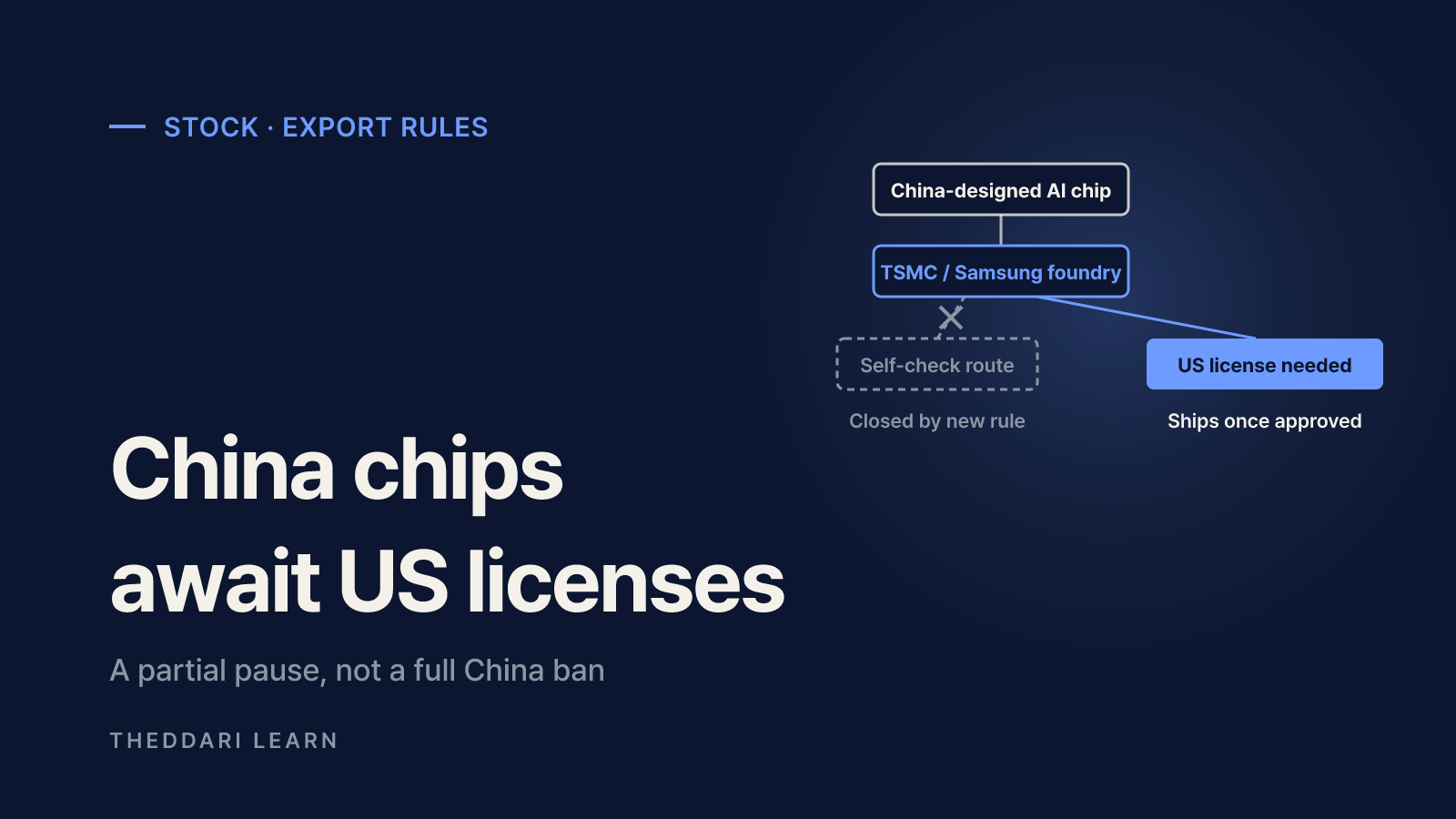
Chip Export Controls: Why TSMC, Samsung Paused China Chips
After the US Commerce Department's new chip export rule took effect on November 19, 2026, TSMC and Samsung reportedly paused some deliveries to Chinese customers. Here is what the rule actually changes, which parts are confirmed, and the numbers that matter for TSM and Samsung shareholders.
 株式
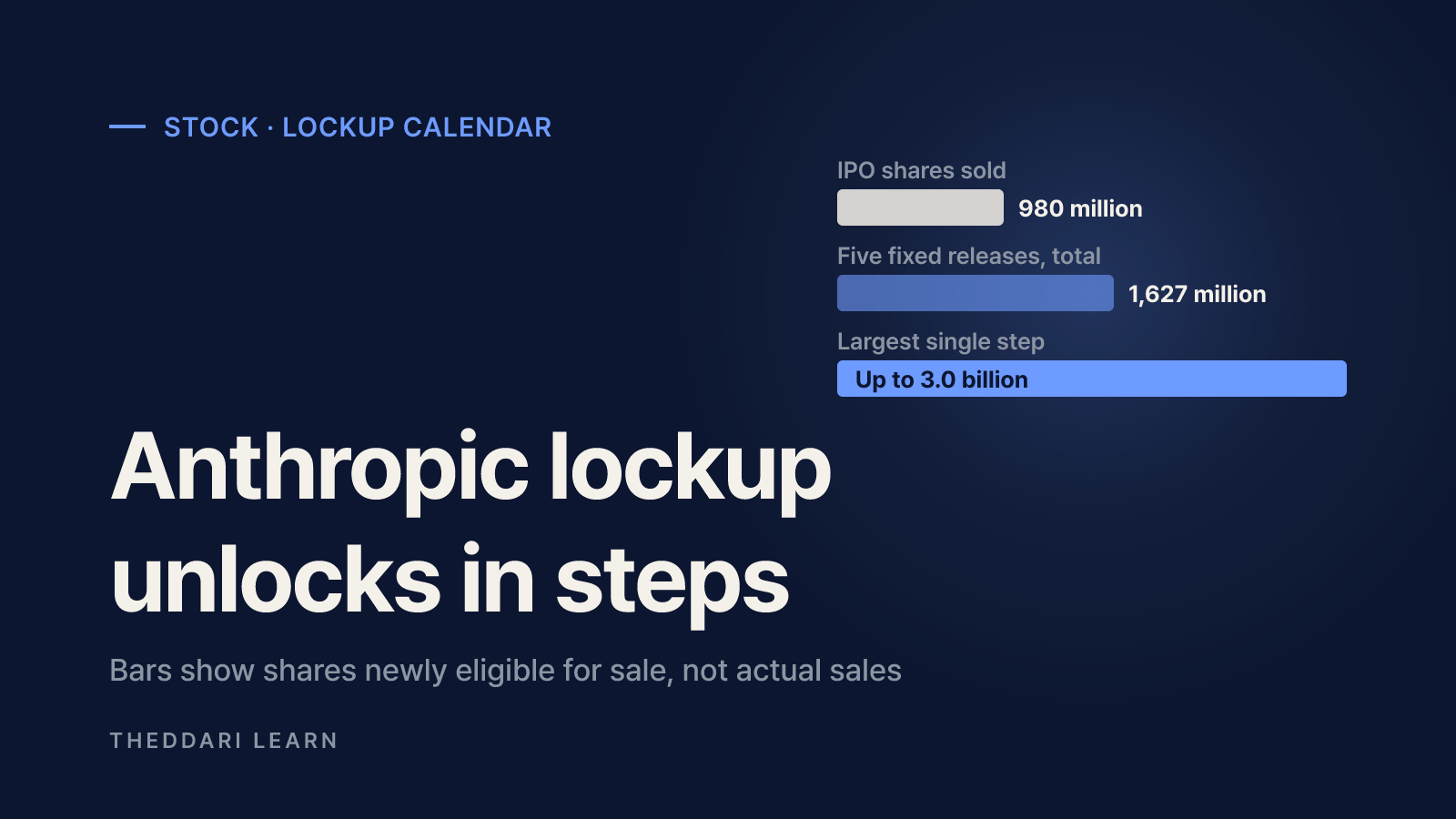
Anthropic IPO Lockup Expiration Dates and ANT Price Impact
There is no single Anthropic lockup expiration date. Insider shares unlock in 23 steps, some on fixed dates and the largest ones tied to earnings. Here is the calendar, where to verify it, and how to think about price impact.
 株式
Korea Dividend Policy: What the President's Push Changes
A viral clip says President Lee Jae-myung 'drew the sword' on dividends. As of November 2026 no law forces Korean companies to pay more, but a new dividend tax break and disclosure rules are already in place.